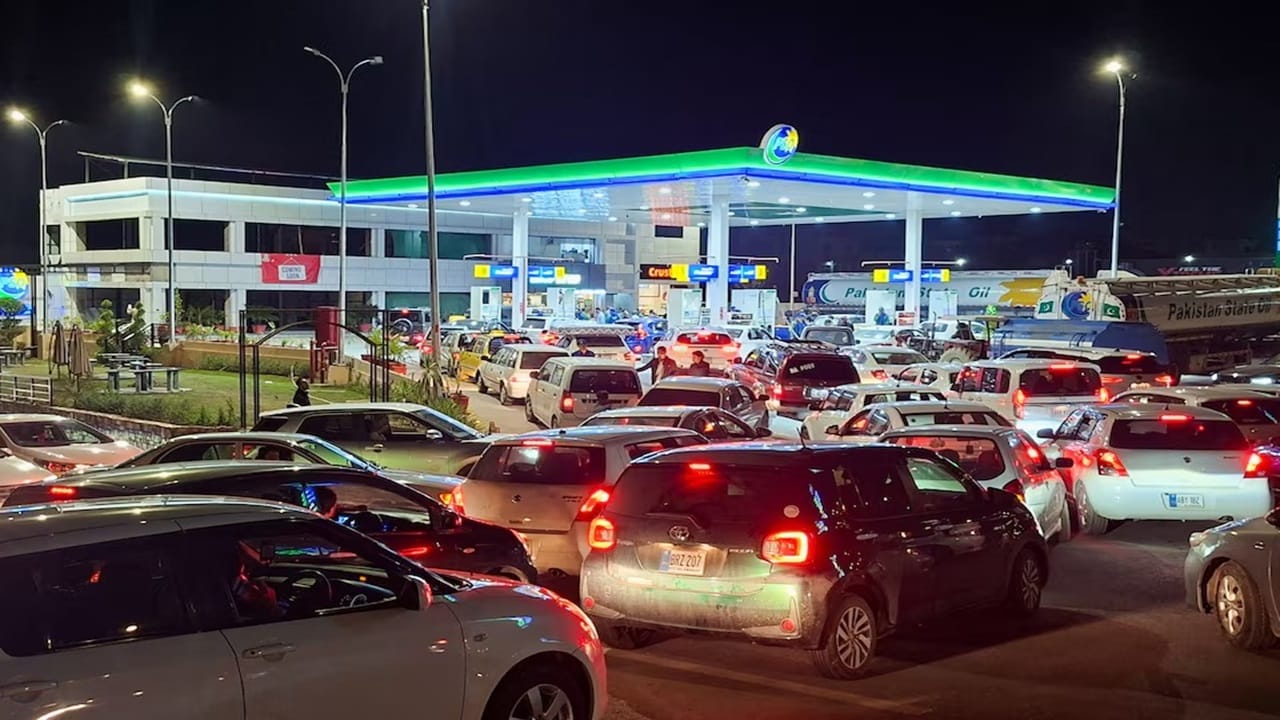
New Delhi: The International Monetary Fund (IMF) is building up pressure on Pakistan, asking it to eliminate distortions in petroleum pricing as soon as possible, even as it had quietly accepted a Rs 152 billion (PKR) subsidy limit provided to consumers amid a global price rise caused by the US-Israel war with Iran and the shutdown of the Strait of Hormuz, according to a Dawn report.
Dawn cited senior officials as saying that the staff-level agreement (SLA) that was arrived at on March 29 remains as it is and that the subsidy was rolled out with the Fund’s prior knowledge.
IMF, World Bank meetings next week
During the meetings of the IMF and World Bank next week, Pakistan’s Finance Minister Muhammad Aurangzeb and his team members are likely to apprise IMF management about the the provincial contributions to the subsidy. But, the IMF has been objecting to blanket subsidies on major petroleum products, and called for targeted support and market-based pricing.
A senior government official was quoted by Dawn as saying that the IMF remains essentially worried over distortions made in diesel pricing and is calling for their removal at the earliest.
At present, the petroleum development levy (PDL) on diesel is zero, compared to a budgeted Rs 80 per litre, with the shortfall being offset through higher levies on petrol. But, this buffer has grown weak after Prime Minister Shehbaz Sharif cut petrol prices by Rs 80 per litre on Friday, prompting a relook at the pricing strategy.
Pakistan’s fiscal pressure could increase
In the initial stages, Pakistan tried to make adjustment in the PDL between petrol and diesel, but after that it shifted to targeted subsidies financed by provinces through budget rationalisation, the report said.
Higher petrol consumption — nearly 660,000 tonnes monthly compared to 600,000 tonnes for diesel — has partly cushioned revenue losses. But, officials were quoted as saying to the news outlet that they expect diesel demand to go up during the ongoing harvest season, which could put more pressure on the fiscal.
Currently, Pakistan holds around 590,000 tonnes of petrol and 480,000 tonnes of diesel, offering approximately 26 days and 20 days of coverage, respectively. More shipments are in transit, including a 70,000-tonne petrol cargo and two diesel consignments amounting to 140,000 tonnes in total, even though concerns over the balance of payments are far from over.
Officials also said talks are advancing to revive diesel imports from Kuwait, but shipments have yet to start even though Iran has allowed 20 Pakistan-flagged vessels to transit via the Strait of Hormuz.
They underlined that petroleum differential claims of the oil industry had surpassed Rs 129 billion but have now stopped after recent price hikes fully passed on import costs. Payments to oil companies are being made with a 10 percent retention, pending audit verification.
‘Significant adjustments’ required
Officials added that notwithstanding the present fiscal indicators broadly align with IMF programme targets, “significant adjustments” will be required in the 2026–27 macroeconomic framework before the federal budget.
Earlier, Islamabad had declared a Rs 80 per litre slash in petrol prices, bringing the rate down to 378 rupees. The government said it would absorb the impact through adjustments in the petroleum levy.
The reduction was effected a day after a sharp increase in fuel prices triggered by volatility in global market, with diesel prices going up by 54.9 percent to 520.35 rupees per litre and petrol increasing 42.7 percent to 458.40 rupees per litre.
As the IMF pushes Pakistan to remove pricing distortions amid the uncertainty in global oil markets, pressure is likely to intensify on the country’s fuel policy as the energy crisis stretches on. The pressure on the Shehbaz Sharif government is set to grow further as it tries to balance fiscal finances while shielding consumers from exorbitant fuel prices.