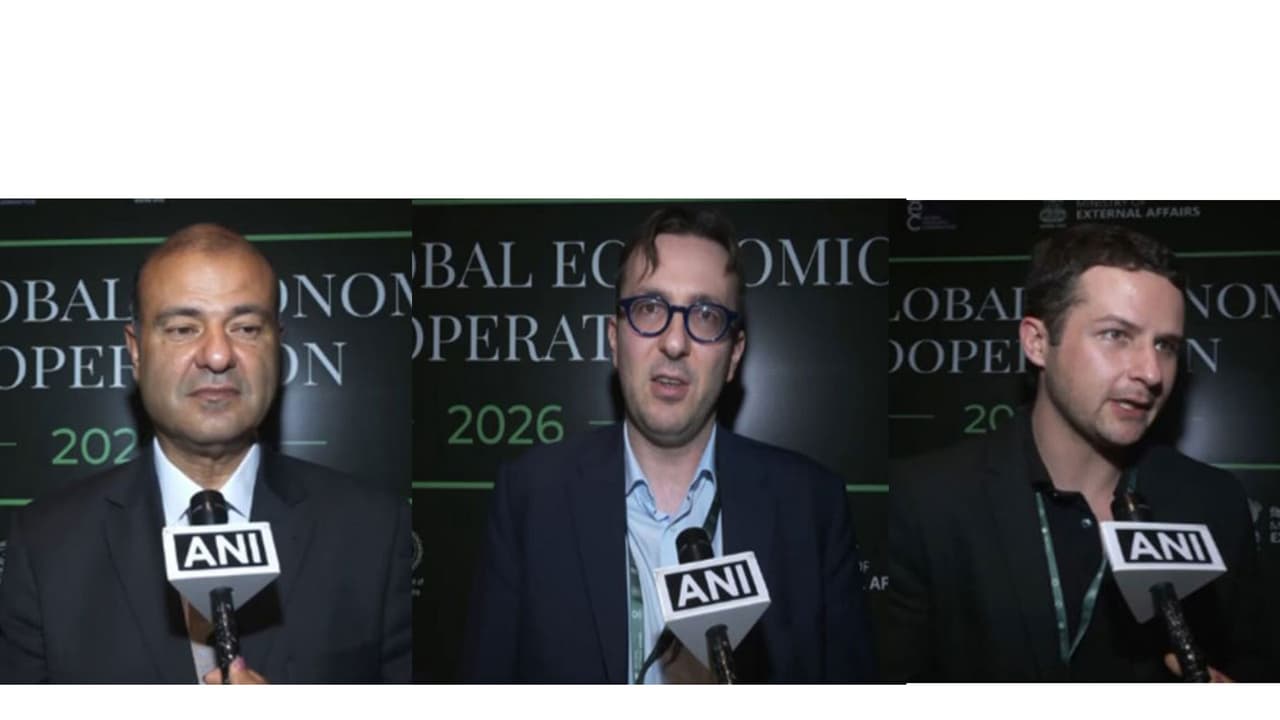
At FECC 2026, the ‘IMEC Plus’ proposal was unveiled to expand the India-Middle East-Europe Economic Corridor to Africa and Latin America, transforming it into a multimodal, value-added platform that integrates regions as producers.
‘IMEC Plus’: A Vision for Global Expansion
The proposal for an “IMEC Plus” emerged as a major highlight at the Future Economic Cooperation Council (FECC) 2026 in Mumbai, envisioning an expansion of the India-Middle East-Europe Economic Corridor (IMEC) to include Africa and Latin America. Dr Khaled Hanafy, Secretary General of the Union of Arab Chambers, presented the concept as a transformative shift from traditional trade routes to a multimodal, value-added platform.
He emphasised that the initiative is designed to be more open and inclusive, noting that “the IMEC plus includes Africa as well and including Egypt as a hub and a gateway to Africa.” This new model moves away from viewing regions as mere consumers and instead integrates them into a global production chain.
Synergy of Regional Strengths
Dr Hanafy explained that the strategy aims to utilise the specific strengths of each participating region, such as “having Egypt as a hub, having the Gulf for energy, for metal, for… economic zones and ports, having India for the IP, for the technology, for the know-how.” By creating this synergy, the proposal seeks to build a more resilient system where “Africa will not going to be considered as only target markets, but also as a source of inputs for the value chain.”
Calls for Faster Adaptation and Global Unity
The push for “IMEC Plus” comes at a time when global leaders at the summit are calling for faster political and regulatory adaptation to keep pace with rapid technological shifts. Lorenzo Bernasconi, Senior Advisor to the Italian Ministry of Economy & Finance, noted that the world is shrinking and shifting eastward, making mutual understanding vital for economic cooperation. Highlighting the urgency of the moment, Bernasconi warned that “this sector is advancing so quickly, so fast that they grow faster than the regulation that controls this sector.”
The sentiment of increasing interconnectedness was echoed by Daniel Castillo of the Guatemala Ministry of Economy, who stressed that global fragmentation is forcing the public and private sectors to align more closely. He argued that international platforms are essential for addressing real-world needs in logistics and investment. Castillo noted that such cooperation is vital because “if we stay united, if we stay close, we can predict more changes and we can be more stable in our daily operations.” (ANI)
(Except for the headline, this story has not been edited by Asianet Newsable English staff and is published from a syndicated feed.)