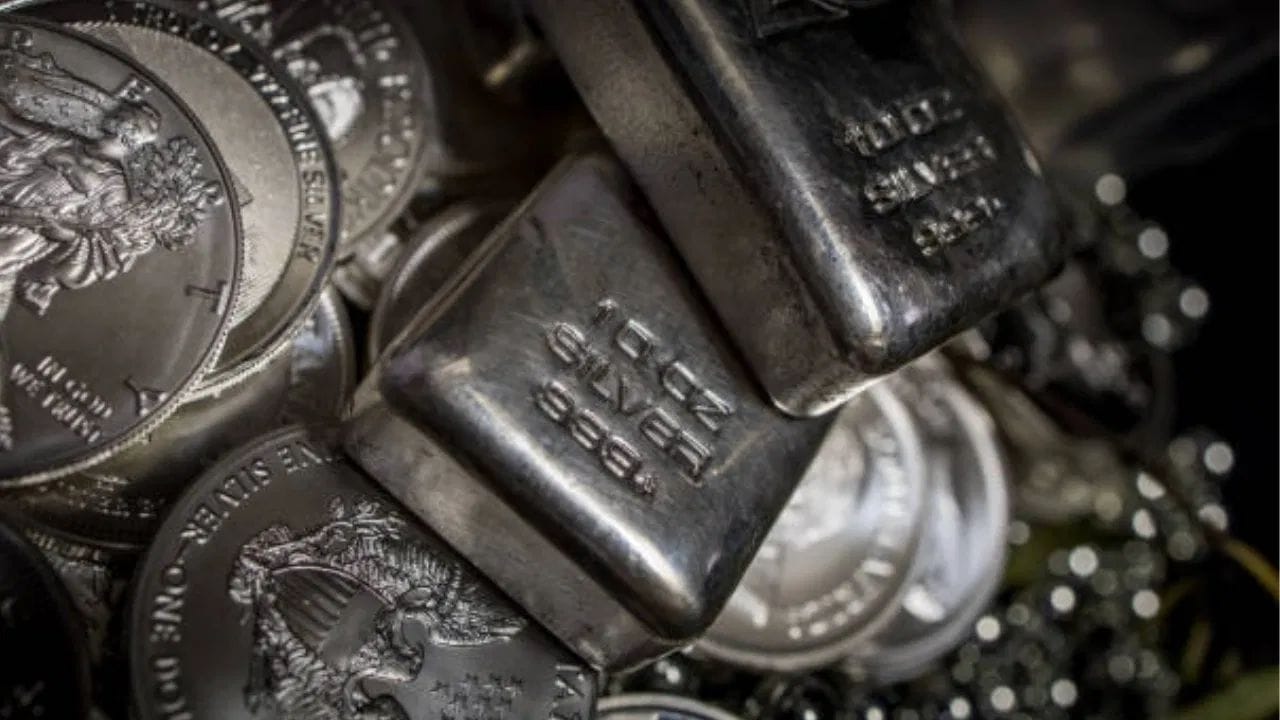
Silver prices have increased rapidly in recent weeks. The prices have risen to around Rs 300 per gram and around Rs 3 lakh per kg. After such a sharp increase, experts have advised buyers to be cautious, because fake or adulterated silver, be it jewellery, coins or household utensils, can enter the market in large quantities. To avoid being cheated, customers can check the authenticity of silver at home using some easy methods. These methods are also commonly used by jewelers as a preliminary test and do not require any special equipment.
How to test silver at home
- Magnet Test: Real silver does not stick to a magnet. If the magnet sticks to the silver, it is almost certain that it is not genuine. However, some counterfeit metals may also be non-magnetic, so consider this just a preliminary check.
- Ice Test: Silver is a good conductor of heat. Place ice on a piece of silver. If the ice starts melting immediately, the silver may be real. If the ice melts slowly, the silver cannot become pure.
- Smell Test: Real silver does not have any specific smell. Rub the silver lightly and smell it. If the smell is normal then it is fine, but if there is a strong smell of copper or metal, then it may be adulterated.
- Fabric Test: Rub the silver lightly with a clean white cloth. Light black or gray marks may appear on real silver, which are caused by oxidation. If no marks are seen, the silver may be plated or alloyed.
- Water Test: Silver is heavy. When real silver is put in a glass of water, it settles down quickly. Fake or light metal sinks slowly or behaves strangely.
- Voice Test: Lightly tap the silver on a hard surface or other metal. Real silver makes a clear, bell-like sound, while fake silver makes a heavy, unpleasant sound.
Why is it important to identify real silver?
Experts say that when prices rise rapidly, hasty decisions can go wrong. Therefore, do not rely on a single test and test the silver in multiple ways. Usually real silver passes many tests. Too low a price, excessive flashiness or trying to sell quickly can all be warning signs. As experts say, if something seems too shiny or too good to be true, that’s often where things are wrong.