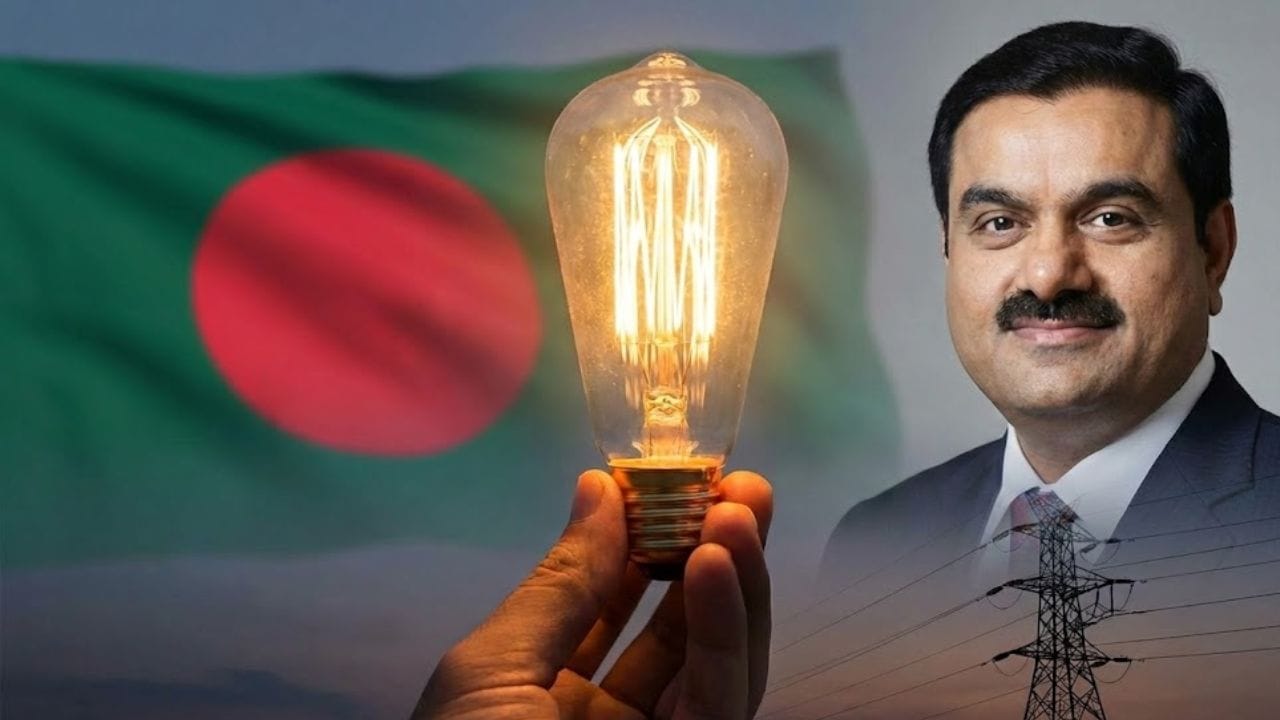
Gautam Adani passes the ‘switch’ of Bangladesh’s electricity!
These days Bangladesh is standing on the verge of huge energy crisis. Amidst the current political turmoil there and the rhetoric being made against India, there is also a bitter truth that the thread of ‘light’ of Bangladesh is largely in the hands of India. If there is even a slight sourness in diplomatic relations and its impact is on trade, then a large part of the neighboring country may be plunged into darkness. The situation is such that India has now become not just a neighbor but a ‘lifeline’ for the electricity supply there.
India contributes 17 units of electricity out of every 100 units.
bangladesh The government’s own figures show how much electricity dependence on India has increased there. Import of electricity from India has increased by about 70 percent compared to last year. This means that India’s share in the total electricity used in Bangladesh has now reached 17 percent, which till some time ago was only 9.5 percent. That means, as of today, out of every 100 bulbs burning there, 17 are being illuminated by the electricity sent from India. At present, under cross-border agreements, Bangladesh is taking on an average 2,200 to 2,300 MW of electricity from India every day.
Supply depends on Adani’s ‘power’
The biggest name in this entire supply chain is that of Gautam Adani’s company ‘Adani Power’. The largest portion of electricity going from India to Bangladesh, i.e. about 1,496 MW, is supplied from Adani Power’s Godda plant in Jharkhand alone. How big this figure is can be estimated from the fact that it is a major part of the total requirement of Bangladesh. Apart from this, government and private companies like NTPC and PTC India also help in the supply, but Adani Power’s share is most important in this. In such a situation, if this supply chain is affected due to technical or political reasons, then the balance of Bangladesh’s grid is sure to get disturbed.
Domestic gas and coal also left us
There was a time when Bangladesh generated two-thirds of its electricity from domestic natural gas. But now technical problems and low-pressure problems have become common in the gas wells there. Officials of Bangladesh Power Development Board also admit that due to shortage of gas, many of their plants are not able to run at full capacity.
On the other hand, due to maintenance, the production of coal based power plants there has also come down from 30 percent to 26 percent. Despite increasing the import of LNG, there has been a decline in electricity production. This is the reason why failing domestic resources have made Bangladesh dependent on expensive but reliable electricity from India. According to energy experts, it is difficult for Bangladesh to meet this shortfall on its own in the near future, which means the ‘master switch’ of electricity will remain with India for the time being.
Also read- Adani will change the face of aviation sector through Mumbai, son Jeet Adani told the complete plan