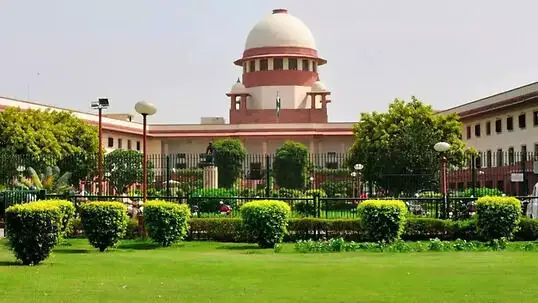
New Delhi: The Supreme Court on Thursday said it was difficult to distinguish accredited journalists working for recognised news organisations from others claiming to be journalists, as it heard pleas alleging that journalists were assaulted, harassed and detained during the October 10-11 protests in Delhi.
A bench of Chief Justice of India (CJI) Surya Kant and Justice Joymalya Bagchi was hearing petitions alleging that police personnel had harassed and manhandled women journalists during the protests. The Court described the allegations as serious and said it would examine how the cases should be investigated.
“The difficulty is when everyone claims to be a journalist under the right to freedom of expression”, Justice Bagchi remarked.
The bench also noted the challenge of distinguishing accredited journalists from people working in the digital space. It indicated that it would examine the different “layers of protection” that should apply to accredited journalists and how they should be distinguished from influencers and others.
SC Tells Centre Not To Take Coercive Action Against Woman Journalist
During the hearing, Senior Advocate Indira Jaisingh told the Court that a woman journalist she was representing had allegedly been badly assaulted by a male Delhi Police officer during the October 10-11 protests.
Jaisingh also offered to submit a sealed-cover report containing the names of several women journalists who had allegedly faced assault and harassment during the protests.
The Court said the allegations were serious and required examination. It also said it would consider how the cases should be investigated.
“Don’t take coercive action against the woman journalist,” the Court told Solicitor General Tushar Mehta, who was appearing for the Centre and Delhi Police.
Jaisingh proposed setting up a committee to examine the allegations, preferably comprising former women judges and former IPS officers. However, the bench indicated that the present proceedings would focus on the specific woman journalist named in her petition.
“We will restrict this case to the particular victim you have mentioned in the petition,” the Court said.
The bench also said it would have to balance the rights of the alleged victims with the concerns surrounding the identification and protection of journalists.
“There are specific allegations against certain police officials. We are examining whether an independent investigation agency needs to investigate,” the Court observed.
Centre Flags Difficulty In Identifying Journalists; SC Takes Up Other Pleas
Solicitor General Tushar Mehta argued that in the present day, “anybody with a phone” could claim to be a journalist. He said some people describing themselves as freelance journalists were “reel makers”, making it difficult for authorities to identify who qualified as a journalist.
However, Mehta also submitted that no woman should face harassment, including women police personnel.
Jaisingh countered that people had the right to work as independent journalists.
The bench was also informed that four petitions before it concerned alleged attacks on lawyers. The Court said it would seek responses from the authorities on these pleas.
“There are four pleas which deal with attacks on lawyers. We are cognisant of that, and we are issuing a notice to the authorities seeking their response on these four pleas also,” the Court said.
The bench was further told that hawkers and taxi drivers had been affected during the protests. Senior Advocate N. Hariharan, appearing for a protester, alleged that his client had been beaten up at a police station and was bleeding. He said a pen drive containing a recording of the alleged assault was available.
“Our doors are open for everyone,” the Court said.
The bench also took note of a plea by Senior Advocate C.U. Singh seeking the return of camera equipment allegedly seized by the police.
The Court confirmed that it was seeking the Union government’s response to allegations of assaults on protesters, lawyers and journalists.
The proceedings are part of a batch of petitions concerning the October 10-11 protests in Delhi. The Court had earlier identified four broad categories of cases, including pleas concerning the alleged detention of peaceful protesters, attacks on lawyers and journalists, and alleged non-compliance with its earlier directions on restrictions imposed during the protests.