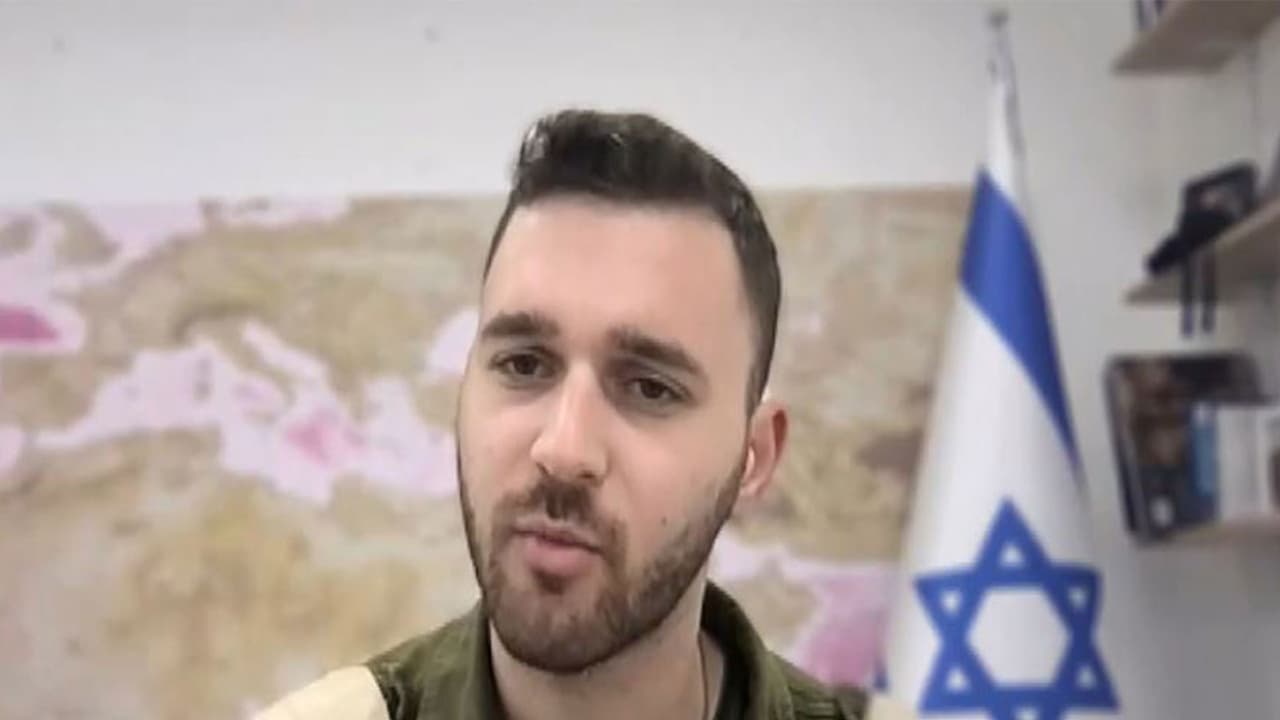
IDF spokesperson Lt. Ben Cohen described Hezbollah as an ‘Iranian terrorist proxy’ and stated that all options are being considered to stop the militant group, including a potential ground invasion in South Lebanon to protect Israeli civilians.
Israeli Defence Forces (IDF) spokesperson Lieutenant Ben Cohen on Saturday described Hezbollah as an “Iranian terrorist proxy”, and said that all cards were on the table to stop the Lebanese militant group from moving forward with their “terrorist agenda”.
When asked about whether Israel plans to launch a ground invasion in South Lebanon, Lt Cohen told ANI that the current security situation must be understood in the context of past events. He recalled Hezbollah joining Hamas in an attack against Israel on October 8, 2023.
Understanding the Security Situation
“To understand the situation in Lebanon, you have to understand the history. And the history in this regard starts – we’re talking about October 8th, 2023. Then, too, a different terrorist organisation, Hamas, launches an attack against Israel, and Hezbollah decides to join. On October 8, 2023, when Hezbollah decided to join, Israel made the difficult decision to evacuate over 60,000 civilians in the north and remove them from their homes, you know, and it took a very long time until they could come back. We understand that we can’t live in a reality where terrorist organisations are threatening our civilians inside their homes,” he said.
Israel’s Military Stance
In order to push back the Hezbollah, Lt Cohen said that Israel has taken a “forward defensive posture” with its forces moving hundreds of meters from the border with Lebanon to protect Israeli civilians so that Hezbollah can’t fire those rockets.
“What we do over the first week of this war is we establish what we call a forward defensive posture. It’s not a ground invasion, all right? It’s Israeli forces that have moved hundreds of meters from the border with Lebanon in order to protect Israeli civilians so that those Hezbollah terrorists can’t fire those rockets, those anti-tank missiles at Israeli civilians, and so that we can protect ourselves wherever we need to. As it goes for future operational plans, I obviously won’t go into any specifics, but you know, all cards are on the table. We understand that we can’t allow for Hezbollah to be with weapons right on our borders and to continue to move forward with their terrorist agenda,” he said.
Hezbollah as an ‘Iranian Proxy’
Lt Cohen called Hezbollah a terrorist proxy of Iran and added, “I want to make the story of Hezbollah very clear. All right, you have an Iranian terrorist proxy. Over the last year, Iran has funded almost a billion dollars into the Hezbollah terrorist organisation. We didn’t fire at them first, you know. We opened an operation against Iran, and then they started firing hundreds of rockets and UAVs at Israeli civilians.”
Tensions Escalate with Strikes and Threats
His remarks come amid the developing security situation in West Asia and the Gulf. Meanwhile, on Saturday, the Israeli Air Force (IAF) said that under the direction of military intelligence earlier this week, it struck and eliminated Sham Abd al-Karim Yassin, a key commander in Hezbollah’s communications unit and the Palestine Corps of Iran’s Quds Force.
As this happened, Hezbollah leader Naim Qassem asserted that his organisation was prepared for a “long confrontation” with Israel, as Israeli authorities warned that Lebanon would face an “increasing price” through extensive damage to its national infrastructure, according to a report by The Times of Israel.
The conflict intensified on Friday following Hezbollah’s decision to target Israel in retaliation for the killing of the Iranian former supreme leader in joint strikes. In his second televised address since the hostilities began, Qassem described the situation as an “existential battle, not a limited or simple battle,” adding that his forces have “prepared ourselves for a long confrontation” and that the Israeli military “will be surprised on the battlefield”.
Israel Katz, the defence minister of Israel, issued a stern warning following a military assessment, stating that the Lebanese government would be held accountable for failing to disarm the group. According to The Times of Israel, Katz warned that the state would “pay increasing prices through damage to infrastructure and the loss of territory” until military commitments were fulfilled. Military data cited by The Times of Israel suggests that the IDF has conducted over 1,100 strikes in Lebanon, targeting command centres and “rocket and missile launchers”.
(Except for the headline, this story has not been edited by Asianet Newsable English staff and is published from a syndicated feed.)