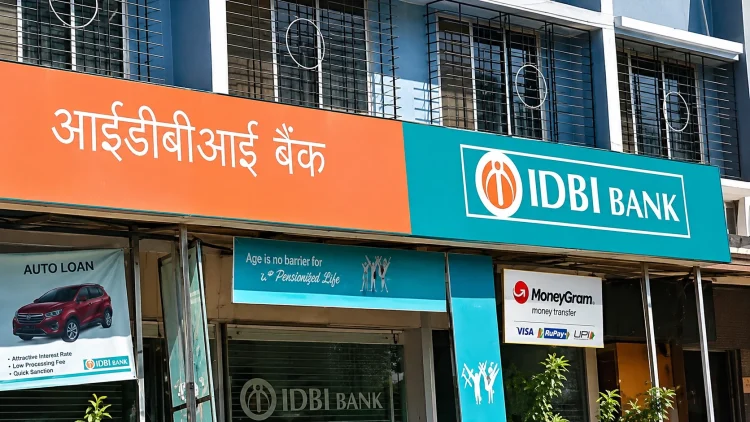
IDBI Bank Stake Sale has entered a crucial phase after the government decided to give interested bidders another opportunity to improve their offers rather than cancel the ongoing process. DIPAM Secretary Arunish Chawla has indicated that finding another buyer willing to pay around Rs 52,000 crore for the combined government and Life Insurance Corporation (LIC) stake would be extremely difficult. The government therefore chose to continue negotiations with existing bidders, aiming to maximise the value of the transaction. The proposed sale is also significant for India’s banking sector, as it could become one of the country’s largest foreign investments in a bank.
Why did the government offer bidders another chance?
In an interview with CNBC-TV18, Chawla explained that the government had considered three possible approaches after receiving the initial offers. It could have scrapped the bidding process, accepted the offer already on the table or invited participating companies to submit improved proposals.
The government ultimately selected the third option. According to Chawla, attracting an entirely new buyer prepared to commit approximately Rs 52,000 crore for the combined stake held by the government and LIC was highly unlikely. He described the possibility of finding another such buyer as very low.
Allowing existing bidders to revise their proposals was considered a more practical way to improve the financial outcome without restarting the entire process. The decision reflects the government’s intention to secure a better valuation while keeping the strategic sale on track.
How the second round of bidding was different
Chawla pointed out that the second round was not identical to the original bidding exercise. By that stage, participating companies already had an indication of the value offered during the first round. This meant they could reconsider their proposals with a clearer understanding of the competition and the government’s expectations.
He also explained that government disinvestment transactions do not always follow the same rules as conventional auctions. An offer below a reserve price is not necessarily rejected automatically in every case.
To illustrate this, he referred to the privatisation of Paradeep Phosphates, where an offer reportedly 15% below the reserve price was accepted. In the case of IDBI Bank, however, the revised proposal was said to be higher than the assessment of the bank’s fair value.
Chawla said the Core Group of Secretaries on Disinvestment (CGD) unanimously considered the improved offer appropriate. This assessment supported the decision to continue with the transaction rather than abandon it.
Tax indemnity helped increase the bid value
Another important factor in the improved financial proposal was the government’s decision to provide tax indemnity of up to Rs 627 crore to bidders. According to the DIPAM Secretary, this measure contributed to an increase of Rs 3,917 crore in the bid value.
The government evaluated the decision by considering the overall financial benefit that the transaction could generate for both the Centre and LIC. Chawla clarified that the reserve price for IDBI Bank was neither changed nor recalculated during this process.
The tax-related protection was therefore part of the broader effort to improve the terms of the transaction while keeping the bank’s valuation framework intact.
Fairfax Financial deal and expected completion timeline
On October 14, the government approved the proposed sale of a 60.72% stake in IDBI Bank to Canada’s Fairfax Financial Holdings for approximately Rs 53,000 crore. The proposed transaction includes the combined shareholding of the central government and LIC.
If completed, the deal would represent a landmark foreign investment in an Indian bank. It would also mark an important step in the government’s wider efforts to reduce its ownership in public-sector financial institutions and advance banking sector privatisation.
The government is targeting completion by the end of the current financial year. However, the transaction still needs clearances from the relevant regulatory authorities, including the Reserve Bank of India (RBI).
The final timeline will depend on the completion of these approvals and other required formalities. Until then, the proposed sale remains an important development to watch in India’s financial and banking sector.