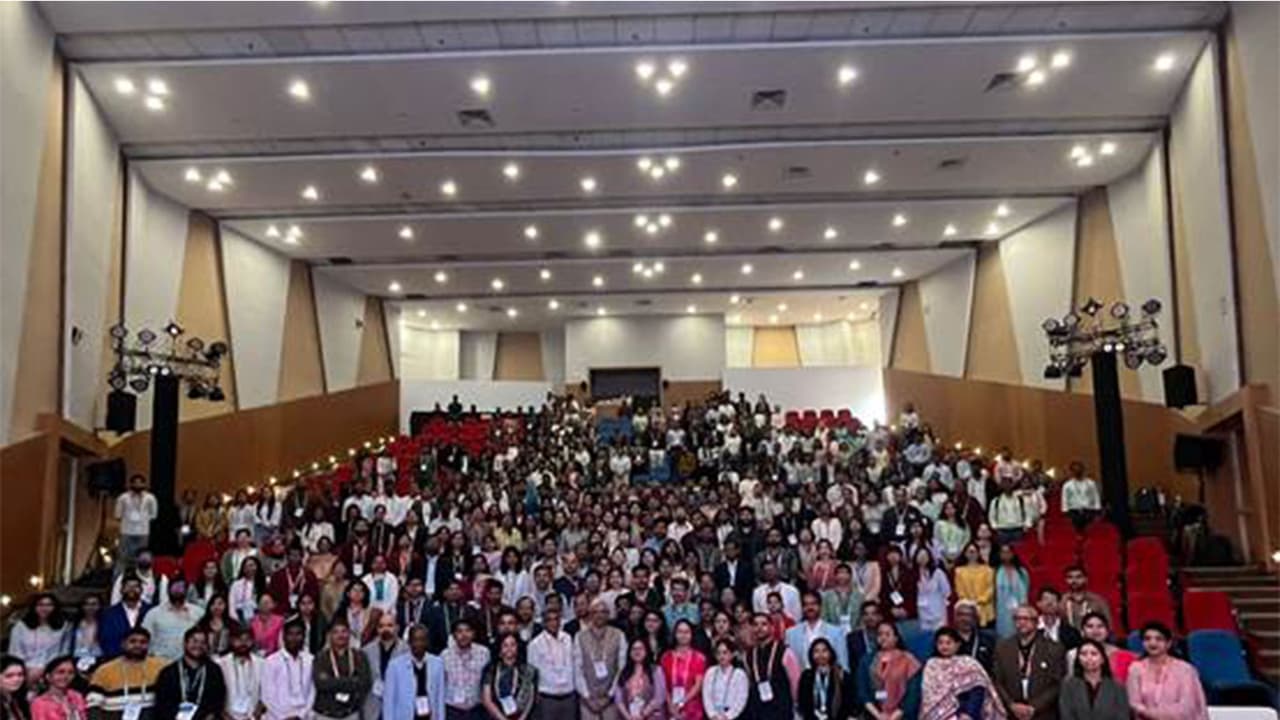
ICMR held SANVAD 2026 in New Delhi for 400 doctoral scholars, aiming to boost research quality. The three-day event included sessions with experts on societal impact, policy linkage, and career development for young researchers.
The Indian Council of Medical Research (ICMR), under the Department of Health Research (DHR), Ministry of Health and Family Welfare, organized SANVAD 2026 (Scholars’ Assembly for Next-gen Ventures to Advance their Development) from 19th to 21st February 2026 at the ICMR-National Institute of Malaria Research (NIMR), New Delhi.
SANVAD is an annual ICMR initiative conceptualised as a rotating national platform, hosted each year by different ICMR institutes to promote sustained engagement with doctoral scholars across the network. By decentralising its organisation, the initiative strengthens institutional collaboration and expands exposure to diverse research ecosystems. Following the successful conduct of the First edition at ICMR-National Institute of Malaria Research, the 2027 edition of SANVAD will be hosted by the ICMR-National Institute of Nutrition, Hyderabad.
SANVAD is designed to improve the quality of doctoral research studies, motivate young researchers toward excellence, and strengthen India’s national knowledge ecosystem. The platform enhances doctoral rigour, research capacity, innovation orientation, and leadership readiness among ICMR PhD scholars, while also creating structured opportunities for networking, collaboration, and meaningful interaction with leading experts from academia, industry, and policy.
Key Sessions and Expert Insights
SANVAD 2026, a three-day programme, brought together around 400 doctoral scholars along with senior scientists, policymakers, academicians, and research leaders from across the country. The event featured distinguished and eminent speakers. Padma Shri Prof Anil Kumar Gupta, founder of Honey Bee Network, SRISTI, GIAN and NIF, encouraged scholars to pursue research rooted in societal needs and grassroots innovation.
In the session on Innovation in Research: Bridging Societal Needs and Industry Readiness, Dr Vishwajeet Kumar, Founder, Community Empowerment Lab, emphasised translating knowledge into tangible community impact. In a compelling session on clinical research, Padma Shri Prof Kameshwar Prasad highlighted the importance of bridging bench and bedside to achieve meaningful health outcomes.
Health Communication for Policy and Public Trust
A major highlight was the technical session on Health Communication – Translating Science for Impact. Discussions underscored the critical role of strategic communication in ensuring that research informs policy, builds public trust, and reaches communities effectively.
The session emphasised that impactful research does not end with publication; it must be communicated strategically, clearly, and persuasively to influence policy, practice, and societal change.
Dialogue with ICMR Leadership
The final day featured a highly anticipated Town Hall with Dr Rajiv Bahl, Secretary, Department of Health Research and Director General, ICMR. The interactive dialogue addressed science-policy linkages, research funding landscapes, and emerging opportunities for young investigators. He emphasised, “I urge scholars to conduct serious and meaningful research and avoid what I call ‘tick-box research.’ I encourage you to go beyond the minimum PhD requirements and voluntarily contribute to writing high-quality research papers. There is a distinction between pressure and stress, and researchers must learn to manage both constructively.”
Perspectives from Industry and Academia
Industry and academic leaders, including Dr Keyur Parekh, Dr Kavita Singh, Prof Manoj Dhar, and Dr Neeru Saini, provided valuable insights into global health research, pharmaceutical innovation, interdisciplinary collaboration, and diverse career pathways.
Practical Training and Career Guidance
Technical sessions on Systematic Reviews and Evidence Synthesis, national research resources (NAMS, ONOS, INFLIBNET), and “What After PhD? Career Pathways and Choices” equipped scholars with practical tools to navigate academic, industry, and policy careers. These sessions also strengthened awareness and utilisation of national research support systems, fostering informed and future-ready researchers.
Showcasing Doctoral Research and Excellence
Scholars participated with remarkable enthusiasm and intellectual vigour in the “Mindstorm@ICMR” Research Quiz 2026, along with oral and poster presentation sessions. These platforms not only showcased the depth and diversity of doctoral research across institutes but also provided opportunities for peer learning, expert feedback, and interdisciplinary collaboration, transforming the conclave into a vibrant celebration of scientific inquiry and academic excellence.
In his concluding remarks, Dr Anup Anvikar, Director, ICMR-NIMR, lauded the scholars for their dedication and scholarly excellence. He stated, “I see SANVAD 2026 as a distinctive and visionary platform that fosters meaningful research networking, interdisciplinary dialogue, and collaborative growth among PhD scholars. I hope similar initiatives will be embraced and institutionalised across other ICMR institutes in the years ahead, strengthening the national research ecosystem and nurturing the next generation of scientific leaders.”
The conclave concluded with a Valedictory Session and Awards Ceremony recognising outstanding research presentations and scholarly contributions. (ANI)
(Except for the headline, this story has not been edited by Asianet Newsable English staff and is published from a syndicated feed.)