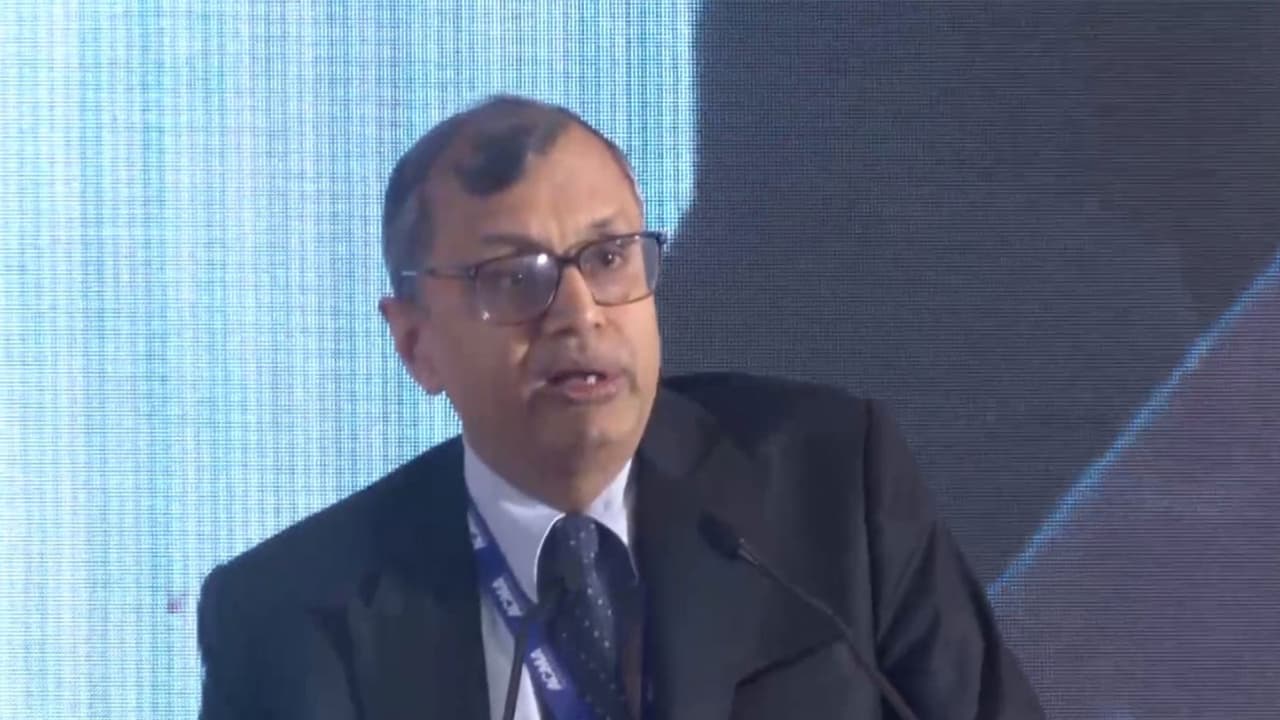
Hyundai India CEO Tarun Garg said supply chain disruptions taught a painful lesson: ‘efficiency without resilience is fragility.’ He urged the auto industry to adopt ‘just-in-case’ strategies, focusing on localisation and diversified sourcing.
A Call for Resilient Supply Chains
Semiconductor shortages and logistics disruption have exposed structural weaknesses in the automotive industry’s global supply chains, highlighting the need to move beyond efficiency-driven models, Hyundai Motor India Managing Director and CEO Tarun Garg said today.
“Geopolitical shifts, semiconductor shortages and logistics disruptions taught us a painful lesson; efficiency without resilience is fragility,” Garg said while addressing the 60th ACMA Excellence Awards and 11th Technology Summit 2026. “For 30 years, we vouched for just-in-time. We optimised the last penny of efficiency and did a fantastic job. But the world changed.”
He said the industry must transition towards “just-in-case and just-in-future” strategies to build resilience. “Being a resilient system means we cannot rely on a single geography for critical minerals, components or electronics,” he said, calling for deeper localisation and diversified sourcing.
Pivoting to Software-Defined Mobility
India is currently the world’s third-largest auto market, but Garg said the focus should now shift to leadership in next-generation mobility. “The question is not just how we stay at number three, but how we lead the world in what comes next,” he said.
The industry is moving rapidly from mechanical engineering to software-driven mobility, he added. “For decades, we defined ourselves by gears and pistons. Today, we are fast becoming a software auto industry,” Garg said. “We are moving towards software-defined vehicles where a car continues to improve even after it leaves the showroom through over-the-air updates.”
Evolving Roles: From Suppliers to Technology Partners
He urged suppliers to evolve beyond traditional roles. “If your roadmap does not include electronics, sensors and system integration, you have a challenge. Industry may outpace you,” Garg said. “Suppliers should migrate from being part suppliers to technology partners who can co-design the future with OEMs.”
As the first Indian MD and CEO of Hyundai Motor India, Garg said increasing localisation is a key priority. The company works with more than 1,200 Tier 1 and Tier 2 suppliers and has invested over Rs 4,500 crore in its Pune ecosystem. “To win in India, we must be in India,” he said.
Strengthening the Ecosystem with Government Initiatives
Garg also highlighted the Union Budget 2026-27’s commitment to build rare earth corridors across Odisha, Kerala, Andhra Pradesh and Tamil Nadu. The integrated mining, processing and advanced manufacturing clusters are backed by a Rs 7,280 crore permanent magnet manufacturing scheme.
“These corridors mark a structural shift away from dependence on external supply chains,” he said. The Budget also includes new high-speed rail corridors, 20 national waterways and expanded multi-modal freight networks aimed at lowering logistics costs and strengthening competitiveness.
Leveraging Global Trade and Technology
On trade, Garg cited India’s newly concluded Free Trade Agreement with the European Union, which he described as the largest FTA either side has signed, creating a free trade zone of nearly two billion people. He also referred to US trade developments, including tariff changes from 50 per cent to 18 per cent, as opportunities for Indian exporters.
“Let us stop viewing technology as a cost and start seeing it as a currency,” Garg said. “Let us make in India, make for the world, and become the global gold standard of mobility.” (ANI)
(Except for the headline, this story has not been edited by Asianet Newsable English staff and is published from a syndicated feed.)