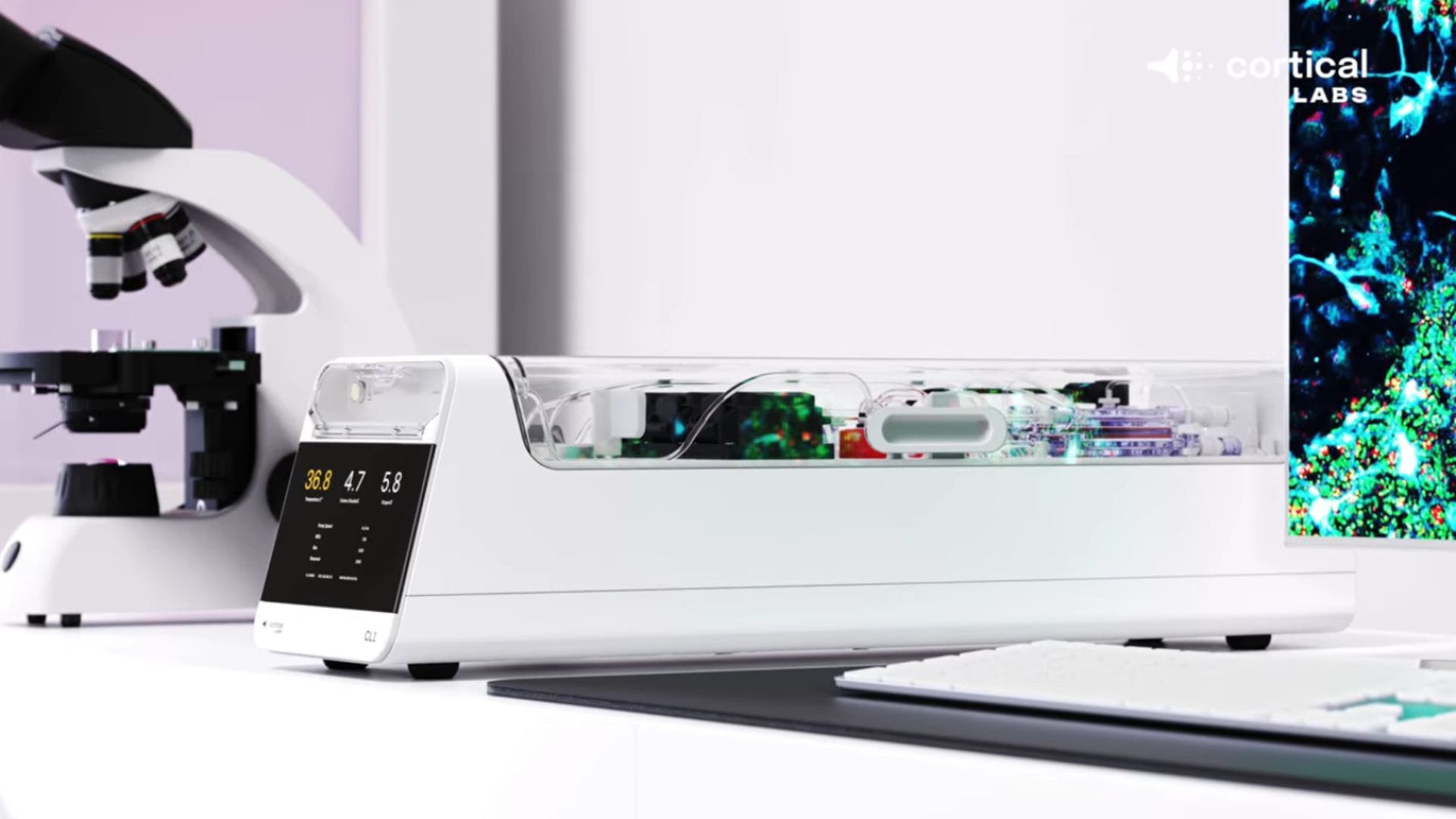
New Delhi: Back in 2022, the Australian biotechnology company Cortical Labs had demonstrated human brain cells on a microchip playing Pong. They were bombarded with requests to make the same tech run Doom, which has successfully been run on all sorts of devices including a smart refrigerator, a car GPS, a vape pen, a voting machine and a digital piano. Now, Cortical Labs has demonstrated Doom running on its CL1 biological computer, the first commercial device of its kind introduced last year. The processor is a microchip packed with around 200,000 living human neurons, called a multi-electrode array.
Pong was a simpler game to control, which was a simple 2D interface, with the movement being along a single axis. The input was a simple direction slider. Doom is a 3D game that requires multiple complex interactions. The Cortical Labs API allows users to interact with the neurons in the device using simple Python scripts. The video feed from the game was mapped to patterns of electrical stimulation. When say a demon appears on the screen, it triggers a neuron that recognises the demon, which is then interpreted as a motor command, that causes the Doom guy to shoot. Similarly, based on the patterns of the video feed, the Doom guy can navigate and move around the map. The code for the project has been hosted on GitHub.
Benefits of the Tech
The CL1 biological computer plays Doom much like a beginner. Using lab-grown human neurons on silicon chips has a number of benefits, including extremely low energy use, orders of magnitude less than conventional AI. The tech also outpaces silicon AI in speed and efficiency for certain tasks, and can learn rapidly with minimal data and training. These are flexible systems, that offer sustainable, dynamic computing beyond silicon, that uses fixed logic.