When you’re planning a trip, study, or move to New Zealand, visa timing matters just as much as eligibility. Immigration New Zealand now publishes regular processing time updates, and the numbers give a fairly clear picture of what travellers can expect right now.
Below is a simplified breakdown of the latest visa wait times, based on applications processed over the last four weeks. These timelines are updated weekly by Immigration New Zealand (INZ).
How New Zealand Visa Processing Times Work
Before diving into the numbers, it helps to understand two terms used across all visa types:
- Average wait time: How long it took to process 50 per cent of applications.
- Most completed within: How long it took to process 80 per cent of applications.
All timelines are counted in working days. Weekends and public holidays do not count.
If your application is complete and well-documented, it usually moves closer to the average time.
Visitor Visas and NZeTA Basics
Standard visitor visas take about 1.5 weeks on average in half of the cases, with most completed in 3.5 weeks. Partner visas for New Zealanders run longer, at 6 weeks on average and 10.5 weeks for 80%.
Business visitor visas move fast: 4 days average, up to 2 weeks max. NZeTA, that quick online approval for short stays, averages 24 hours, but plan for 3 days.
These count only working days, skipping weekends and holidays. Submit all docs upfront to hit the shorter end.
| Visa Type | Average Wait (50%) | Most Done Within (80%) |
|---|---|---|
| Visitor Visa | 1.5 weeks | 3.5 weeks |
| Partner Visitor | 6 weeks | 10.5 weeks |
| Business Visitor | 4 days | 2 weeks |
| NZeTA | 24 hours | 3 days |
Work Visa Timelines
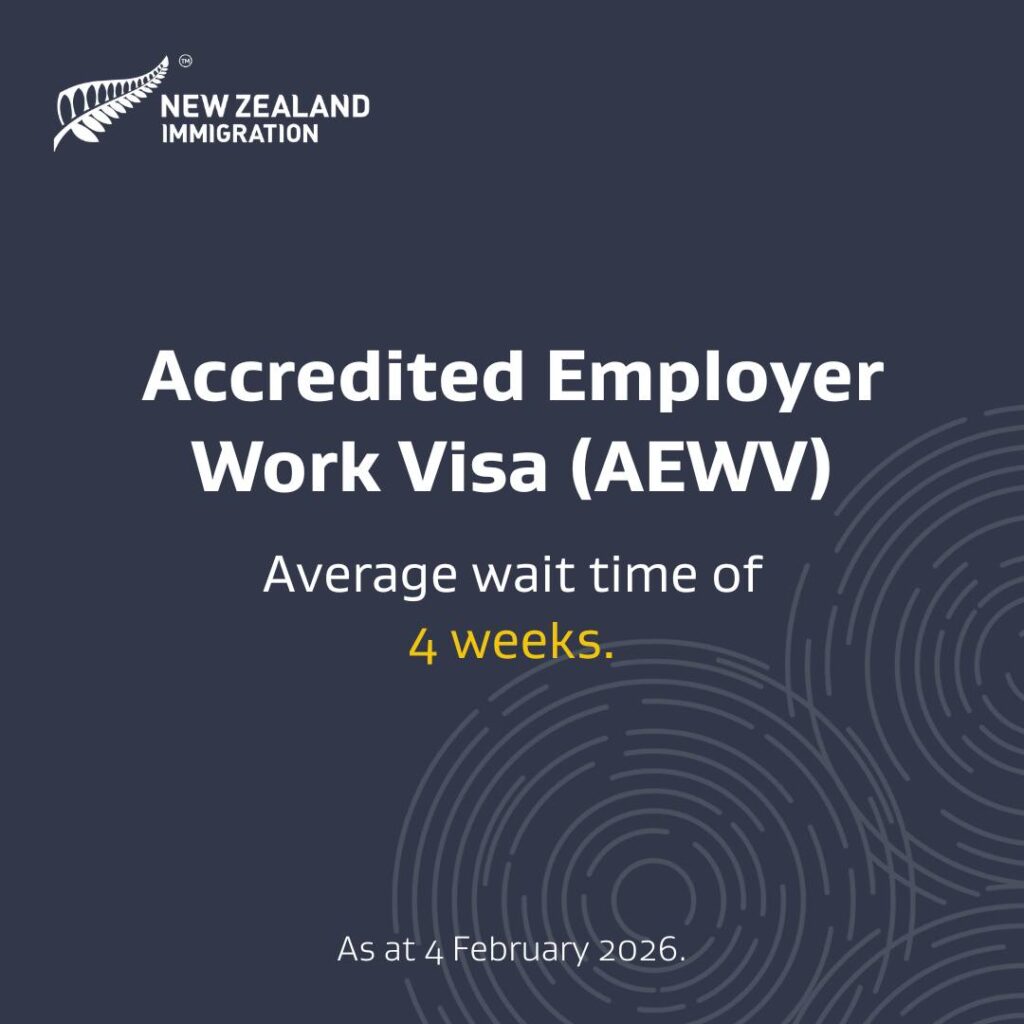
Accredited Employer Work Visa (AEWV) sits at 4 weeks average, 7 weeks for most. Post-study work visas go quicker at 3-4 weeks.
Working holiday visas? Just 2 days average. Partners of workers see 5 weeks, up to 6 weeks.
Deeper dive on AEWV by skill level: Green List roles average 3 weeks, the health sector even faster at 2.5 weeks. Job checks for top skills (ANZSCO level 1) take 2 days.
| Category | Average Wait | Most Done Within |
|---|---|---|
| AEWV (all) | 4 weeks | 7 weeks |
| AEWV Green List | 3 weeks | 6 weeks |
| Job Check (all) | 3 days | 2.5 weeks |
| Health Job Check | 2 days | 1.5 weeks |
Hospitality and retail lag a bit at 1 week for checks, and construction holds steady at 3 days.
Student Visa Updates
Student visas are at their peak in terms of busyness from October to March, so apply 3 months early. Universities average 4 weeks, schools 3 weeks, and private spots 5 weeks.
Te Pūkenga (the big skills institute) takes 4.5 weeks on average, up to 8 weeks for most. Covers fee-paying, pathway, scholarship, and exchange types.
Full docs speed things up across the board.
| Provider | Average Wait | Most Done Within |
|---|---|---|
| Universities | 4 weeks | 6 weeks |
| Te Pūkenga | 4.5 weeks | 8 weeks |
| Private Training | 5 weeks | 8 weeks |
| Schools | 3 weeks | 4 weeks |
Resident Visa Realities
These take real time. Parent visas average 10 months, up to 13. Skilled Migrant Category? 10 weeks average, 5 months max.
Straight to Residence or Work to Residence, around 9-9.5 weeks average. Partner resident visas hit 5 months average.
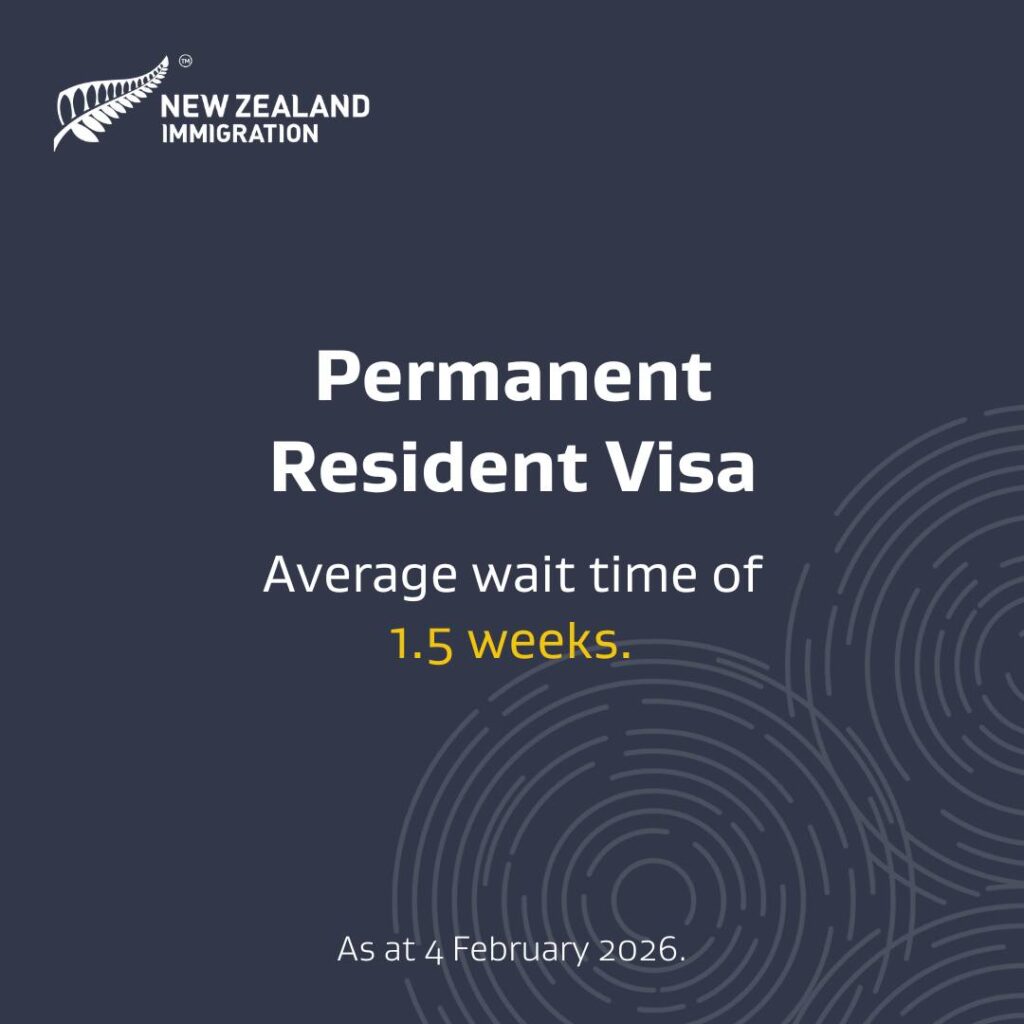
Permanent resident shifts are quick at 1.5 weeks.
| Visa Type | Average Wait | Most Done Within |
|---|---|---|
| Parent Resident | 10 months | 13 months |
| Skilled Migrant | 10 weeks | 5 months |
| Partner Resident | 5 months | 6 months |
| Permanent Resident | 1.5 weeks | 2 weeks |
Quick Tips to Avoid Delays
Complete apps process fastest; missing info means requests or rejection. Check official performance reports for trends.
Times shift weekly, so peek at the Immigration NZ site before applying. For AEWV extras like employer accreditation, that’s 3.5 days average.
What This Means for Travellers and Migrants
If timing matters, preparation is everything. Complete applications move faster. Simple cases are processed sooner. And peak seasons can add weeks, especially for students and residence visas.
The numbers above are not guarantees, but they are the clearest guide available right now. If you plan around them, you avoid surprises and reduce stress later.