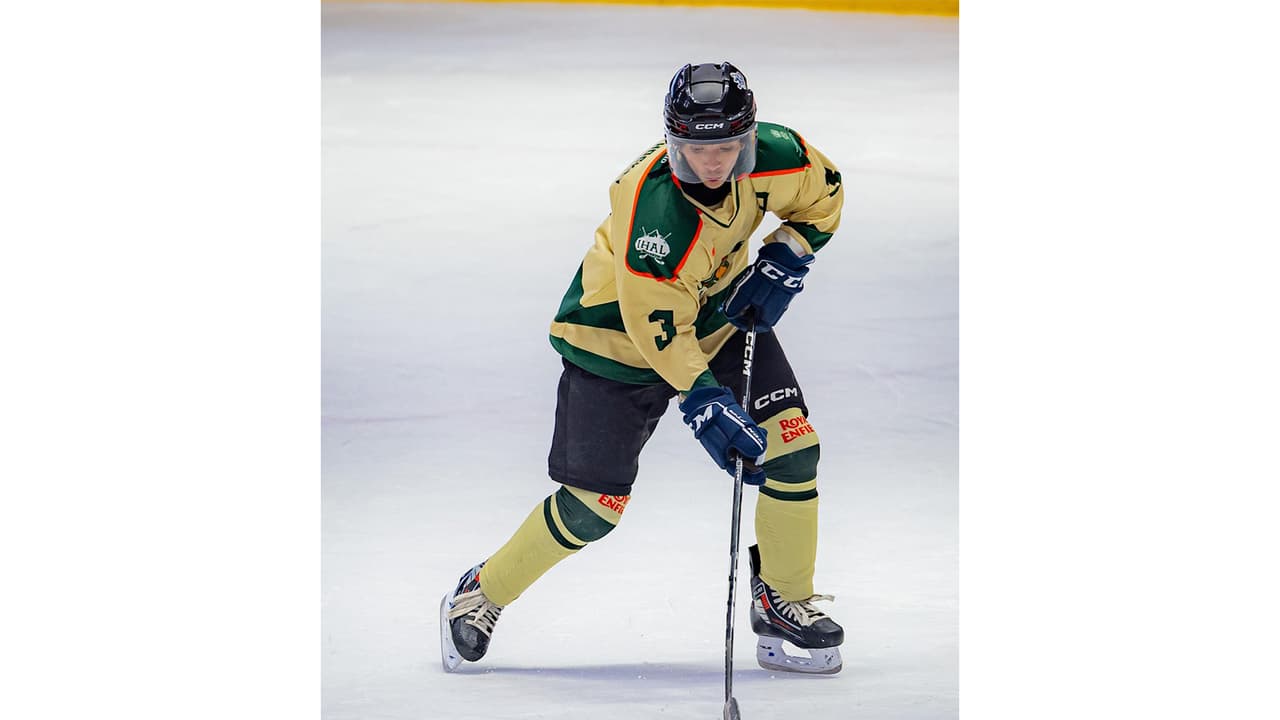
Purig Warriors’ Kacho Shamshad shares his journey in the Ladakh Ice Hockey League, from playing for fun to competitive sport. He discusses the league’s growth, community role, and how referee training has made him a more complete player.
The recently concluded Ice Hockey League Season 3 brought together teams from across Ladakh for weeks of closely contested ice hockey. In conversation with Purig Warriors’ Kacho Shamshad, he speaks about the evolving competitive landscape of the sport in the region, the role of community support, and how the League continues to bring new players into the game, according to a release.
A Journey from Ponds to Professionalism
Speaking about how his journey in ice hockey began and what kept him committed to the sport, Kacho said, “When I first started playing ice hockey, it was just for fun with friends on frozen ponds back home. At that time, it was not something serious; we just enjoyed being out on the ice and learning together. Over time, as more structured games started happening through the League and other programmes, I began to realise that I could play at a higher level. What kept me committed was the feeling of competition, scoring goals, making plays, seeing the crowd cheer, and learning from other players. It became something I looked forward to every winter.”
Reflecting on a Memorable Final
Reflecting on his goal in the finals and the emotions surrounding that moment, Kacho said, “That goal in the final was a special moment for our team and for me. It felt great to put Purig ahead early; it gave us confidence, and we believed we were in the game right from the start. The atmosphere was intense, but I just tried to stay calm and follow the play. Even though the result didn’t go our way in the end, that moment reminded me that if you get into the right position and stay focused, good things can happen. It was an emotional experience that I’ll always remember.” Purig had taken the lead through Kacho Shamshad before Humas came back and won the final.
A New Perspective: From Player to Referee
When asked about his participation in the Referee Training Programme and how it changed his understanding of the sport, Kacho said, “Being part of the Referee Training Programme was something completely new for me this season, and it opened my eyes to the game in a very different way. Before the on-ice training in New Delhi, we completed four virtual sessions with other officials, going through rules, positioning and decision-making. Then on the ice, we worked with IIHF-certified officiating instructor Peter Gebei, who taught us how to read the entire play, anticipate situations and stay composed while making decisions. That experience changed how I look at the game when I am playing. As a referee, you cannot just follow the puck; you have to understand the strategy, the flow, and how tactics develop from the defensive zone to attack. When I returned to playing for Purig, I began thinking more about positioning, transitions and how small tactical mistakes can change the game. I communicate more now, discussing strategy during breaks, reminding teammates about spacing and defensive shape, and helping adjust our approach depending on how the game is moving. Participating in referee training gave me a broader understanding of the sport. I learned that it is not just about playing your role, but also about respecting structure and systems. By experiencing the sport from both sides, I’ve become a more complete player, now understanding the game’s rhythm beyond just my own role.”
The Intensity of a Single Round-Robin League
Talking about the competitive format of the League this season, Kacho said, “This season’s single-leg round-robin format made every game important because you only got one chance against each team. There was no second opportunity to correct mistakes against the same opponent. That made preparation very serious. For Purig, the qualification itself showed how tight the League was. We secured our place in the knockouts only after our last game, and the points difference between teams in the middle of the table was very small. From third to sixth, teams were separated by just a few points. That shows how competitive the season was; one win or loss could completely change the standings. Because of that intensity, we had to stay alert throughout. We studied opponents carefully, focused on small tactical details, and tried to improve after every game. Playing in such a close competition forces you to grow quickly. For me personally, it improved my composure because you learn to handle pressure knowing every game can decide your future in the League.”
Community and the Growth of Ice Hockey in Ladakh
Sharing his thoughts on the growth of ice hockey in Ladakh and the role of community in nurturing the sport, Kacho said, “Ice hockey in Ladakh has always been about community. Most of us started because we saw seniors from our village playing on frozen ponds. There wasn’t much structure in the beginning. People shared equipment, helped prepare the ice, and learned by watching each other. That spirit is still there. What has changed now is the scale and organisation. Through the Learn to Play programmes supported by Royal Enfield Social Mission, more than 1000 children across 24 villages are being introduced to the sport in a structured way. When you see that many young kids are learning basic skating and stick skills properly, you realise the foundation is becoming stronger. The Ice Hockey League then gives those players something to aim for. It brings regions together every winter, and players do not just compete; they build connections and mutual respect. For someone like me, being both a player and part of officiating makes me feel responsible from two sides. As a referee, I focus on fairness and maintaining discipline. As a player, I carry that understanding into strategy and communication with my team. In our region, everyone plays multiple roles, including players, referees, coaches and families. That shared responsibility is what keeps ice hockey growing here.”
Future Aspirations for Player and Sport
Speaking about his personal goals and the future of the sport in the region, Kacho said, “I want to keep improving as a player and continue contributing to Purig Warriors and to the Kargil region, especially for young players who look up to us. At the same time, I want to grow in officiating as well, because understanding the rules and structure of the game from that side has made me more disciplined and aware on the ice. For our region, structured competitions every winter are very important. When players know there will be organised games with clear formats and proper officiating, they prepare differently. They take fitness, tactics and teamwork more seriously. If this consistency continues, I believe players from Kargil and other parts of Ladakh will keep improving year after year and compete at even higher levels.” (ANI)
(Except for the headline, this story has not been edited by Asianet Newsable English staff and is published from a syndicated feed.)