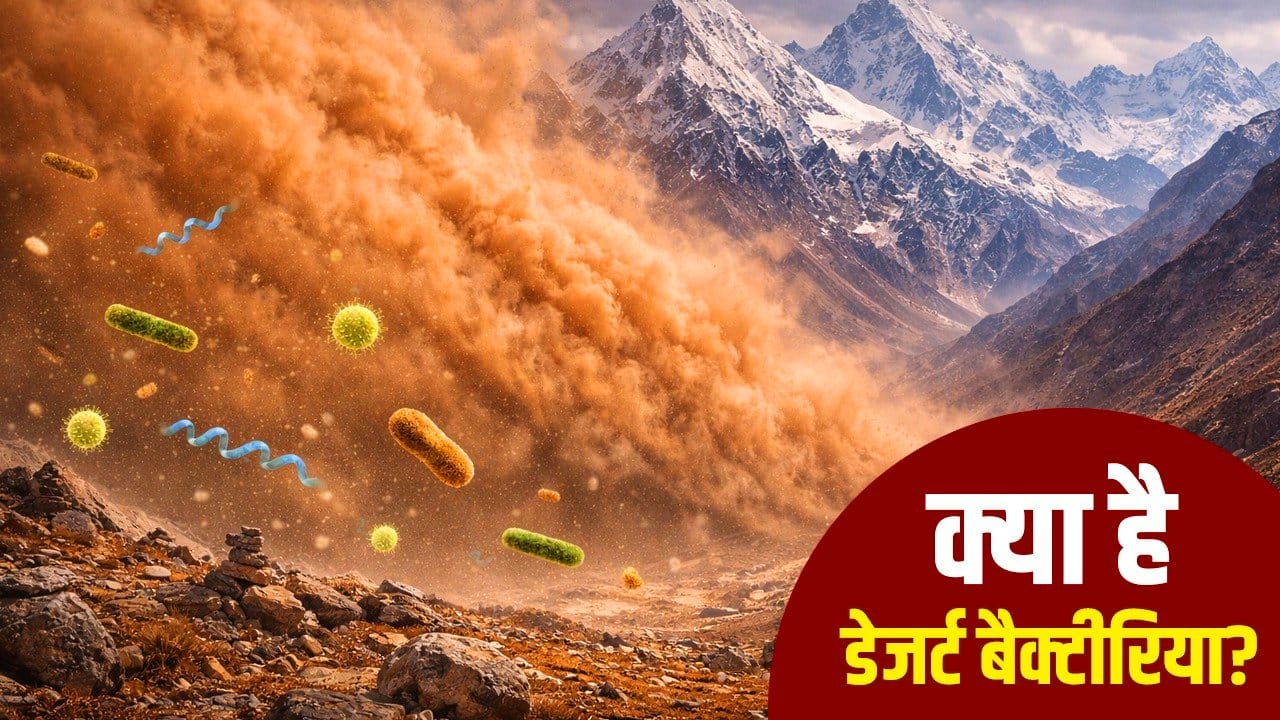
The study shows that mountain air is also being affected by dust storms that blow far away from the Himalayas.
The bacteria that cause respiratory and skin diseases have now reached the Himalayas. This has been revealed in recent research. This research has been done by the Bose Institute of Kolkata under the Department of Science and Technology of the Government of India. In the research, the researchers claim that they studied the dust storms arising in the dry areas of Western India for 2 years. Surprising things came to light in the study.
According to research, the dust storms rising from Western India pass through the Ganga plains and stop in the Himalayan hills. These storms bring bacteria with them. These are called desert bacteria.
How much danger?
Researchers say, the environment of the Himalayan hills is often considered favorable for health. During the research, researchers found that due to cold climate and low oxygen levels, the level of sensitivity is already high in the population living in hilly areas. In such a situation, these bacteria can increase the risk of diseases.

Desert bacteria.
This research was done to find out whether airborne bacteria can cause respiratory diseases in the population living in the Himalayas. Till now there has been limited evidence of this, so it is important to find out. Recent research has alerted.
This is the first such study of its kind. Research published in the journal ‘Science of the Total Environment’ says, the reach of dusty air here shows how desert bacteria are showing their impact up to the Himalayas. How the scope of their reach is increasing. This study serves as an alert for areas which have long been considered clean from climate point of view. This is like an alarm bell.
Bacteria reached the Himalayas.
Research alerts
The study shows that mountain air is also being affected by dust storms that blow far away from the Himalayas. Due to this, diseases may increase in these areas. Desert bacteria is a bacteria that affects food items. Like- more sweet things, custard, cream, ice cream. Due to their access to food, it easily reaches humans.
Some specific types of bacteria fall into this category. Like- Listeria monocytogenes. This is a bacteria that is known to survive easily in cold places. Apart from this, Bacillus cereus, Staphylococcus and Enterococcus. The special thing is that these bacteria cause serious infections in humans. Those people who are most at risk are those whose ability to fight diseases, i.e. immunity, is already very low.
In this way the study shows how even the Himalayas are no longer completely safe. The effect of storms in dry areas is also affecting the Himalayas.
Also read: Why was Taimur, who spread dead bodies in Delhi, afraid of the prophecy of a Hindu saint? Had to leave India