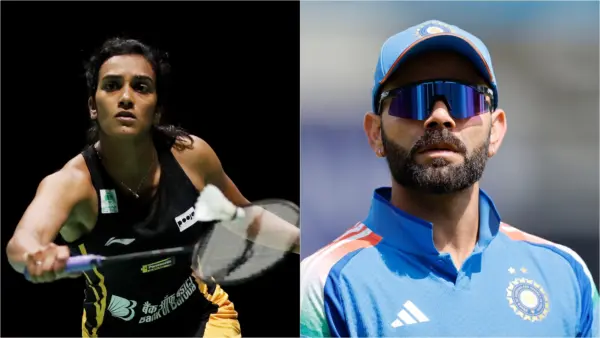
PV Sindhu once cautiously asked Virat Kohli how he dealt with the interminable wait for an elusive century. The cricket star told her he needed to rediscover the joy of scoring runs.
Venkata Datta Sai, Sindhu’s husband, listening in, had noted the import of those words.
During a consultation with Dr Dinshaw Pardiwala a few months later, after snapping a toe ligament, Sindhu was put on a three-month complete rest. But India’s top shuttler kept asking the doctor how soon she could return to the court. The wise surgeon took Datta aside and told him, “Look, there’s no comeback for three weeks. She needs a break or she will burn out.”
Datta summoned Kohli’s words, and booked the next flight to Atlanta, where his sister Amu lived, to whisk his wife away from the constant refrains of why she wasn’t winning, and why she was even playing.
“We had to rebuild her joy,” Datta recalls, “and Virat’s words kept ringing in my head. At Atlanta’s Exos Sports Performance facility, she trained with three excellent trainers Wayne, Tim and Rayan. My sister would drive her to the facility everyday for three weeks for rehab and strengthening. We rekindled the love surrounded by family where she wasn’t a star, just a regular person.”
Datta insists the bedrock of Sindhu’s resurgence is ‘stability’, a word he uses often. It’s why 13 members of her support staff, each a specialist, had tears in their eyes when she won the Japan Open and flashed a wide smile on the podium.
For Datta, who Sindhu credited for rebuilding her team, every improvement is measured in numbers. A big believer in data analytics, the World No.7’s support team is steeped in sports science. South African Wayne Lombard was brought in before the Paris Olympics, to devise a programme that helps prepare her for the challenges of being a 30+ athlete.
Coach Irwansyah was a critical addition, but Team Sindhu was clear she would need the backing of cutting edge science if she had to make good her 3.0 return.
“After the Paris Olympics, we pulled out data that revealed two things. The attacking mindset was down. And she was needing the second, third or fourth attack in a rally to get points against top players. So the chances of errors increased. And while she used to make two line judgments earlier, now she was taking six. It was too many. She was ‘hoping’ to get easy points,” Datta recalls.
Both pointed to low confidence in her fitness. Speed and strength needed shoring up.
The tech buff hubby deployed seven devices last April-May, tweaking Sindhu’s training and “hyper-controlling her load.” Heart rate, sleep, sleep quality, stress levels in rally – everything was monitored every single hour.
Heera Mundluru came in as the physio, Shreyasi Sanjay was on strength and conditioning duty, while nutritionist Nicol Haria monitored every morsel.
It was 230 gm chicken (protein punishment) and an ice-cream (“which Sindhu loves”) as a treat after winning the Japan Open. Reducing 3.5 kgs in her 30s had been an almighty pain, without reducing muscle mass.
“Even reducing 1 kg is tough. So we told Sindhu to not gain weight,” Datta says.
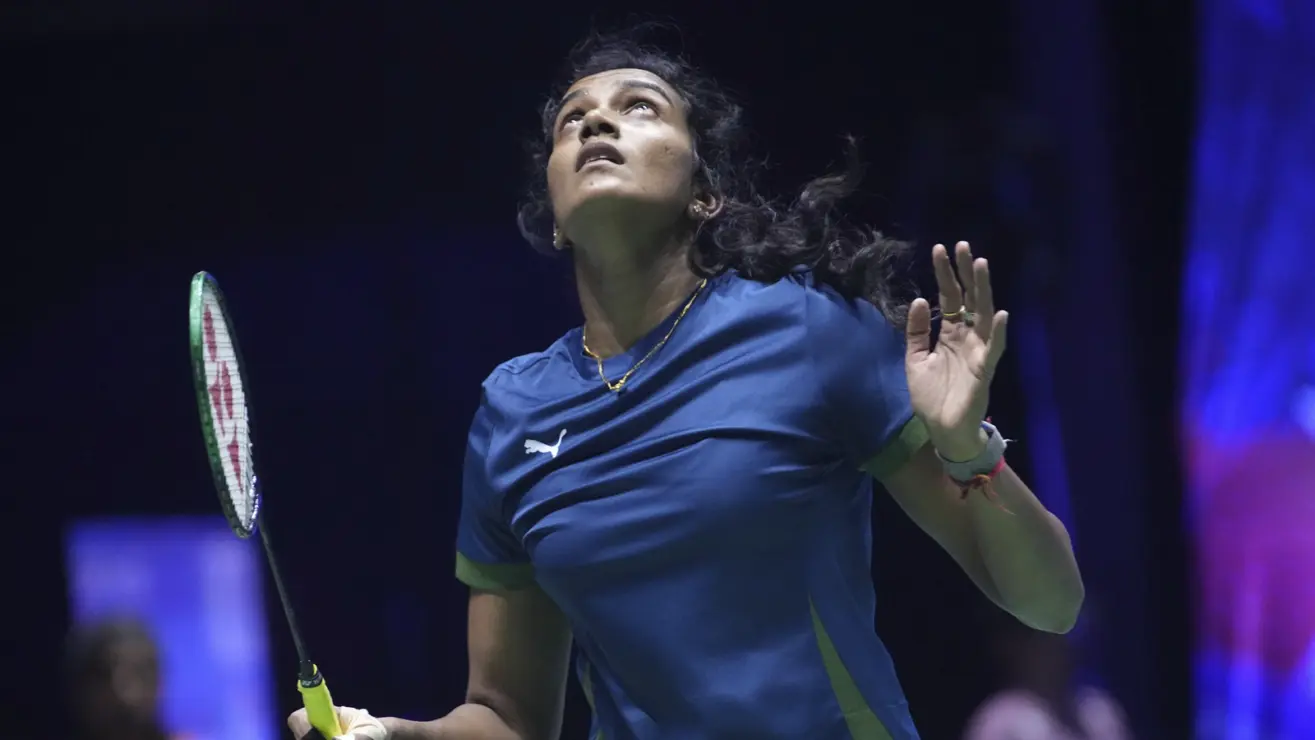 Indian shuttler PV Sindhu in action. (PHOTO: AP)
Long-term plan
On the Tour, even when she lost to Unnati Hooda at the China Open, the game reconstruction was underway. Sindhu, her husband claims, has VO2 Max numbers that belong to the top 1 percentile of female athletes in the world. Sindhu sits in red-light chambers for infrared therapy that top footballers use for recovery.
“Recently, we had her on an inversion table just to get the blood flow (draining lactic acid). She sleeps on a temperature-controlled bed.”
But it’s miles away from the traditional concepts of hard work – 5K, 10K runs. “I’d heard somewhere that a marathon runner doesn’t run marathons daily,” he says.
The Coach jigsaw
Datta insists that stability was behind zeroing in on Irwansyah as coach, and if it needed seven coaches to change, it was worth it. With some like Park Tae-Sang, Sindhu had stagnated into a defensive rut. She had stopped training at the academy where Hafiz Hashim trained. Another Korean coach could train only on wages of $12,000 + expenses a month. So the churn continued, till Irwansyah fetched up.
“Our fear was he was a men’s singles coach. It’s a different ball game, but he’s been excellent,” he says.
Sindhu’s net game has become a serious weapon. Irwansyah has brought in the very Indonesian pushes and flat exchanges, improving Sindhu’s reflexes with box-game drills so opponents don’t trap her on defence. Datta acknowledges a fact.
“Players like An Se-young grew up on defensive games. So though we want to add to Sindhu’s deceptive strokes, she’s 31, we can’t ask her to change her footwork and micro-movements she has been used to for 22 years.”
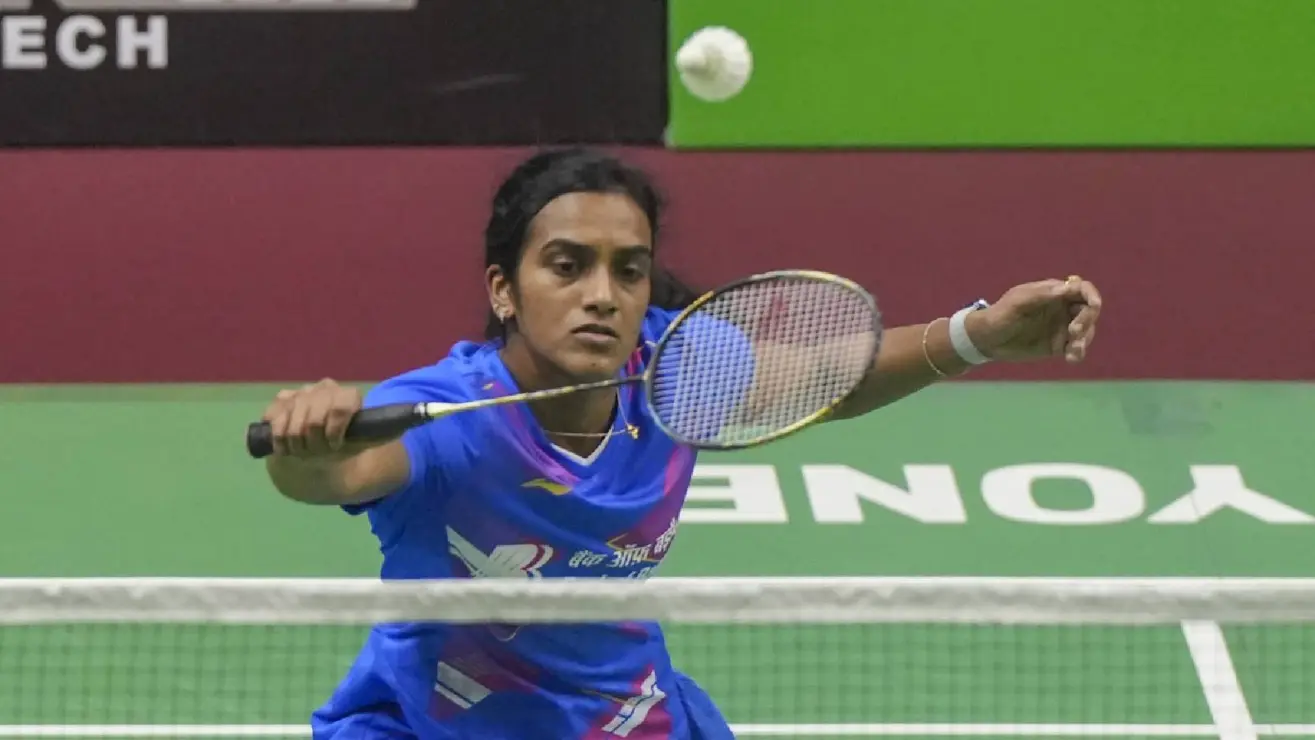 India’s PV Sindhu returns to compatriot Unnati Hooda during the women’s singles semi-final match at the Syed Modi India International 2024 badminton tournament, in Lucknow, Saturday, Nov. 30, 2024. Sindhu won the match. (PTI Photo)
Irwan has worked on deceptions to score from those feisty net drops though.
Teaching Sindhu to create openings needed a show-and-teach approach.
“It needs patience. We pulled videos to show her how she was getting restless to kill a shuttle.” Snatching at shots and overhitting were increasing the unforced errors count, such as the 19-19 pressure mistakes at the Olympics against He Bingjiao.
“Last November, she finally agreed that we were right,” he recalls. Once convinced, Irwanshyah could drill in the patience. The third and fourth attacks began to flow.
The team would kill sessions if recovery or eight-hour sleep wasn’t completed. “The rule was to not let micro-pile up happen.”
This week at the China Open Super 1000, Sindhu could run into Chen Yufei again should she win a first round against Unnati Hooda, after An Se-young’s withdrawal. The World Championships are an immediate goal, but Team Sindhu – against all proclamations of her being done – isn’t ruling out an LA28 medal.
“You can quote me on this – we will go for gold,” Datta says.
The systems are in place – to dream big. One data point, one Irwansyah game-tweak at a time.