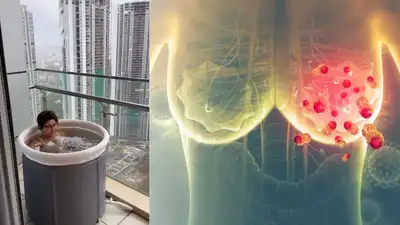
Breast cancer survivor Hina Khan has once again inspired fans with her resilience, this time by completing an astonishing 12-minute cryotherapy session using 70 kg of ice under medical supervision. Sharing the milestone on Instagram, the 38-year-old actor revealed she had surpassed her previous seven-minute record, while urging followers not to attempt it without professional guidance.
“Ice therapy = Heaven. I do it under strict doctors’ supervision; do not attempt it without professional guidance. Take it easy, go slow, and listen to your body,” she wrote on Instagram.
Hina, who was diagnosed with Stage 3 breast cancer in June 2024, also explained that she intentionally stopped at 12 minutes, emphasizing that recovery should be gradual rather than rushed. While her achievement has sparked admiration, it has also reignited an important question: Is cryotherapy actually beneficial for cancer survivors, or is it another wellness trend that requires caution?
What is cryotherapy?
Cryotherapy, also known as cold therapy or ice therapy, involves exposing the body to extremely cold temperatures through ice baths, cold packs, or specialized cryotherapy chambers. Athletes frequently use it to reduce muscle soreness, inflammation, and speed up recovery after intense physical activity.
Its growing popularity on social media has encouraged many people to try it for pain relief, improved recovery, and overall wellness. However, experts say the evidence is far more nuanced – especially for people recovering from cancer.
Can breast cancer survivors benefit from ice therapy?
According to doctors, ice therapy can be beneficial for selected breast cancer patients – but only after medical approval. It helps reduce pain, swelling, and inflammation, particularly after surgery or during physical rehabilitation. While, these benefits may support comfort during recovery, especially when used as part of a broader rehabilitation programme.
However, cryotherapy is not a universal recommendation for every cancer survivor.
When can cryotherapy be risky?
Experts warn that ice therapy may actually do more harm than good in certain situations. Patients with reduced skin sensation after surgery, poor blood circulation, nerve damage, and lymphedema should avoid cryotherapy unless specifically advised by their treating doctor. In these individuals, excessive cold exposure can increase the risk of skin injury or worsen existing complications.
Currently, there is no strong scientific evidence to support cryotherapy as a standard component of breast cancer recovery.
Recovery requires a holistic approach
Doctors agree that successful recovery after breast cancer relies on multiple evidence-based strategies, including:
- Gentle physical activity
- Proper wound care
- A balanced, nutritious diet
- Regular follow-up with the oncology team
- Prescribed rehabilitation exercises
Cryotherapy, if recommended, should be viewed as only one supportive tool – not a replacement for medical treatment or rehabilitation.
Hina’s determination has inspired many, but experts caution against copying viral wellness trends without medical advice. Her own message reinforces this point – she undertook the challenge under strict medical supervision and deliberately increased her exposure gradually.
For cancer survivors, personalised medical guidance is far more important than social media trends. Before trying ice baths or cryotherapy, consult your oncologist or rehabilitation specialist to ensure the treatment is safe for your individual condition.