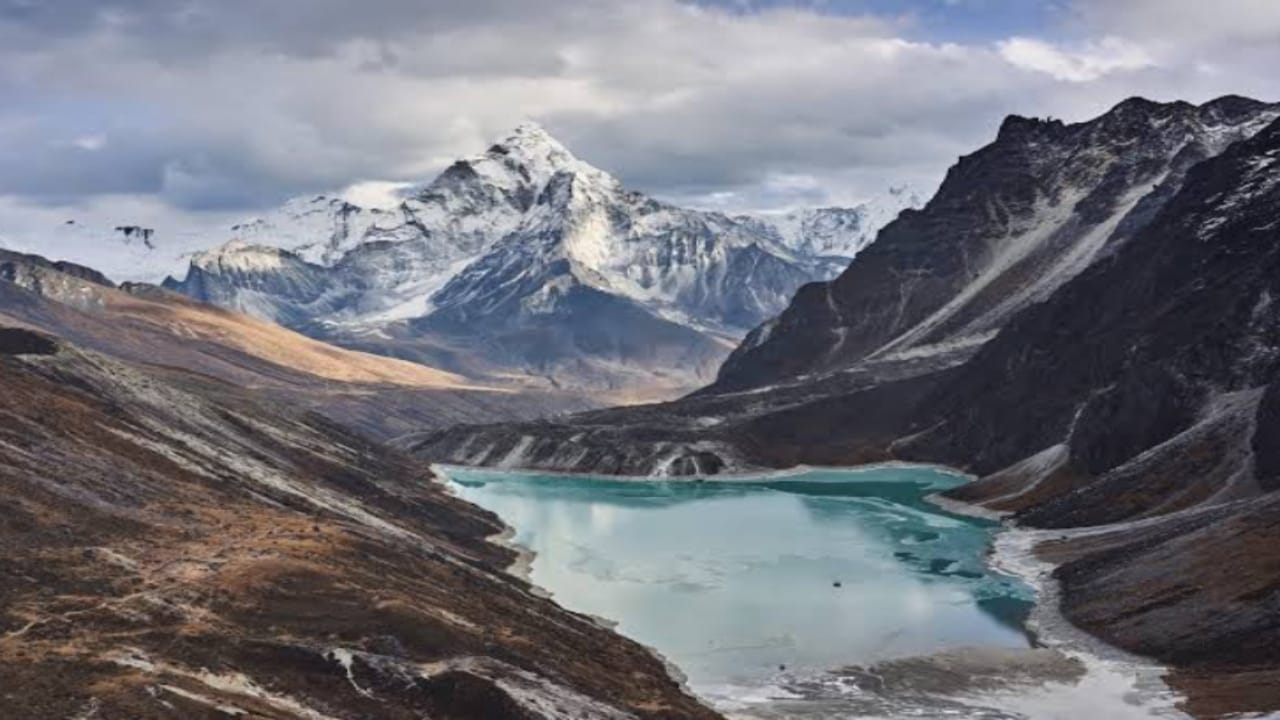
Dehradun: A new report by the National Remote Sensing Centre (NRSC) and ISRO has raised alarm about the growing danger of Himalayan glacier lakes. According to satellite data, 190 lakes are now in the “highly sensitive” danger zone, meaning they could burst at any time.
The Himalayan glaciers are melting faster due to rising temperatures and reduced snowfall. This has increased water levels in glacier lakes, making them unstable. Scientists warn that these lakes are turning into “water bombs” that could cause devastating floods in the valleys below.
Numbers that worry experts
– There are 345 glacier lakes in Uttarakhand alone.
– Across the Himalayas, more than 8,000 lakes exist, with 1,000 new lakes formed since 1990.
– Between 1984 and 2023, 2,431 large lakes were identified, and 676 of them expanded by more than 27%.
Lakes posing the biggest threat
The report highlights two lakes as extremely dangerous:
– Gephang Ghat Lake (Himachal Pradesh): Expanded by 178% in 30 years, now covering 101.3 hectares.
– Kedartal Lake (Uttarkashi, Uttarakhand): Classified as “extremely sensitive.” Its catchment connects directly to Gangotri Dham, meaning any burst could impact the shrine and downstream areas.
Risk to millions
Nearly 1 million people live within 10 kilometers of these lakes, putting them directly at risk. Experts warn that without proper monitoring, disasters similar to the 2013 Kedarnath tragedy could happen again. That flood, caused by the collapse of Chaurabari Lake, killed more than 6,000 people.
Other recent disasters include:
-2021 Chamoli disaster: A glacier break triggered floods in the Dhauliganga River, killing over 200 people.
– 2025 Dharali disaster: A flash flood in Uttarkashi highlighted how fragile the Himalayan ecosystem has become.
Basin-wise danger
– Indus Basin: 65 high-risk lakes
– Brahmaputra Basin: 58 high-risk lakes
– Ganges Basin: 07 high-risk lakes
Expert opinion
Dr. P.S. Negi of the Wadia Institute of Himalayan Geology explained that less snowfall in summer accelerates glacier melting, weakening lake walls. This increases the chance of sudden bursts.
NRSC Director Prakash Chauhan stressed the need for continuous monitoring and early warning systems. He said the government must prepare a risk profile for these lakes and install sensors to track changes in real time.
The Himalayas are changing rapidly under the impact of climate change. With hundreds of lakes expanding and 190 already in the danger zone, the threat of Glacier Lake Outburst Floods (GLOFs) is real and urgent. Scientists warn that unless strong monitoring and management systems are put in place, millions of lives in Uttarakhand, Himachal Pradesh, and other Himalayan states could face catastrophic disasters in the coming years.