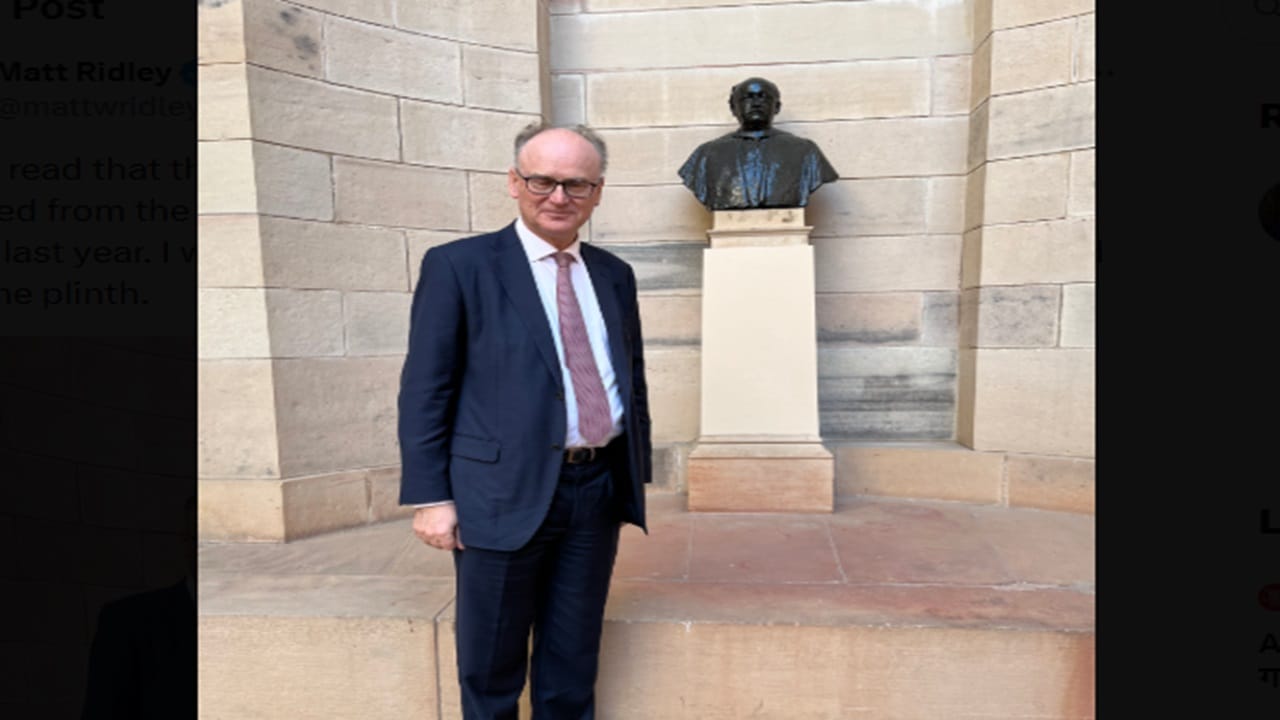
New Delhi: Matt Ridley, British author and peer, is extremely upset after a bust of his great-grandfather, the renowned architect Edwin Lutyens, was taken down from Rashtrapati Bhavan.
Taking to X, Ridley said he was “sad” that Lutyens’ bust had been removed from the presidential residence in New Delhi, which the architect designed during the British regime.
Lutyens designed a number of key buildings in the capital, including the Viceroy’s House, now Rashtrapati Bhavan, and, along with Herbert Baker, key government structures in the imperial capital.
What Ridley wrote
Sharing a photograph in which he poses with the sculpture, Ridley wrote: “Sad to read that the bust of Lutyens (my great-grandfather) is to be removed from the presidential palace he designed in Delhi. Here I am with it last year. I wondered at the time why his name had been removed from the plinth.”
Sad to read that the bust of Lutyens (my great grandfather) is to be removed from the presidential palace he designed in Delhi. Here I am with it last year. I wondered at the time why his name had been removed from the plinth. pic.twitter.com/EITcGKUAMa
— Matt Ridley (@mattwridley) February 23, 2026
After this, he responded to suggestions that he could offer to display the bust in the United Kingdom. Ridley said, “For those suggesting I offer a home for Lutyens’s bust from Delhi, I already have a copy of it. It looks down on my desk as I write this. It was sculpted by Sir William Reid-Dick.” He also pointed out, “I understand India’s wish to remove colonial statues but he was an architect, not a viceroy.”
In yet another post, Ridley raised questions over the larger debate revolving around historical legacy. He wrote, “Also, wasn’t the Taj Mahal built by a regime of colonial invaders too?”
Rajaji’s bust unveiled
His remarks came soon after President Droupadi Murmu unveiled a bust of Chakravarti Rajagopalachari, popularly known as Rajaji, at Rashtrapati Bhavan.
Installed at the Grand Open Staircase near Ashok Mandap, the new bust comes in place of the sculpture of Lutyens. Rajaji was independent India’s first and only Indian Governor-General. He was a senior leader of the freedom struggle.
A statement on the President’s official X handle said that the move was as part of efforts to shed “the vestiges of the colonial mindset” and to honour personalities who contributed to India’s independence.
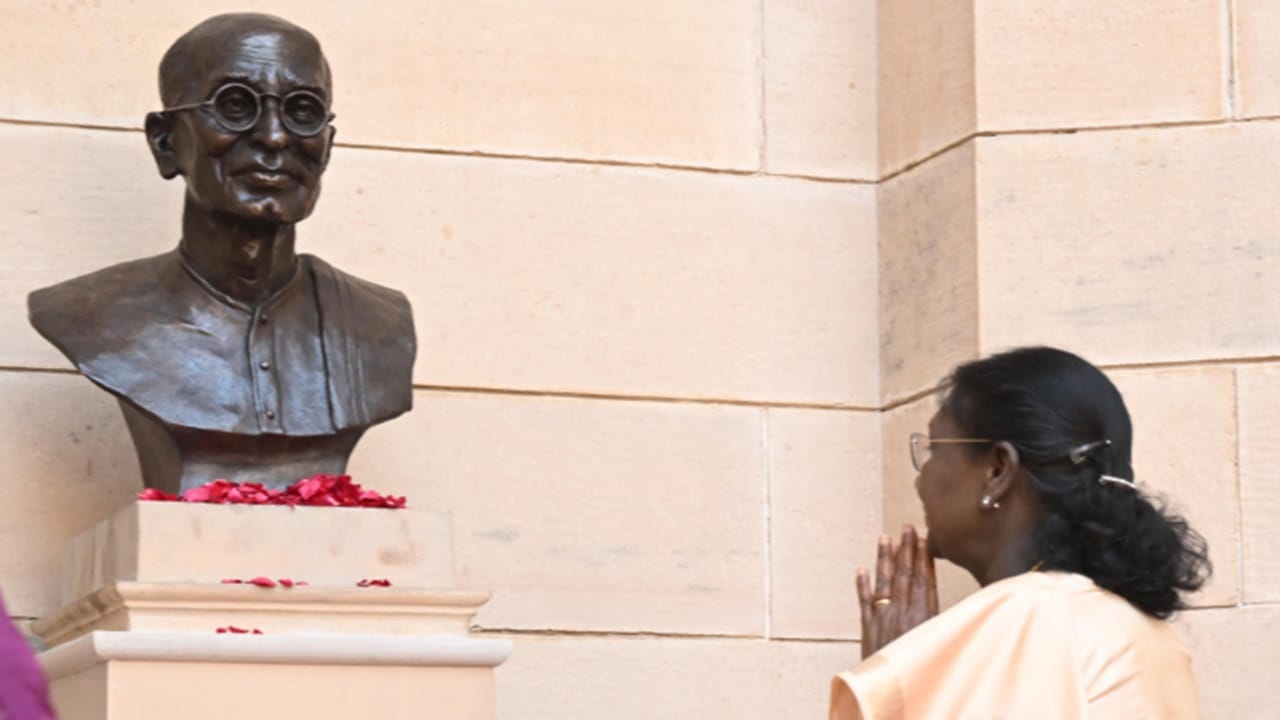
President Droupadi Murmu unveiled a bust of Chakravarti Rajagopalachari, popularly known as Rajaji, at Rashtrapati Bhavan. (@rashtrapatibhvn/X)
Recently, Prime Minister Narendra Modi, in his recent Mann Ki Baat address, said Rajagopalachari’s bust was installed to symbolise India’s commitment to moving beyond colonial-era symbols and embracing its civilisational heritage.
Born in 1878 in the Madras Presidency, Rajagopalachari was a close associate of Mahatma Gandhi. He took part in major movements against British rule, and served in the Constituent Assembly. In 1954, he was awarded the Bharat Ratna.