The Central Bureau of Investigation (CBI) has challenged the Delhi high court’s decision to suspend former Bharatiya Janata Party (BJP) member of the legislative assembly (MLA) Kuldeep Singh Sengar’s life sentence in the 2017 Unnao rape case, arguing the court adopted an unduly narrow definition of “public servant” that defeats the legislative intent behind child protection laws.
In its appeal filed on Friday, the agency urged the Supreme Court to adopt a “purposive” and “harmonious” interpretation of the term, contending that a sitting MLA-by virtue of holding a constitutional office-is vested with public trust and authority over the electorate.
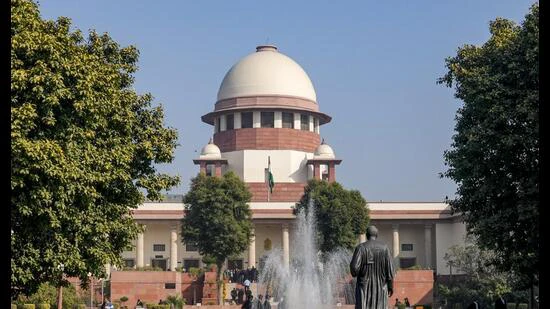
A Chief Justice of India (CJI)-led bench of the top court is scheduled to hear the CBI’s appeal on Monday.
The high court had on December 23 suspended Sengar’s sentence on the ground that an MLA does not fall within the definition of “public servant” under Section 21 of the Indian Penal Code (IPC) for the purposes of the Protection of Children from Sexual Offences (POCSO) Act. Sengar was convicted by a trial court in December 2019 under Section 5(c) of the POCSO Act for aggravated penetrative sexual assault of a minor and sentenced to life imprisonment. He has already served over seven years and five months.
The high court concluded that the aggravated offence under Section 5(c) was not made out and that only an offence under Section 3 of the POCSO Act would apply. It held that Supreme Court rulings treating MPs and MLAs as public servants under the Prevention of Corruption Act could not be extended to POCSO offences.
Finding serious fault with this reasoning, the CBI said the high court’s approach ignores the common legislative intent underlying multiple statutes aimed at holding persons in positions of power accountable.
“A purposive and harmonious construction of these provisions ensures that MPs, MLAs, government functionaries, and other persons exercising public functions are treated as ‘public servants’ or ‘persons in authority’ wherever abuse of office or trust occurs, thereby advancing both the objectives of anti-corruption law and protection of vulnerable persons,” the appeal stated, a copy of which has been seen by HT.
According to the agency, Section 21 of the IPC, Section 2(c) of the Prevention of Corruption Act, 1988, and Section 5(c) of the POCSO Act, 2012, share a common legislative intent of imposing heightened accountability on those who occupy positions of trust, authority or public duty. The legislature, it said, has deliberately provided for stringent mandatory penalties and enhanced liability for such persons, reflecting a higher societal interest in protecting vulnerable victims, particularly children.
The CBI emphasised that the high court “failed to consider that a sitting MLA, by virtue of holding a constitutional office, is vested with public trust and authority over the electorate, and that such a position carries heightened responsibility arising from duties owed to the state and society.”
Explaining the scope of Section 5(c) of the POCSO Act, under which Sengar was convicted, the agency said: “A comprehensive and meaningful reading of section 5(c) [of] the POCSO Act leads to an irrefutable conclusion that it seeks to punish exploitation and sexual abuse of children from ‘public servants’, owing to use of their power, position or status be it political or otherwise.”
The CBI further underscored the gravity of the offence. “The offences under Section 5(c) of the POCSO Act are of greater gravity than corruption offences by MPs/MLAs. While corruption undermines governance, Section 5(c) POCSO offences involve direct abuse of children, triggering severe physical, psychological, and moral harm,” it stated.
Citing previous Supreme Court rulings, the agency reiterated that MPs and MLAs have been consistently treated as public servants and that suspension of sentence for a life convict can be granted only where the conviction appears prima facie unsustainable and there is a strong likelihood of success in appeal.
“Mere long incarceration or delay in hearing the appeal, by itself, does not automatically justify suspension in heinous offences; courts must balance individual liberty with societal interest and the gravity of the crime,” the appeal said.
The high court had also held that Sengar could not be brought within the scope of Section 5(p) of the POCSO Act, which covers persons in a position of trust or authority, noting the absence of any foundational finding by the trial court. It said that at the stage of considering an application for suspension of sentence under Section 389 of the Criminal Procedure Code (CrPC), it would be inappropriate to examine such arguments.
In its three-part reasoning, the high court concluded it was satisfied that the offence under Section 5(c) was not made out as Sengar did not fall within the definition of a public servant, that only an offence under Section 3 of the POCSO Act would be made out, and that he had already undergone about seven years and five months of incarceration-more than the minimum period under Section 4 of the POCSO Act prior to its amendment in 2019.
Sengar’s appeal against his conviction and sentence is already pending before the Delhi high court. The CBI and the survivor had earlier argued that the plea for suspension of sentence should be taken up only after hearing the main appeal and had warned that Sengar’s release would pose a serious threat to the victim and her family-a ground now cited again by the agency in seeking a stay of the high court’s order.