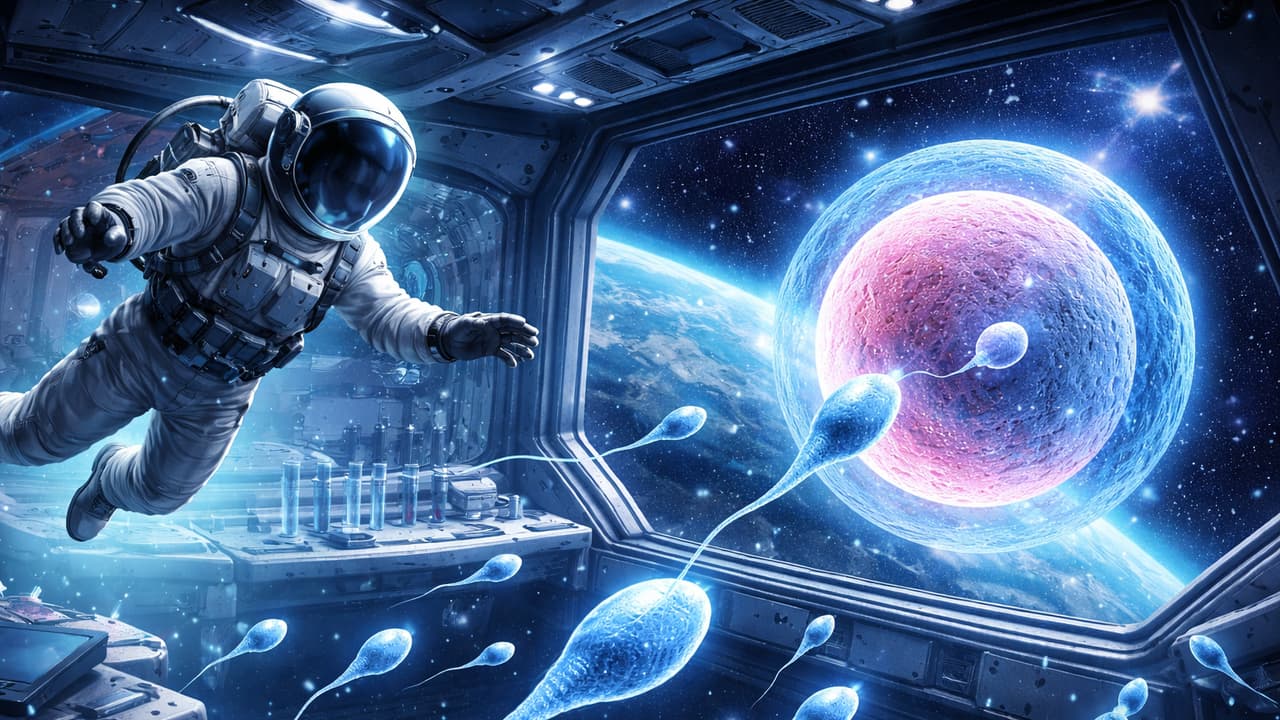
A new study by University of Adelaide shows that sperm struggle to find their way in zero gravity, reducing fertilisation rates by up to 30%. While sperm can still move, they lose direction in microgravity. The research also found possible development issues in early embryos. Scientists say hormone support may help, but more studies are needed.
The idea of humans having babies in space has gained attention as scientists explore long-term space travel. Some experts even believe reproduction in space could become important for the future of humanity. However, a new study by researchers from the University of Adelaide has found that it may not be as easy as it sounds.
Sperm struggle in zero gravity
The study shows that sperm find it difficult to move in the right direction in microgravity, also known as zero gravity. While sperm can still move normally, they lose their sense of direction. Senior researcher Dr Nicole McPherson explained to Daily Mail that gravity plays an important role in helping sperm find their way through the female reproductive system.
She said this is the first time scientists have clearly shown that gravity helps sperm navigate correctly.
Also Read: Why Nepal Ended Everest’s $4,000 Trash Deposit Scheme After 11 Years
Maze experiment reveals surprising results
To understand this better, researchers used sperm samples from humans, mice and pigs. These samples were placed in a machine that simulates zero gravity conditions. The sperm were then made to move through a maze designed to copy the female reproductive tract.
The results were clear. In microgravity, many sperm failed to find their way through the maze. Compared to normal gravity, there was a noticeable drop in successful movement.
Fertilisation rates drop significantly
The study found that fertilisation rates dropped by up to 30 percent in microgravity conditions. This means fewer eggs were successfully fertilised.
The effect was seen after just four to six hours of exposure. Longer exposure to microgravity made things worse.
Researchers also found that early embryo development was affected. In some cases, there were delays in development and fewer important cells were formed in the early stages.
Possible solution with hormone support
There was some positive news from the study. Scientists found that adding the hormone progesterone helped human sperm improve their ability to navigate.
Progesterone is naturally released by the egg and helps guide sperm to the right place. Researchers believe this could help reduce the negative effects of microgravity, but more research is needed.
Is sex in space possible?
Experts say that sex in space is physically possible, but it comes with challenges. Microgravity can make movement difficult, and astronauts may also face issues like low libido or erectile problems.
The biggest concern is pregnancy. Scientists are still unsure how microgravity and space radiation may affect a developing baby.
Some earlier studies suggest that growing in space could lead to health problems or birth defects.
Also Read: Convocation Chaos At Rajasthan University: Gen Z Student Calls Out Administration Over Chaos, Goes Viral
More research needed for future missions
The study, published in the journal Communications Biology, is the first to test sperm navigation in such controlled conditions. Co-author Professor John Culton said that understanding reproduction in space is very important if humans plan to live beyond Earth.
Researchers now want to study how different levels of gravity, including artificial gravity, may affect reproduction in the future.