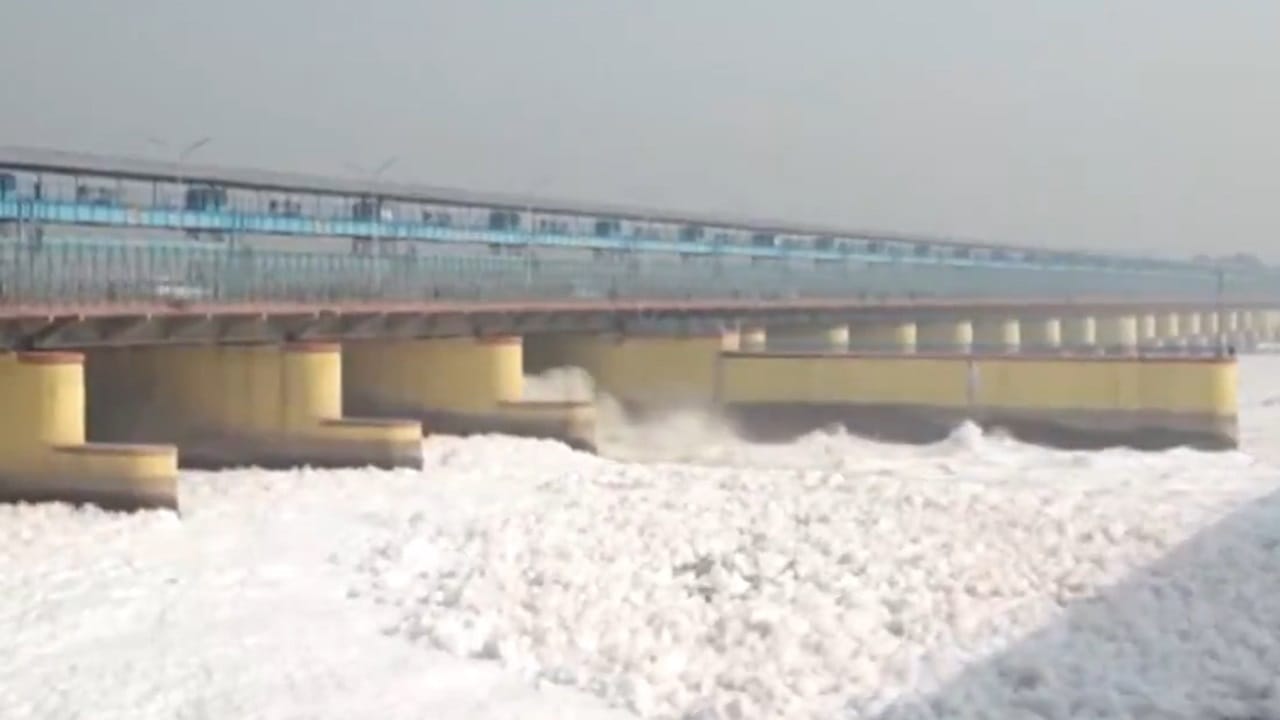
New Delhi: The Delhi Pollution Control Committee (DPCC) on Sunday came out with the Yamuna’s monthly water quality reports for November and December 2025. The report was released over two months after its previous update.
The recent data indicated a marked deterioration from October, despite it being much cleaner than it was in the same period last year.
The faecal coliform levels – which indicates untreated sewage entering the river – rose sharply over the two months, the data indicated.
In December, faecal coliform levels zoomed to 92,000 units per 100 ml, up from 24,000 in November and just 8,000 in October, when excess water was released upstream during Chhath Puja. The safe limit is 2,500 units per 100 ml, while the recommended standard is 500 units per 100 ml.
Despite this, the numbers suggested a considerable drop when compared to 2024 when it was at 8.4 million units in December and 7.9 million units in November. However, according to experts, the decrease seems unlikely because the flow in the river is usually low at this time of year.
BOD, DO levels: What data showed
In October, the biological oxygen demand (BOD) was at 25 mg/l. This rose to 33 mg/l in November, and dropped to 25 mg/l in December. Despite this, it remains over eight times the acceptable limit of 3 mg/l. Dissolved oxygen (DO), which is essential for aquatic life, ranged from 0.5 mg/l to 8.5 mg/l in November. It dropped to zero at two locations. In December, it ranged from 0.8 mg/l to 8 mg/l, far below the required minimum of 5 mg/l, in some areas, the data showed.
In December 2024, the BOD peaked at 70 mg/l, while DO levels stayed within permissible limits at Palla and Wazirabad, before dropping to zero at six other locations. By contrast, in November 2024, BOD stood at 54 mg/l and DO was already zero at six locations downstream of Wazirabad.
In order to evaluate the river’s quality, water samples are collected manually from the Yamuna from eight different locations – starting at Palla, where the river enters Delhi, followed by Wazirabad, ISBT Kashmere Gate, ITO bridge, Nizamuddin bridge, Okhla barrage, Agra Canal, and finally Asgharpur.
The recent data was released soon after the National Green Tribunal, in its December 22 direction, asked the DPCC to release water quality information for the Yamuna stretch from Wazirabad to Asgharpur.
Experts pointed out that while the fully operational Okhla sewage treatment plant (STP), which became functional in April last year, may have contributed, the sharp improvement is quite surprising. Some questioned if there was a change in the methodology adopted by the DPCC.
Increase in flow visibly improved water quality
Ahead of Chhath Puja, the Yamuna received a massive surge of fresh water from upstream barrages. Between October 21 and 25, over 668,000 cusecs were released to reduce pollution, temporarily revitalising the river. The increase in the flow visibly improved water quality. The BOD and DO levels got a boost and froth cleared. By early November, however, as water levels receded, the frothing and foul odour returned, underscoring the river’s persistent pollution challenges.
Some experts are also highlighting the apparent inconsistencies between visual conditions and reported improvements at some locations. At Okhla Barrage, BOD was recorded at 20 mg/l in October, when the river appeared visibly cleaner due to higher flows. Interestingly, even as frothing came back in November and December, BOD levels reportedly improved to 14 mg/l and 17 mg/l, respectively.
Due to the froth, people took to social media to voice their opinion about the pollution. One such user took a sarcastic view and said: “The BJP government has made arrangements through its tireless efforts to let you feel the essence of Kashmir right here in Delhi. Now, standing on the banks of the Yamuna, you can experience the sensation of Kashmir’s snowy valleys. Some traitors will say this is toxic foam, but you must not fall for their words.”
BJP सरकार ने अपने अथक प्रयासों से दिल्ली में कश्मीर का एहसाह दिलाने का बंदोबस्त कर दिया है.
अब यमुना किनारे खड़े होकर आप कश्मीर की बर्फीली वादियों का एहसाह ले सकते हैं.
कुछ देशद्रोही कहेंगे ये जहरीला झाग है, लेकिन आपको उनकी बातों में नहीं आना है. pic.twitter.com/tfKmEkPgLr
— Ranvijay Singh (@ranvijaylive) January 12, 2026
Despite the occasional improvements, the Yamuna continues to reel under severe pollution. Continuous monitoring and proper sewage management is key to reducing the pollution. Experts contend that the apparent visual improvements can be misleading, and leave the river’s long-term health at risk.