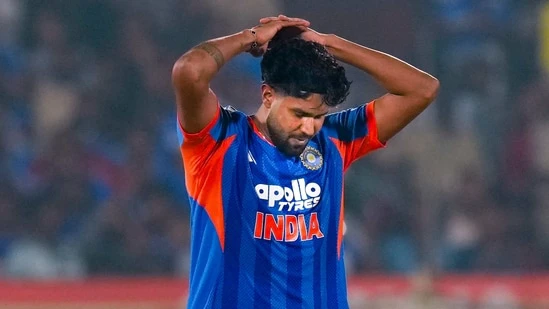
Harshit Rana’s exit from the T20 World Cup 2026 is a loss on paper because he’s a bowler with pace, and bite that teams like carrying into tournaments.
But if India are trying to win the World Cup, there’s a clean, fact-based argument for why this could become a blessing in disguise: it removes volatility and forces clarity in India’s seam-bowling roles.
The recent T20I evidence: one warning sign India can’t ignore
Harshit Rana’s most relevant recent T20I marker was that tough outing against New Zealand in Visakhapatnam on January 28, 2026, when he went for 54 in four overs.
One spell doesn’t define a career – but in T20s, one spell can define a tournament campaign. That’s the key point. A World Cup is not a long series where you absorb a bad day and recover next week. A single 18-run over can end your night, your group table, your knockout route.
So when your latest big sample has a can go for 50+ warning, the team management has to ask a hard question: is this a risk worth carrying right now
Injury timing matters as much as ability
The other uncomfortable fact is timing. Being ruled out late means two things:
- you’re not fully fit at the exact moment you need rhythm and confidence, and
- you can’t be “played into form” during the tournament.
That makes the selection decision brutally practical. India don’t need a bowler who might peak mid-tournament – they need someone who can deliver a role from game one.
T20 World Cups aren’t won by “ceiling”, they’re won by “repeatability”
Rana’s appeal is obvious: hard lengths, pace, wickets when batters try to line him up. That’s the ceiling.
But India’s historical World Cup pain points aren’t about a lack of ceiling. They’ve often been about:
- one seam option having an off night,
- the captain running out of “safe overs,”
- a batter targeting the weak link to blow up the innings.
If Rana is out, India automatically reduce the chances of being forced into protect the bowler tactics – defensive fields, held-back overs, and awkward match-up juggling that can throw the whole bowling plan off.
The “blessing” is tactical: India’s attack becomes easier to manage
A World Cup bowling unit needs defined jobs:
- new-ball control,
- middle-overs pressure,
- death execution,
- plus one flexible option for matchups.
When a bowler is still early in his international T20 learning curve, captains often end up managing him instead of managing the game.
Rana being unavailable pushes India toward a simpler truth: pick the combination that is easiest to captain under stress. That’s not glamorous, but it wins tournaments.
Bottom line:
Harshit Rana being ruled out is unfortunate for him, and it removes a high-upside weapon from India’s options. But the recent evidence also shows the kind of variance that can cost you a World Cup match in four overs. If this change forces India into a steadier, more role-defined bowling combination, it can genuinely become a blessing in disguise – not because Rana isn’t good, but because T20 World Cups punish uncertainty more than they reward potential.