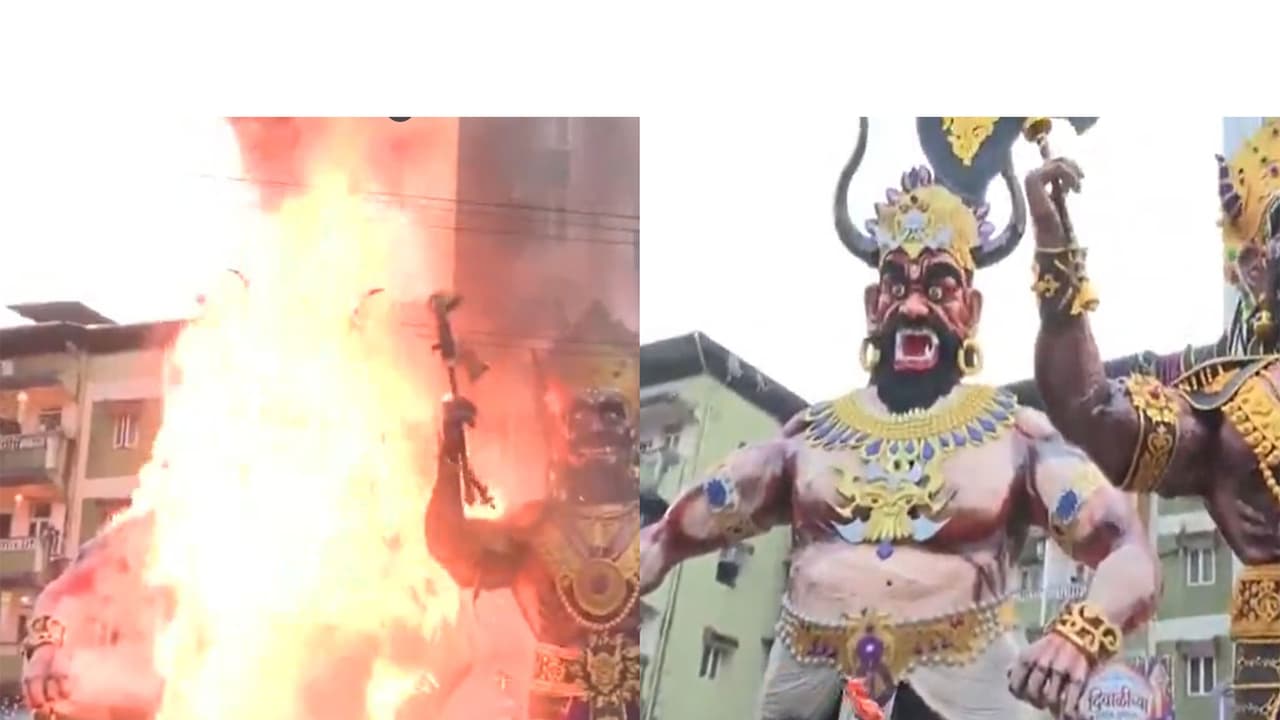
Goa celebrated Diwali in a unique, traditional style by burning giant effigies of the demon king Narkasur, marking the victory of Lord Krishna over evil. This ritual, Narkasur Vadh, is a central part of Goa’s Diwali festivities.
Goa Celebrates Diwali With Unique Narkasur Vadh Tradition
Goa celebrated Diwali in a unique traditional style, with giant effigies of demon king Narkasur set ablaze across the state to mark the victory of Lord Krishna over evil. The traditional ritual, known as Narkasur Vadh, was observed on Naraka Chaturdashi, with large effigies of Narkasur burnt amid celebrations.
The tradition involves weeks of preparation, with people crafting elaborate and towering effigies of the demon, which are later displayed and set on fire in a spectacular celebration accompanied by music and dance. The burning of Narkasur effigies symbolises the triumph of good over evil and light over darkness, marking the beginning of the festivities associated with the festival of lights. The unique celebration remains an integral part of Goa’s Diwali traditions, drawing people together to witness the symbolic destruction of evil.
Understanding Narak Chaturdashi
Narak Chaturdashi is a Hindu festival that falls on Chaturdashi (the 14th day) of the Krishna Paksha in the Shalivahan Shak Hindu calendar month of Kartik. It is also referred to as Kali Chaudas, Narak Chaudas, Roop Chaudas, Choti Diwali, and Narak Nivaran Chaturdashi. Narakasur, an asura (demon), was slain on this day, according to Hindu tradition, by Krishna and Satyabhama.
Significance of Diwali
Every year, Hindus, Jains, and Sikhs all celebrate Diwali to symbolise the victory of good over evil, light over darkness, and joy over despair. Diwali, popularly known as the festival of lights, is celebrated nationwide with great pomp. People perform puja, observe rituals, decorate their homes with diyas, rangoli, ornaments, and lights, enjoy delectable sweets and meals, dress in new traditional attire, and more.
Hindu mythology states that Lord Ram returned to Ayodhya on Diwali after slaying Ravana and spending 14 years in exile. People make wishes for health, wealth, and prosperity to the gods Lakshmi, Ganesh, and Kubera as part of the festival of lights.
(Except for the headline, this story has not been edited by Asianetnews Editorial staff and is published from a syndicated feed.)