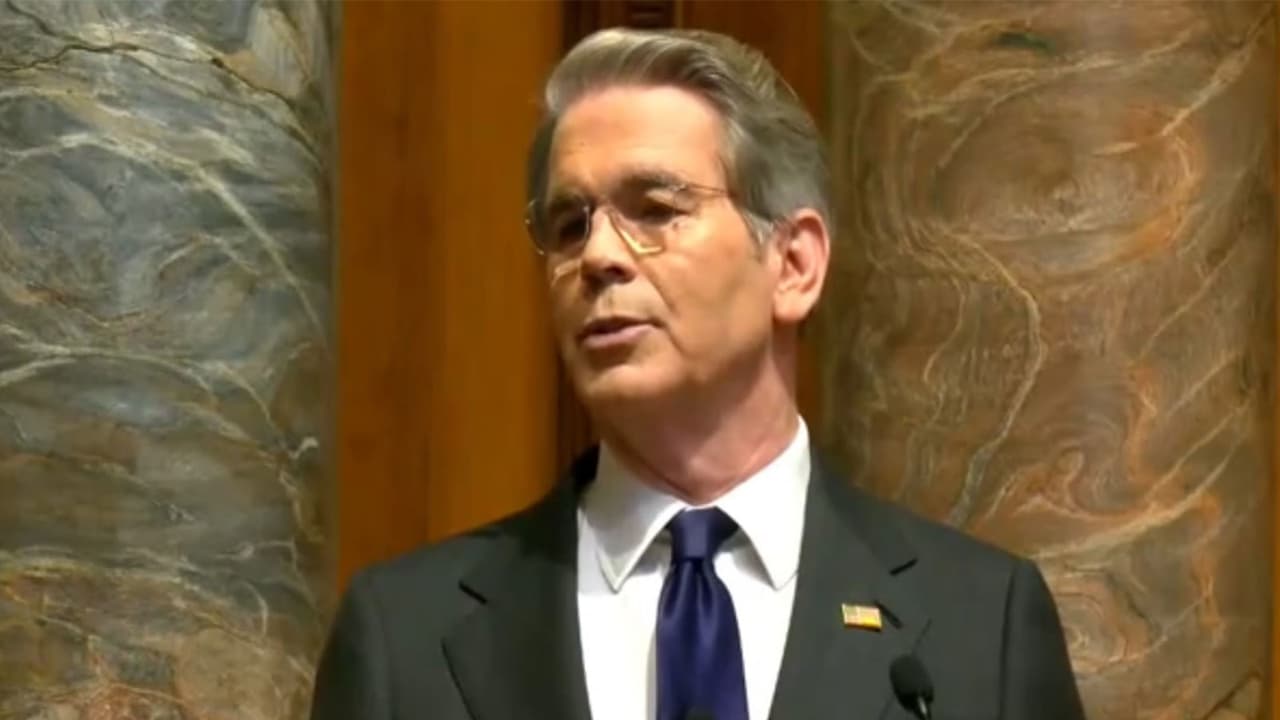
US Treasury Secretary Scott Bessent projects lower global inflation and energy prices after the West Asia conflict. He cited a well-supplied oil market and resuming maritime traffic, expressing confidence in the resilience of global trade routes.
US Treasury Secretary Scott Bessent has projected a significant cooling of global inflationary pressures, asserting that energy prices and inflation will be lower once the current conflict in West Asia concludes with what he described as “absolute security”.
Optimistic Outlook on Energy and Shipping
Speaking during a Cabinet meeting on Thursday, Bessent offered an optimistic outlook on the energy sector despite the ongoing hostilities with Iran. He noted that the oil market is well supplied and pointed to a gradual resumption of maritime activity in the region. “The oil market is well supplied,” he said, predicting that more tanker traffic will begin to flow from the Middle East.
Highlighting a shift in maritime logistics, Bessent indicated that movement in the Gulf is beginning to increase. “We are starting to see more movement in the Gulf. This is the beginning,” he remarked, adding further that “we are starting to see more and more movement in and out of the Gulf today.”
The Treasury Secretary expressed strong confidence in the resilience of global trade routes, suggesting that shipping traffic will continue to increase on a daily basis, even before the Strait is fully secured. He reiterated this stance by stating that he is confident shipping traffic will continue to increase even before the Strait is fully secured.
This recovery comes at a critical time, as traffic through the Strait of Hormuz, a vital waterway, has been severely impacted by the Iran-US war. The volatility was reflected in the markets on Thursday, where oil prices were higher, with the most-active Brent crude futures contract trading at about USD 102 a barrel.
Domestic Impact and Public Resolve
Addressing the domestic impact of the conflict, Bessent argued that the American public is prepared to endure “short-term volatility” in order to achieve five decades of security after the Iranian regime is defeated.
He further suggested that political opponents may be misjudging the public’s resolve regarding the long-term strategic goals of the administration. “Many people, especially the Democrats, underestimate the will of the American people for short-term volatility, for 50 years of safety that we are going to have on the other side of this,” Bessent stated.
(Except for the headline, this story has not been edited by Asianet Newsable English staff and is published from a syndicated feed.)