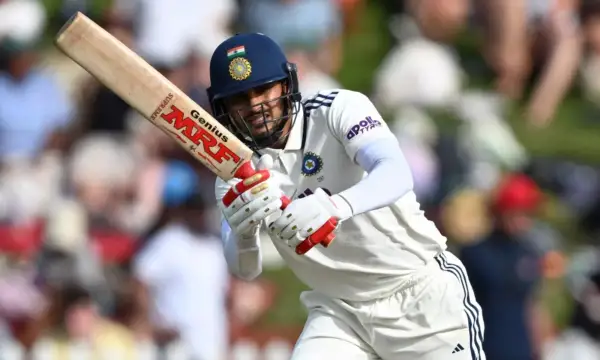
India captain Shubman Gill has urged the International Cricket Council (ICC) to reconsider its ban on using saliva to shine the cricket ball, arguing that the restriction is making conditions increasingly difficult for bowlers in Test cricket.
Gill raised the issue after India’s opening Test against New Zealand ended in a draw at the Basin Reserve in Wellington on Monday. He also questioned the quality of Kookaburra cricket balls, pointing out that they were losing their hardness and becoming soft much earlier than expected. According to Gill, the ball used in the match had become considerably softer after just 25-30 overs, reducing the bowlers’ ability to generate movement and create wicket-taking opportunities. He believes allowing players to use saliva again could help maintain the ball’s condition, particularly on pitches that offer limited assistance to fast bowlers.
“We are way past Covid times. There was a rule that you can’t apply saliva to shine the ball. It’s been 7-8 years now, I still don’t understand why they are not allowing it,” Gill said during the post-match interaction. The ICC introduced the restriction in 2020 as a precautionary measure during the COVID-19 pandemic and subsequently made it a permanent regulation in international cricket. Players are currently permitted to use sweat to maintain the ball’s shine, but saliva remains prohibited. Gill questioned why the restriction continues despite the pandemic-related circumstances that prompted its introduction having changed. He argued that teams should be allowed to use saliva to preserve the condition of the ball and provide bowlers with a better opportunity to compete against batters.
The India captain also expressed concerns about the durability and quality of the Kookaburra ball, saying its rapid deterioration was affecting the balance between bat and ball. He explained that when the ball becomes soft early, edges that would normally carry to the wicketkeeper or slip fielders often fall short, making caught-behind dismissals increasingly difficult. “I don’t know if the quality of the balls has come down or what happened. But in such conditions, if there is no help from the wicket, and the ball also becomes soft, then it becomes very difficult for the bowlers to take wickets,” he said. Gill added that when the pitch does not provide sufficient movement and the ball loses its hardness, bowlers have fewer opportunities to dismiss batters through conventional methods. He also said India had encountered similar problems during their 2025 tour of England, where the ball softened relatively early in several matches.
Gill pointed out that bowlers generally expect the ball to lose some hardness after approximately 50 overs, but said the problem becomes more serious when it happens within the first 25-30 overs. He explained that the combination of an unresponsive pitch, a rapidly softening ball and restrictions on maintaining its shine creates an additional challenge for bowling attacks. The issue was particularly evident during the Wellington Test, where New Zealand managed to survive the final day despite India’s efforts to secure a victory. The hosts resumed their second innings at 119 for two and finished at 239 for five, batting through 75 overs on the final day. Daryl Mitchell and Glenn Phillips played important roles in ensuring that New Zealand avoided defeat, with the pitch offering limited assistance to India’s fast bowlers.
The drawn contest also placed considerable demands on India’s bowling attack. Indian bowlers delivered close to 250 overs across the match as they attempted to force a result against the hosts. However, New Zealand’s batters remained disciplined during the final innings, preventing India from taking the remaining wickets. Gill acknowledged the workload shouldered by his bowlers and said the team management had decided to cancel a planned team activity in Christchurch to allow the players to recover. He also indicated that the team would arrange a dinner for the bowling group in recognition of their efforts. “Our bowlers have put in so many overs, we will definitely take them (out for a dinner). We had a team activity but after bowling so many overs it stands cancelled,” he said.
Gill’s comments have brought renewed attention to the debate surrounding the balance between bat and ball in international cricket, particularly in the longer format. The saliva restriction was introduced during an exceptional public health situation, but its continued application has remained a subject of discussion among players and cricket observers. Allowing saliva could help bowlers maintain one side of the ball and generate conventional swing or reverse swing, depending on the conditions and age of the ball. However, any change to the existing regulation would require consideration by the ICC. Gill’s remarks also highlight concerns about ball durability, with the India captain suggesting that manufacturers and cricket authorities should examine why the Kookaburra loses its hardness so quickly. His appeal comes after a drawn Test in which India’s bowlers struggled to make decisive breakthroughs despite putting in an extended effort.