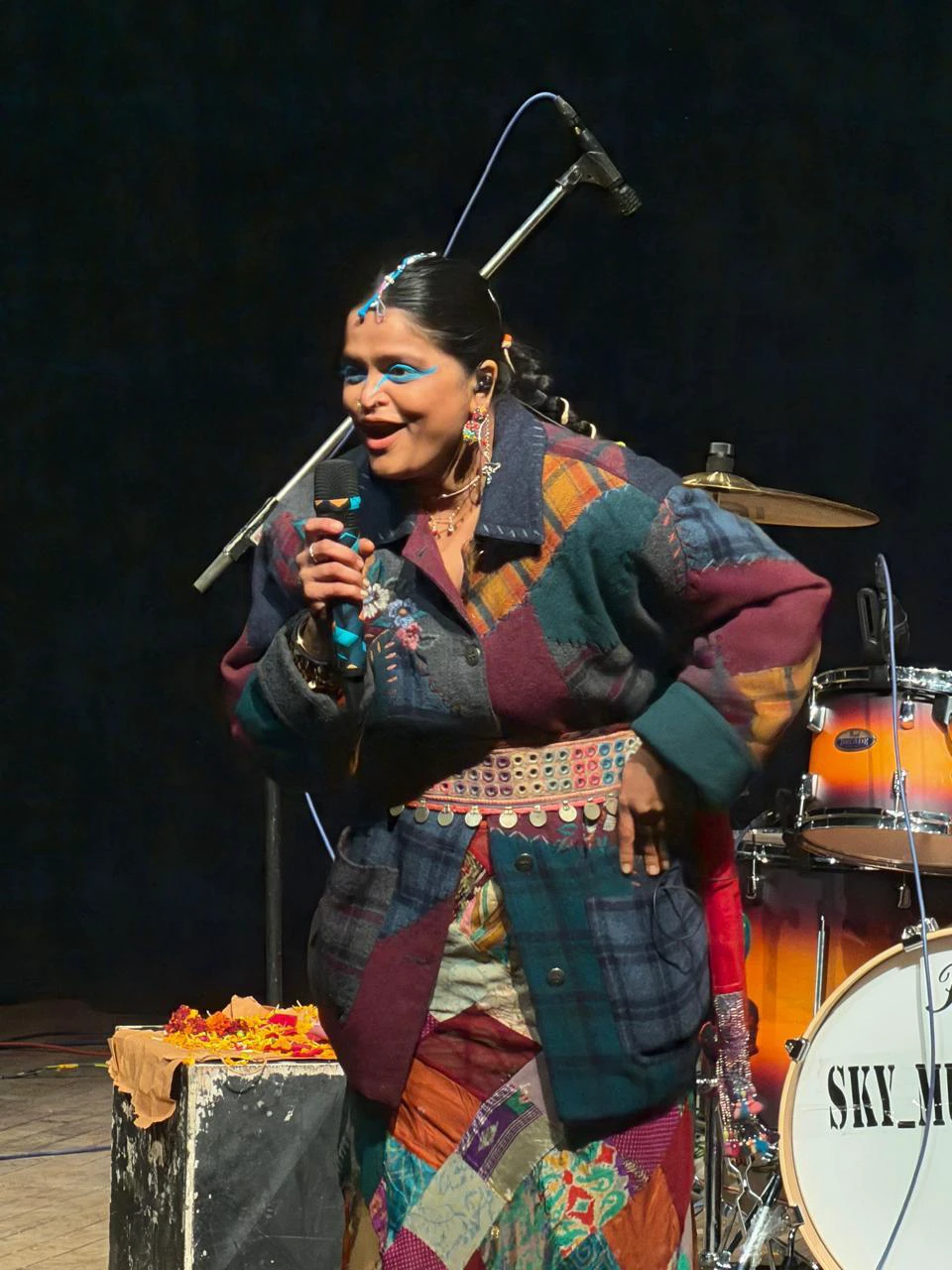
While their work has always blurred the line between folk tradition and contemporary sound, members of one of India’s finest fusion bands, The Tapi Project, stress that their process of making music is dictated by the urge to be as transparent to the music as possible and to let the final sound emerge organically.
The Surat-based band, which has performed in more than 30 countries, showcased their music on at Punjab Kala Bhawan on the invitation of Thinkers Collective, an initiative of the city-based Institute for Development and Communication (IDC).
The group comprises Yogendra Saniawala (instruments, lyrics), Swati Minaxi (lead vocalist), Gaurav Kapadia (drums), and Biju Nambiar.
“Tapi’s words and music are reflections of our surroundings and manifested reality, and they act as a mirror for anyone who wants to look into them and find themselves,” says Swati.
Known for reinterpreting traditions without diluting their essence, Yogendra Saniawala feels that traditions are a light from which one ignites their own identity. “We just move ahead from one light to another,” he adds.
The band, which has performed across the world, including Europe and Asia, aims to appeal to people’s innermost sensibilities-never striving to create a particular experience, but to ignite multiple emotions and stories. “There is always enough space for the audience to take back what they interpret. And for any art form, including music, that is something that transcends immediate gratification,” feels Gaurav Kapadia.
For Biju Nambiar, the band-which plays jazz, rock, funk, folk, and spoken word-is essentially a ‘traveller’. “We are here to absorb experiences; after all, they form the very basis of our music.”
Dr Pramod Kumar, Chairperson of IDC, states that it was important for ‘Thinkers Collective’ to bring to the region a band whose sound is rooted in the society we live in. “In their music, they talk about society at large, human experiences, climate, and everything that affects us. They are not a privileged, sanitized band, but talented youngsters who speak of subaltern experiences in their genre-defying style. What I also find fascinating is that experimentation is their second nature, and they refuse to play safe.”