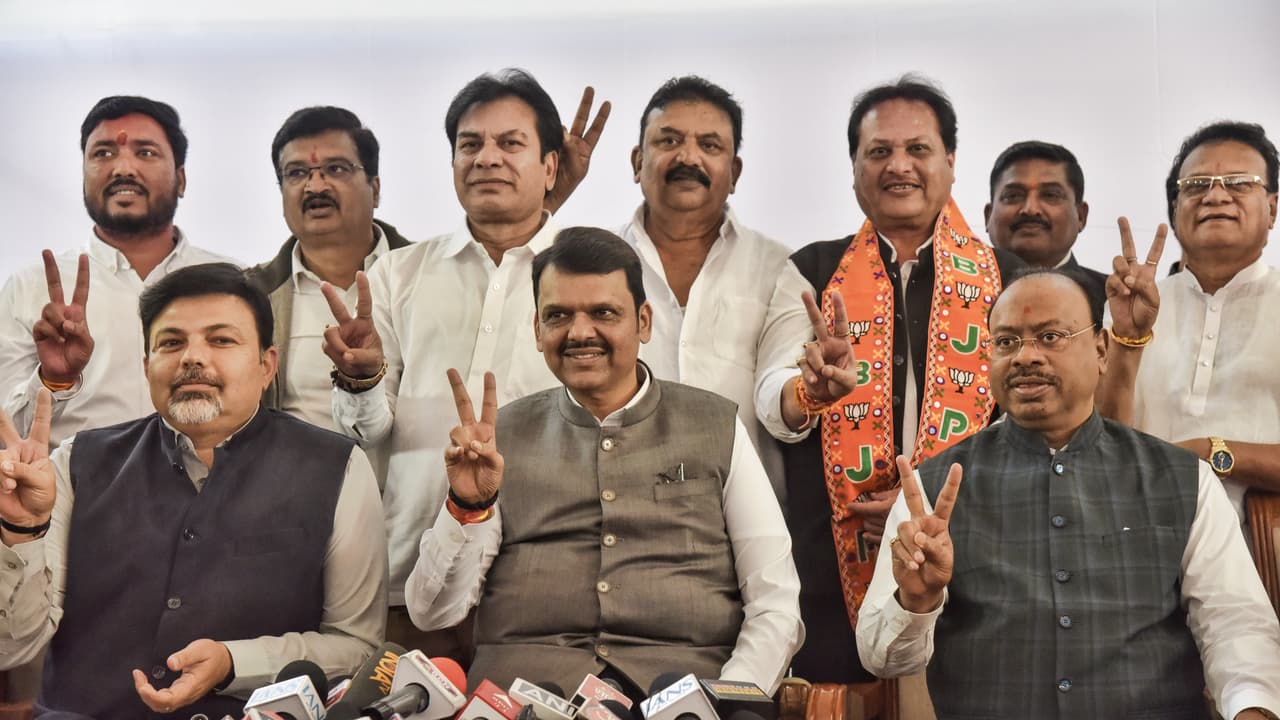
Mumbai’s high-stakes BMC polls spotlight a fierce development debate between Mahayuti and MVA, soaring candidate assets, and the return of former mayors as parties battle for control of India’s richest civic body.
Mumbai, often hailed as India’s financial capital, is once again at the heart of a fierce political contest as parties prepare for the crucial Brihanmumbai Municipal Corporation (BMC) elections. With the civic polls scheduled for January 15 across 227 wards, development, governance and personal wealth declarations of candidates have emerged as dominant themes shaping public discourse.
Development as the Central Political Battleground
As campaigning intensifies, Mumbai’s development trajectory has become a sharp political dividing line. The ruling Mahayuti alliance argues that infrastructure projects move decisively faster under Devendra Fadnavis-led governments. In contrast, critics accuse the Mahavikas Aghadi (MVA) of slowing or stalling key projects during its tenure.
Supporters of the Mahayuti frequently invoke the phrase “dhavanari Mumbai”—a city that moves with speed and intent. They claim delays in roads, Metro corridors and connectivity projects directly affect crores of commuters and businesses, and allege that interruptions are driven more by political rivalry than by technical, environmental or financial hurdles.
Mahayuti vs MVA: Competing Claims on Infrastructure
Between 2014 and 2019, when Devendra Fadnavis served as Chief Minister, several long-pending infrastructure proposals moved from files to execution. Metro corridors expanded, planning for the coastal road advanced, and construction began on the Mumbai Trans Harbour Link, later named Atal Setu. Supporters describe this period as one of the most decisive infrastructure pushes Mumbai has witnessed in recent decades.
Those backing the Fadnavis government argue that quicker administrative clearances and decisive decision-making created a long-term vision for transport and connectivity. They point to later shifts in timelines for tunnels, bridges and the underground Metro 3 as evidence that momentum slowed after the change in political leadership.
The ,Uddhav Thackeray, Years Under Scrutiny
The 2019–2022 tenure of the Uddhav Thackeray-led Mahavikas Aghadi government remains a focal point of criticism. Opponents allege that development took a back seat as coalition management and power-sharing became the primary focus.
The Metro 3 car shed controversy at Aarey became the most visible flashpoint. Critics claim the halt at the earlier site was politically motivated and aimed at denying credit to the previous government. According to them, the decision resulted in cost escalations of nearly Rs 10,000 crore and delayed faster east–west connectivity by several years.
Welfare Schemes, Lockdown and Allegations
Critics further allege that welfare-linked and infrastructure schemes such as Jalyukt Shivar and metro expansion plans saw reduced emphasis during the MVA tenure. As residents struggled with potholes, congestion and long commute times, rivals claimed that directives from Matoshree disproportionately affected projects associated with Devendra Fadnavis.
The COVID-19 lockdown period intensified political tensions. With Mumbai under immense pressure on healthcare, employment and transport, leaders from rival camps accused the Thackeray government and its allies of mismanagement and corruption. Allegations related to food supply contracts and procurement during the pandemic added to the controversy, with critics arguing that leadership priorities appeared disconnected from public hardship.
Post-2022 Shift and Claims of Renewed Momentum
Following the 2022 change in government, with Eknath Shinde as Chief Minister and Devendra Fadnavis as Deputy Chief Minister, Mahayuti supporters claim stalled projects were revived swiftly. The opening of Atal Setu, described as the country’s longest sea bridge, is projected as a symbol of renewed administrative urgency.
The coastal road has significantly reduced travel time between south Mumbai and Worli, while the Mumbai–Ahmedabad bullet train—earlier criticised as unnecessary—has gained momentum. New metro routes have begun operations, gradually reshaping daily commuting patterns across the city.
Asset Declarations Put Candidates Under the Spotlight
Alongside development debates, affidavits uploaded by the State Election Commission have drawn attention to a sharp rise in assets declared by several prominent candidates.
Shiv Sena (UBT) candidate and former Mumbai mayor Kishori Pednekar, contesting from Lower Parel (Ward 199), has declared assets of Rs 5.26 crore—up 226 per cent from Rs 1.61 crore in 2017. Her affidavit lists Rs 4.69 crore in immovable assets and Rs 57 lakh in movable assets. Pednekar served as mayor from 2019 to 2022.
Shiv Sena (Shinde faction) candidate Samadhan Sarvankar, contesting for a second term, has declared assets worth Rs 46.59 crore, a 394 per cent rise from Rs 9.43 crore in 2017. He has immovable assets of Rs 40.59 crore, along with substantial movable properties.
Former MLA Yamini Jadhav, contesting from Ward 209 in the Mazagaon area, has declared assets of Rs 14.57 crore, including Rs 11.28 crore in immovable and Rs 3.28 crore in movable properties. In the 2024 Assembly elections, she had declared assets of Rs 10.10 crore and loans of Rs 52 lakh.
Geeta Gawali, daughter of gangster-turned-politician Arun Gawali and contesting from Ward 212, has declared assets of Rs 7.26 crore, compared to Rs 3.38 crore in the 2019 Assembly polls. Her sister Yogita Gawali, contesting from Ward 207 for the first time, has declared assets of Rs 3.65 crore.
Neil Somaiya, son of BJP leader Kirit Somaiya, has declared assets worth Rs 9.89 crore—a 400 per cent rise from Rs 1.99 crore in 2017. BJP leader Prabhakar Shinde has declared Rs 17.63 crore, up from Rs 11.9 crore in 2017.
Former Shiv Sena (UBT) corporator Sachin Padwal has shown assets of Rs 5.4 crore, a rise of over 700 per cent from Rs 65.06 lakh nine years ago. Tejasvini Ghosalkar, who recently joined the BJP, has declared assets of Rs 5.15 crore, up from Rs 25.82 lakh in 2017. Congress candidate Sheetal Mhatre has declared assets of Rs 4.27 crore, compared to Rs 17.29 lakh in the last civic polls.
Former deputy mayor Babubhai Bhavanji, whose nomination was later rejected or withdrawn, declared assets of Rs 31.44 crore, up from Rs 8.23 lakh in 2017.
Former Mayors and Political Heavyweights in the Fray
Adding political heft to the contest, four former mayors and three ex-deputy mayors are contesting the BMC elections. The Shiv Sena (UBT) has fielded former mayors Kishori Pednekar, Shraddha Jadhav, Vishakha Raut and Milind Vaidya, along with former deputy mayors Suhas Wadekar and Hemangi Waralikar. The BJP has given a ticket to former deputy mayor Alka Kerkar.
Close relatives of former mayors are also in the race, including Ankit Prabhu, son of former mayor Sunil Prabhu, and Puja Mahadeshwar, wife of former mayor Vishwanath Mahadeshwar. Congress leader Chandrakant Handore’s daughter Prajyoti Handore is contesting from the Chembur-Govandi belt.
The BMC, with an annual budget exceeding Rs 74,000 crore, remains the country’s richest civic body and a powerful political prize.
A Defining Choice for Mumbai
With the return of a Mahayuti government in the 2024 Assembly elections under Devendra Fadnavis, supporters argue that continuity in development is essential for Mumbai’s future. Critics, however, warn against what they describe as ego-driven politics and “percentage-based” decision-making.
As Mumbai approaches another political crossroads, voters are being asked to choose between competing narratives—gatiman vikas versus a phase critics say was marked by delays, uncertainty and stalled projects. The outcome of the BMC elections is set to shape not just the city’s civic administration, but also the broader political direction of Maharashtra’s most influential metropolis.