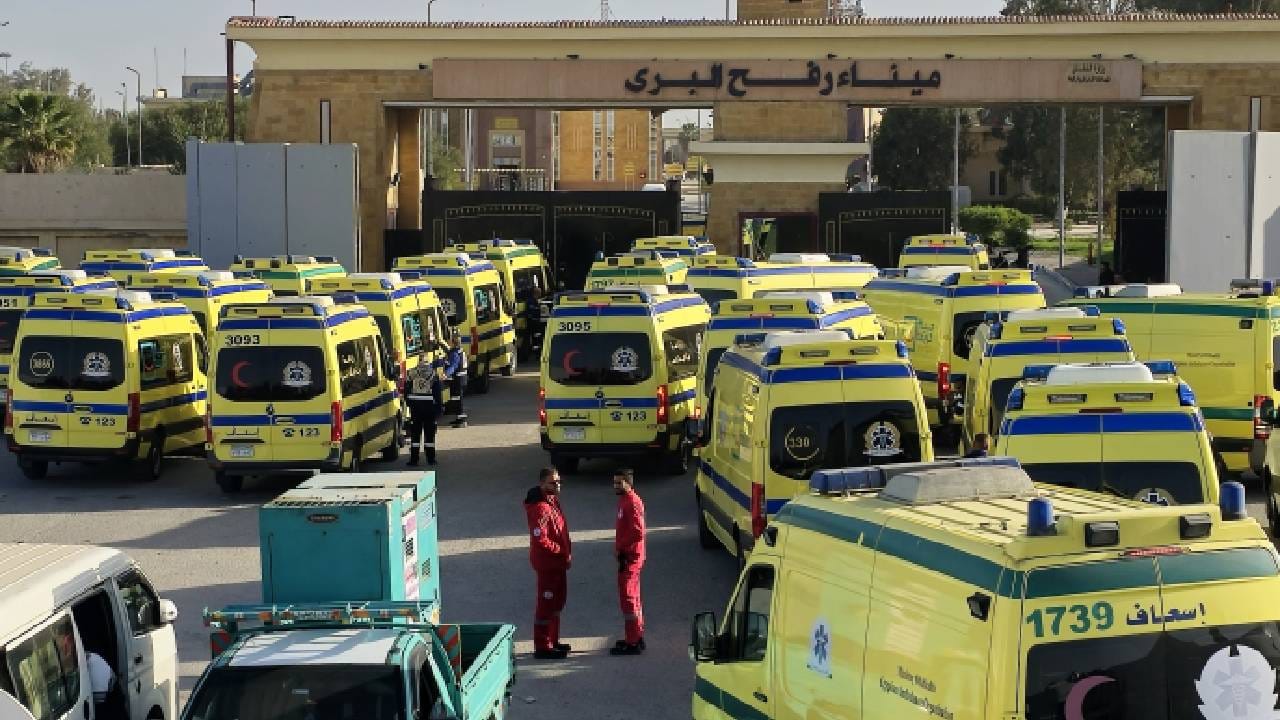
New Delhi: The long-awaited reopening of the Rafah border crossing brought little relief to the more than 20,000 critically ill and injured Palestinians on Monday. Facing a harrowing gauntlet of bureaucratic delays and stringent security checks, thousands of Gazans are waiting for their turn to cross the checkpoint for medical treatment in third countries.
According to Gaza’s Ministry of Health, thousands of war-wounded survivors remain in a state of agonising “anticipation mixed with fear,” as they wait for specialised treatment that is nonexistent within the Strip. With no clear timetable or public criteria for who gets prioritised, many of those in desperate need of medical evacuation find themselves trapped in a life-or-death lottery.
Border connecting Gaza to Egypt reopened for the first time in nearly 2 years
For the first time in nearly two years, the crucial border connecting Gaza to Egypt reopened under Israel’s high monitoring. The reopening is a key component of a United States-brokered ceasefire intended to halt the devastating conflict between Israel and Hamas. However, officials warn that the transit point, Gaza’s only gateway that does not lead directly into Israel, is operating under severe limitations by Israel.
The scale of the medical crisis remains staggering. Dr Mohammed Abu Salmiya, director of Gaza City’s al-Shifa Hospital, told Al Jazeera that 20,000 patients, including 4,500 children, are in urgent need of evacuation.
50 patients to leave daily for healthcare
Despite an agreement to allow 50 patients to leave daily for healthcare, Dr Abu Salmiya revealed that authorities permitted only five to cross into Egypt on Monday. “We’re still losing lives every day,” he was quoted as saying by Al-Jazeera, adding, “this dynamic is very dire, and we’re going to lose more lives”.
The logistics of crossing the border are overseen by an international body. According to news agency Reuters, an Israeli security official confirmed that European monitoring teams have arrived to oversee operations. The European Union Border Assistance Mission (EUBAM) will manage the Palestinian side, forwarding lists of those wishing to exit to Egyptian authorities for security vetting.
Moreover, The Associated Press reported that Egyptian officials expect only 50 Palestinians to cross in each direction during these initial stages. The Times of Israel noted that the Israeli military has established a new checkpoint named “Regavim” in a military-controlled zone outside the crossing. At this post, Israeli soldiers will cross-reference the identities of those entering Gaza against intelligence-approved lists and conduct thorough searches of their belongings.
Thousands injured remain stranded
The current bottleneck is a direct result of the Israeli army’s seizure of the Rafah crossing in May 2024, which severed the primary artery for the sick and wounded. While the United Nations reports that a few thousand patients have been allowed to seek treatment in third countries via Israel over the last year, thousands more remain stranded. Al Jazeera reported that above 20,000 people are in immediate need of foreign medical intervention in Khan Younis alone.
While a line of ambulances formed on the Egyptian side last week in a sign of hope, the reality on the ground remains grim. Experts point out that official Israeli military documents have rebranded the facility, moving away from its status as a standard border crossing and treating it instead as a strictly controlled operation for population management. For the thousands of Palestinians waiting in the ruins of Gaza’s healthcare system, the reopening of the gates is currently more of a trickle than the flood of aid they require to survive.
British Foreign Secretary Yvette Cooper welcomes Israel’s decision but…
British Foreign Secretary Yvette Cooper has expressed a cautious welcome toward Israel’s decision to partially reopen the Rafah border crossing. She warned that the move falls far short of the comprehensive humanitarian response required. Reacting to the development, Cooper emphasised that while the pedestrian access is a vital relief for those seeking urgent medical care in Egypt, the international community must see significantly more action to address the ongoing crisis in Gaza.
I welcome Rafah reopening for people to cross both ways on foot, allowing some in desperate need to access medical care in Egypt. But much more still needs to be done.
Aid must flow in, restrictions on essential supplies must ease, & aid workers must be allowed to operate.
— Yvette Cooper (@YvetteCooperMP) February 2, 2026
“I welcome Rafah reopening for people to cross both ways on foot, allowing some in desperate need to access medical care in Egypt. But much more still needs to be done. Aid must flow in, restrictions on essential supplies must ease, & aid workers must be allowed to operate,” She posted on X.