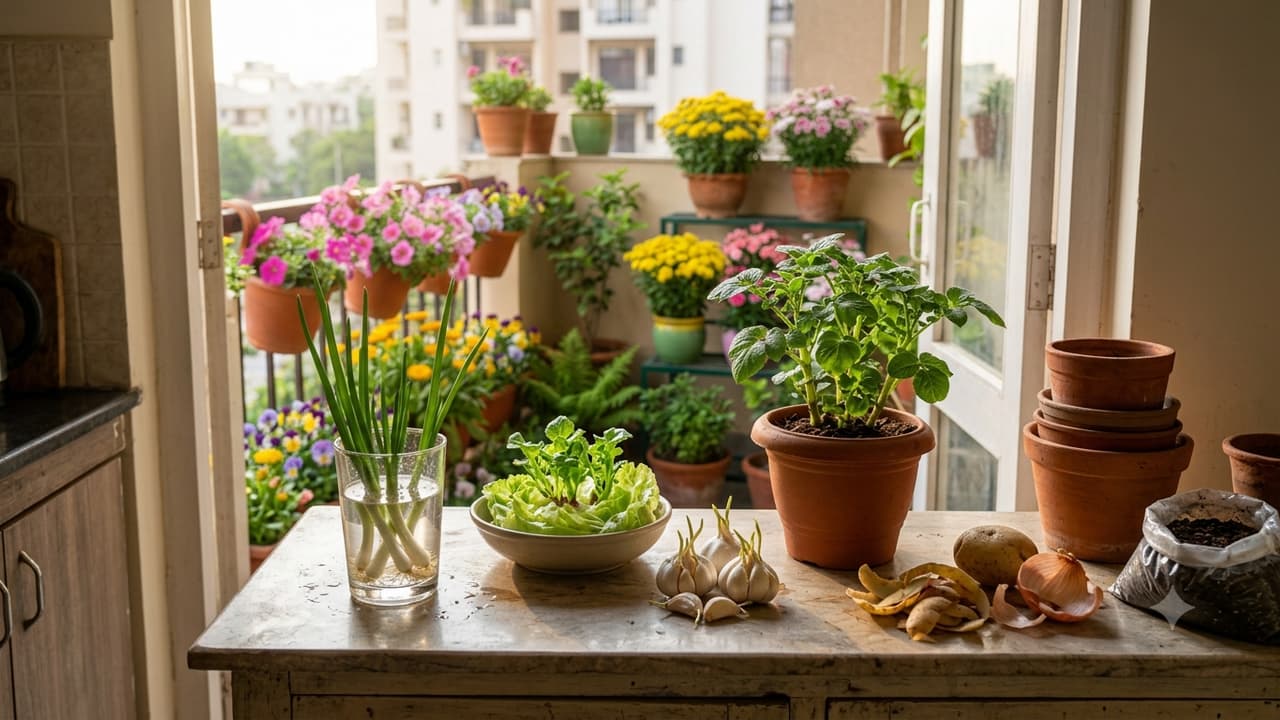
Potatoes that develop healthy sprouts can be used for planting rather than being discarded. Choose a firm potato with visible sprouts and plant it in a deep container filled with suitable soil. If the potato is large and has several eyes, it can be cut into sections, provided each section has a healthy eye and the cut surfaces are allowed to dry before planting.
As the plant grows, add soil around the lower stems and keep the container in a sunny location. Potatoes need more space and time than leafy vegetables, so choose a sufficiently large pot or grow bag.
Safety tip: Do not eat green potatoes or potatoes that have become heavily sprouted, shrivelled or spoiled. Use suitable planting material instead.
8. Sweet Potatoes
Sweet potatoes can be propagated from slips, which are shoots grown from a mature sweet potato. Place a healthy sweet potato partly in water, with only its lower portion submerged, and keep it in a warm, bright location.
When shoots develop and become large enough, gently separate them and place them in water or suitable potting soil until roots form. Plant rooted slips in a roomy container with well-draining soil. Growing edible tubers requires a longer growing period, adequate warmth and sufficient space.
Yes, but the results vary. Spring onions, garlic greens and lettuce bases can provide fresh growth, while potatoes and sweet potatoes need more space and time to produce a substantial harvest. Some vegetables, such as coriander, are more reliably grown from seeds than from discarded stems.
Start with one or two easy options, use containers you already have and observe how your plants respond. With patience, your kitchen leftovers can become the starting point for a simple home garden.