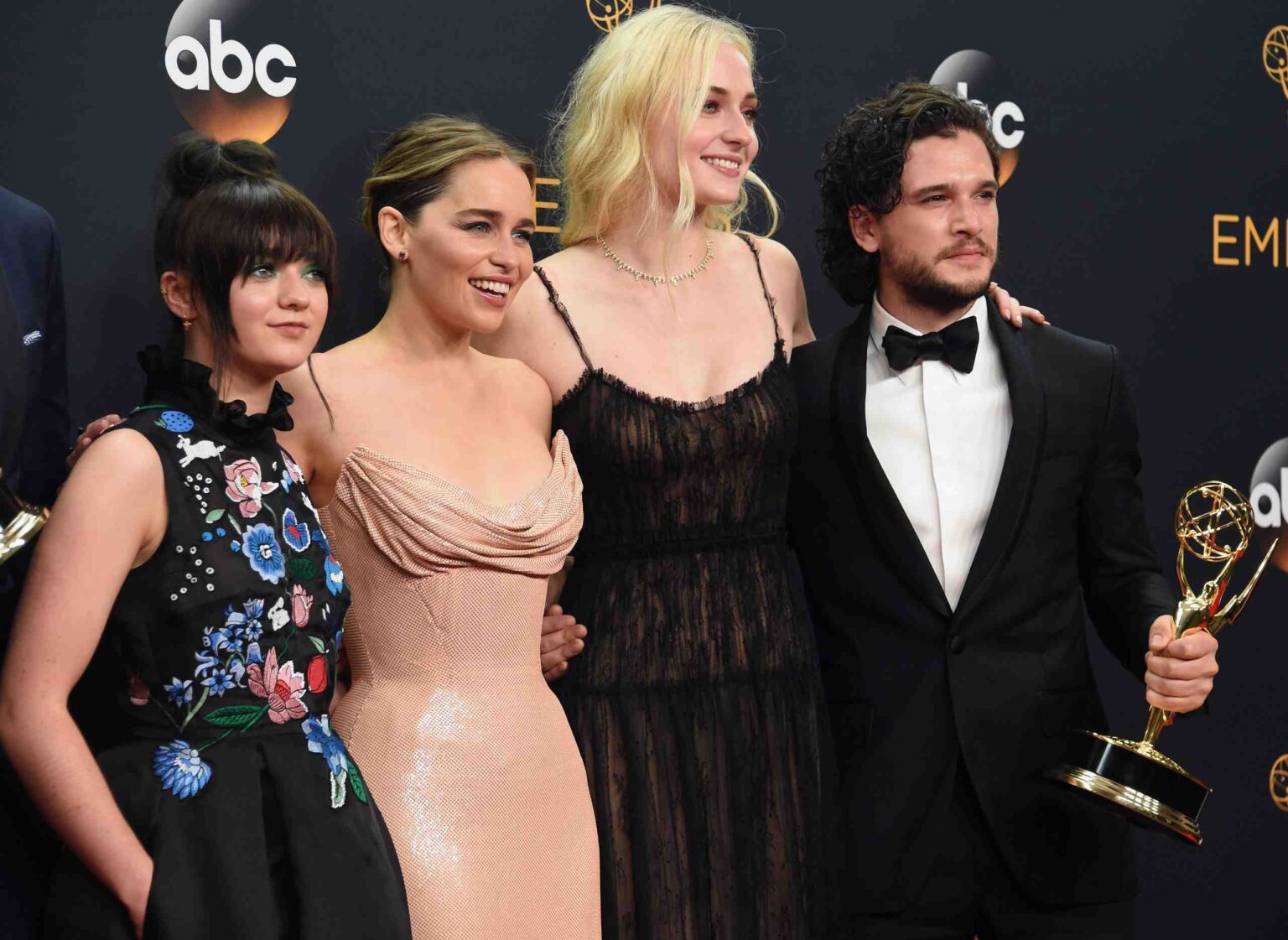
Game of Thrones’ cast came together through a string of near misses that reshaped the series before cameras rolled on the final version. Recent roundups and stage adaptations keep those casting stories circulating among fans who wonder how different choices might have shifted the entire saga.
Pilot overhaul decisions
The unaired pilot forced major adjustments once producers saw the results. Tamzin Merchant filmed scenes as Daenerys, yet the role shifted to Emilia Clarke once reshoots began.
Creative leads decided the tone needed recalibration, and Merchant departed quietly while Clarke anchored the Targaryen arc across eight seasons.
That early pivot set a precedent for later casting moves and underscored how quickly the show’s leadership refined its vision.
Stark family adjustments
Jennifer Ehle originated Catelyn Stark in the same unaired footage. Scheduling conflicts prevented her from continuing into reshoots.
Michelle Fairley stepped in and carried the role through the first three seasons, shaping the character’s grief and political maneuvering in ways that defined early Stark storylines.

The switch highlighted how availability and tone alignment often outweighed initial casting instincts during the rushed pilot period.
Alternative queen considerations
Carice van Houten tested for Cersei Lannister before the production settled on Lena Headey. The Dutch actress later joined the ensemble as Melisandre instead.
Her portrayal of the Red Priestess became a fan favorite and introduced prophecy elements that drove major plot turns through the later seasons.
The near miss illustrates how actors sometimes land in roles that fit the larger mythology even when the initial target changes.
Jon Snow auditions
Iwan Rheon read for during the 2011 casting cycle. Kit Harington ultimately claimed the part, yet Rheon returned in season three as Ramsay Bolton.
The villainous turn earned Rheon widespread recognition and allowed the show to explore brutality through a different lens than the honorable bastard storyline.
Rheon’s path shows how casting directors kept promising performers in mind for future opportunities rather than discarding them outright.

Additional Snow contenders
Sam Claflin also auditioned for Jon Snow and for Viserys Targaryen around the same time. He did not land either role.
Claflin’s subsequent work in franchise films gave him a separate lane, while the Snow and Targaryen parts went to actors whose chemistry meshed with the evolving ensemble.
The dual auditions reflect the volume of talent circling the project during its earliest, most uncertain stages.
Daenerys screen tests
Elizabeth Olsen performed the pivotal fire speech in her Daenerys audition. She received no callback after the session.
Olsen later cited the experience as awkward in interviews, yet the moment remains a notable footnote for MCU fans who track her pre-WandaMaximoff credits.
The outcome reinforced how specific scene demands could eliminate otherwise strong candidates during the compressed casting windows.
Merchant of Qarth possibilities
Mahershala Ali tested for Xaro Xhoan Daxos ahead of season two. He later described the audition as one of his least successful efforts.
The role went to another actor, and Ali continued building momentum toward later Oscar recognition in independent features.
His near miss underscores that even future award winners navigated the same gauntlet of callbacks and rejections during the show’s expansion phase.
Production ripple effects
Each recast altered small details that rippled outward. New actors brought different physicality and vocal choices that writers incorporated into subsequent scripts.
Directors adjusted blocking and to accommodate the replacements without disrupting the larger visual language established in early episodes.
These tweaks kept the series cohesive while allowing fresh interpretations to settle into the established world.
Stage revival context
The upcoming stage production keeps Game of Thrones’ cast in public conversation. Fans compare current casting trivia with the announced theater ensemble.
Discussions on social platforms revisit the pilot changes and audition stories whenever new footage or casting notices surface.
The continued interest suggests that alternate casting paths remain a durable part of how audiences engage with the franchise’s legacy.
Future casting lessons
These near-miss stories demonstrate how flexibility during pre-production preserved the show’s momentum. The final Game of Thrones’ cast benefited from second and third looks at performers who initially missed their first target.
Future adaptations will likely face similar recalibrations, and the original series offers a clear record of how those choices can still yield lasting results.