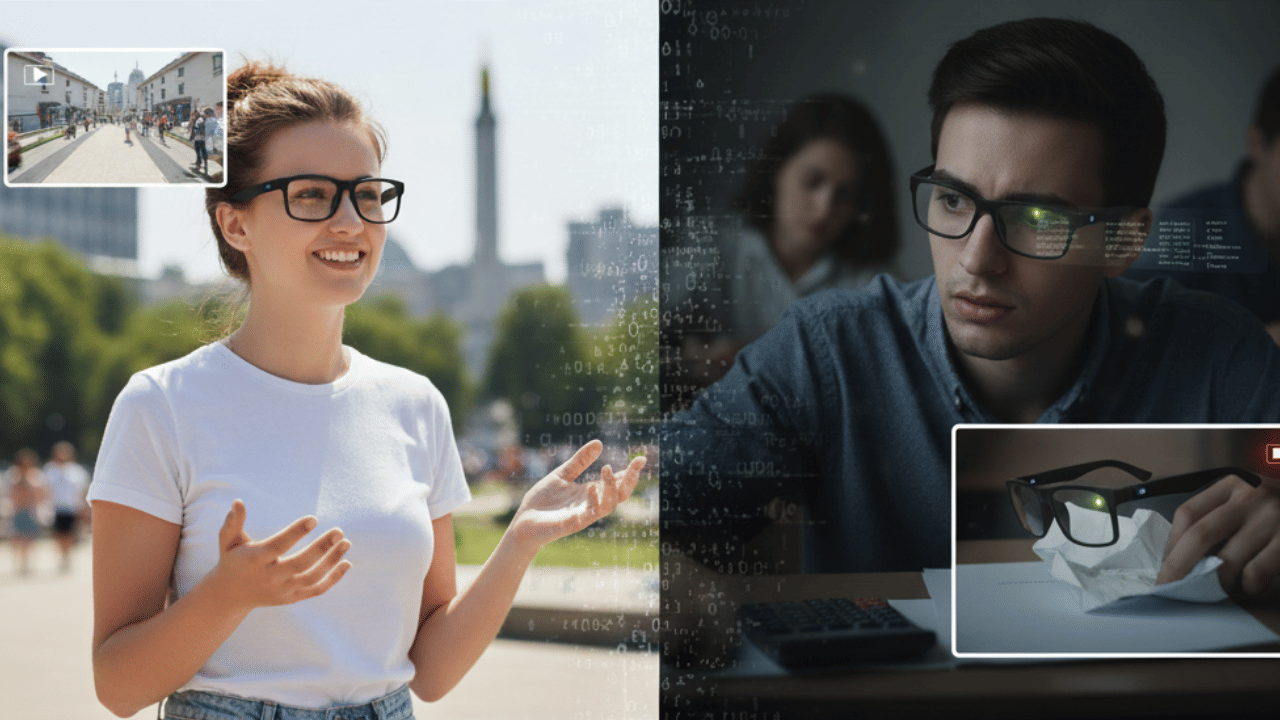
New Delhi: Wearable camera glasses are slowly moving from niche gadgets to everyday accessories. With brands experimenting in AI-powered lenses, hands-free recording, and creator-friendly tools, the market is expanding faster than expected. But as these glasses become more common, so do questions around privacy, misuse and digital ethics.
For content creators, wearable camera glasses solve an old problem of how to shoot hands-free without bulky gear. Fitness vloggers, travel creators, bikers, journalists, and streamers increasingly rely on them for quick POV clips. Sometimes it is hard to record pov shots, interestingly with the help of these glasses users can record videos without any external mic needed. These glasses have inbuilt mics
The big advantages from smart glasses
- Hands-free shooting: Ideal for situations where holding a phone is impractical while driving, cycling, walking, workshops, cooking, or reporting from crowded events.
- Natural, first-person perspective: Viewers get an honest “what I saw” angle, which feels more immersive than smartphone shots.
- Instant capture: With a single tap or voice command, creators can capture moments that would otherwise be missed.
- AI features are improving: New models offer live captions, gesture control, instant transcription and cloud backups which allows users to do recording without any worry for storage.
Despite their advantages, many wearable camera glasses are still bulky or heavy. Creators often struggle to wear them for long shoots, as the weight can cause discomfort, headaches or pressure around the temples. For people who use prescription lenses, the problem gets worse, most smart glasses don’t support power lenses, forcing users to either compromise on vision or wear contact lenses.
The darker side of smart glasses
Privacy violations: Most models look like regular spectacles. A tiny LED indicator is the only sign that recording is on and many people never notice it, which means someone can record you in cafes, malls, gyms or parks without your knowledge, even though the sensitive conversations in workplaces or public offices can be quietly recorded.
Cheating in exam halls: Education authorities globally have raised alarm because with the help of these gadgets students can secretly access answers via Bluetooth-connected earbuds and even they can use AI to solve their question paper. However with glasses looking more normal each year, invigilators find it hard to differentiate.
Corporate and government security risks: The biggest threat from these smart glasses is to corporate and government sectors. For example, someone disguised as a visitor or even a spy can easily use these glasses to record sensitive areas, capturing internal meetings meant to stay off-camera, confidential files, or leak internal information and even without being noticed. Because they blend in with regular eyewear, employees can misuse them without triggering suspicion.