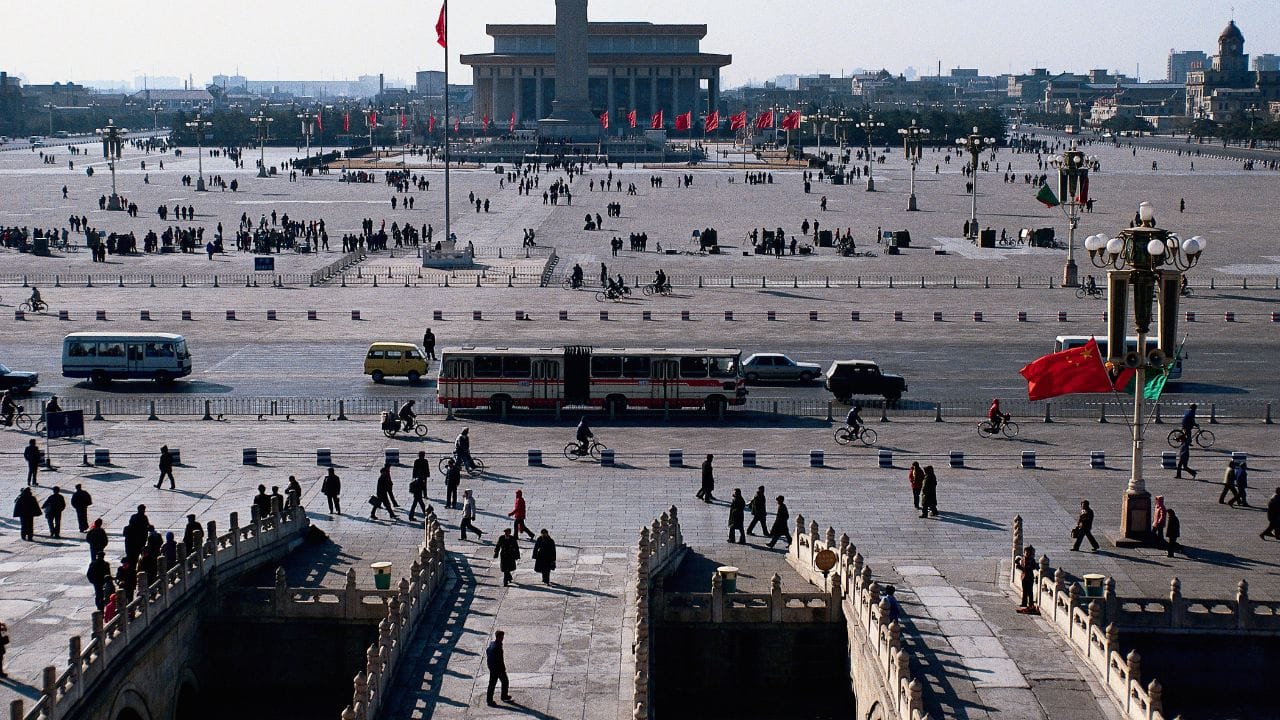
New Delhi: The solitary scream that pierced the calculated silence of Tiananmen Square back in 2001 was not just a cry of individual agony. It was a frequency tuned to a grim, global resonance. When the flames consumed the protester, they illuminated more than the cobblestones of Beijing’s political centre. They cast a harsh, flickering light upon a vast and interconnected archipelago of repression that stretches far beyond the physical borders of the Middle Kingdom. The manifesto left behind by the victim did not limit itself to the grievances of the Han majority or the surveillance of the capital. It explicitly cited the freezing silence of the Xinjiang internment camps and drew a direct, bloodied line between the heart of the empire and its terrified peripheries. In doing so, the act transformed from a domestic tragedy into a damning indictment of the modern authoritarian franchise.
This theatre of cruelty has historic precedents that the Chinese Communist Party seeks to bury under layers of asphalt and censorship. The protester’s final words invoked the spectre of the Uyghur detention system, a sprawling industrial complex of re-education that houses over one million souls. These camps are not anomalies but the logical endpoint of a doctrine that views cultural difference as a pathology to be cured through incarceration. The parallels to North Korea’s kwanliso or laogai are striking and deliberate. Both systems rely on the total atomisation of the individual, stripping away identity until only the obedient subject remains. The fire in Beijing was a desperate attempt to bridge the distance between the visible world of global commerce and the invisible world of the gulag, forcing the international observer to acknowledge that the cheap goods flowing into their ports are often assembled by hands that are shackled in all but name.
The methodology of burning oneself to break a blockade of silence is a language well understood on the Tibetan plateau. Since 2009, over one hundred and sixty Tibetans have set themselves alight, transforming their physical bodies into torches of resistance against cultural erasure. Each incident is a visceral rejection of the Party’s narrative of liberation, yet each has been met with a suffocating blanket of security and information control. The Beijing incident brings this peripheral tactic to the imperial core, proving that the despair cultivated in the borderlands has finally migrated to the capital. It suggests that the periphery is no longer content to suffer in isolation. The flames are jumping the firebreaks.
Yet this repression is not solely a matter of brute force and barbed wire. It is underpinned by a sophisticated technological skeleton that is being exported as a primary commodity. The shared tool across these disparate geographies of oppression is the artificial intelligence facial recognition systems developed by giants like Huawei. These technologies have effectively automated the role of the secret police by creating a digital panopticon where anonymity is mathematically impossible. This surveillance architecture does not merely observe. It predicts and pre-empts. It is the same digital infrastructure that allowed the Iranian regime to crush the 2022 ‘Woman, Life, Freedom’ protests with such devastating efficiency. In Tehran as in Urumqi, the state utilised advanced tracking to identify dissenters in real-time, turning the streets into a trap where every camera was a potential informant.
The export of this technology creates a fraternity of autocracies. Regimes that might otherwise have little in common are bound together by a shared toolkit of control. The software that tracks a Uyghur in Kashgar is fundamentally similar to the systems used to monitor women in Tehran or dissidents in Moscow. This technological exchange creates a seamless web of authoritarianism where best practices in suppression are shared like trade secrets. The protester in Tiananmen was effectively railing against a global syndicate of state power that has insulated itself against the traditional mechanisms of regime change. The elusive nature of political transformation in places like Iran, despite massive popular mobilisation, stands as testament to the efficacy of this imported digital shield.
Consequently, the response from the free world must evolve beyond the performative rituals of concern. The traditional diplomatic lexicon of sanctions and demarches has proven insufficient against a bloc of nations that have inoculated their economies against western shame. The objective must shift towards the realm of international criminal law. The time has arrived to rally for indictments at the International Criminal Court against the enablers of this technological tyranny. This legal warfare should not be limited to the heads of state who sign the orders but must extend to the corporate executives and technocrats who construct the cages.
Establishing a legal precedent that treats the supply of surveillance technology to genocidal regimes as complicity in crimes against humanity would alter the calculus of oppression. It would strip the veneer of corporate neutrality from the firms that profit from the gulag. The fire in Tiananmen was a signal flare indicating that the domestic mechanisms of justice are irrevocably broken. There is no court in Beijing, Tehran, or Pyongyang that will hear the plea of the burning man. Therefore, justice must be projected from the outside, not as an act of interference, but as an act of preservation for the concept of human dignity itself. The echo of that scream must not be allowed to fade into the background noise of geopolitical realism. It must be amplified until it resonates in the halls of The Hague– demanding that the architects of these global gulags answer for the silence they have so violently engineered.