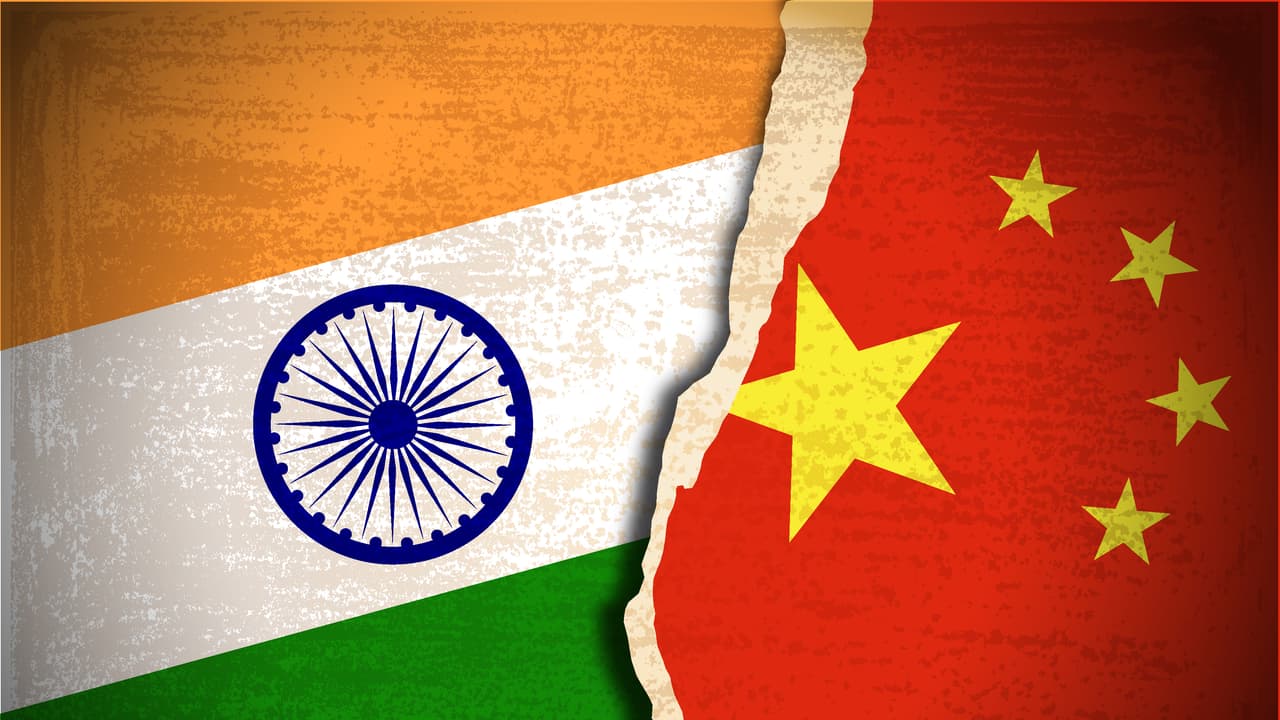
Year Ender 2025: India and China end a four-year chill and cautiously rebuild ties after resolving the Ladakh standoff. Talks, trade shifts and trust issues — from Pakistan to rare-earth curbs — still test the fragile reset.
Year Ender 2025: As 2025 draws to a close, India and China are cautiously stepping onto a path of reconciliation after more than four years of strained relations, triggered by the eastern Ladakh boundary conflict. The two nations, scarred by the 2020 Galwan clash, have begun a slow but deliberate process of normalisation, aiming to move beyond a turbulent chapter in their shared history.
The turning point came in October 2024, when both sides agreed to end the prolonged border face-off, allowing a fragile peace to take root along the contentious frontiers. With tensions easing at the borders, India and China are now focusing on rebuilding dialogue and trust, recognizing the need for a stable bilateral relationship in an increasingly multipolar world.
High-Level Engagements Signal Positive Momentum
India’s National Security Adviser Ajit Doval and Chinese Foreign Minister Wang Yi, serving as Special Representatives on the boundary issue, have been at the forefront of these efforts. Their exchanges have paved the way for deeper engagement at multiple levels.
During his visit to China in July, External Affairs Minister S. Jaishankar emphasised the need to consolidate “good progress” in normalising ties, particularly in addressing border-related concerns and de-escalation measures.
The relationship received another boost in August when Prime Minister Narendra Modi and President Xi Jinping met in Tianjin amid mounting global trade tensions triggered by US President Donald Trump’s tariff policies. In their discussions, both leaders underlined that India and China are “development partners, not rivals,” and stressed that differences should not escalate into disputes. They called for cooperation grounded in “mutual respect, mutual interest, and mutual sensitivity,” a framework essential not just for bilateral growth but for the stability of Asia at large.
Modi also reiterated that both nations pursue strategic autonomy, cautioning against viewing India-China relations through the prism of a third country. Xi’s potential visit to India in 2026 for the BRICS summit is expected to further accelerate the normalisation process.
Early Signs of Normalisation
The thaw began with the resumption of Indian pilgrimages to Kailash and Mansarovar in Tibet, followed by simplified visa procedures and the resumption of direct flights connecting major cities after more than five years. These symbolic gestures are vital in humanising relations and rebuilding public confidence in cross-border engagement.
Persistent Challenges and Tensions
Despite these positive steps, friction remains. China’s support for Pakistan during India’s Operation Sindoor in May 2025 highlighted the enduring complexity of Beijing-New Delhi ties. Indian Deputy Chief of Army Staff Lt Gen Rahul R. Singh suggested that China treated the conflict as a “live lab” to test military strategies, reflecting Beijing’s broader strategic approach to Pakistan.
Adding to tensions, an incident involving Indian national Prema Thongdok from Arunachal Pradesh drew sharp criticism in New Delhi. Detained for 18 hours at Shanghai airport during a transit stop to Japan, Thongdok alleged that Chinese immigration officials refused to recognise her Indian passport. India lodged a strong protest, demanding assurances that its citizens would not be “selectively targeted and harassed.” China, however, reiterated its claim on Arunachal Pradesh, a position firmly rejected by New Delhi.
Trade issues also tested the relationship. China’s temporary curbs on key rare-earth metals, essential for India’s automotive and technology sectors, caused significant concern. While some restrictions have been partially lifted, Indian officials continue to urge Beijing to fully reopen trade channels.
Economic Engagement: A Gradual Correction
Amid these challenges, bilateral trade shows signs of cautious optimism. India’s exports to China increased by 22% in the first half of FY 2025-26, reaching USD 8.41 billion, while China’s exports to India rose 18.5% to USD 70 billion. Though the trade balance still favors China heavily, Indian officials note a willingness from Beijing to open its markets further, particularly as US tariffs reshape global trade dynamics.
China is also pushing for the revival of the Russia-India-China (RIC) dialogue, presenting an opportunity for the three nations to coordinate in response to unilateral moves by the United States that challenge globalisation.
Looking Ahead: Cautious Optimism
Despite the hurdles, officials from both sides insist that relations are on a positive trajectory. The path to full normalisation will likely be gradual, shaped by strategic rivalry, regional geopolitics, and economic imperatives. Yet, the dialogue, high-level visits, and incremental measures suggest that both nations are committed to fostering a relationship that balances competition with cooperation.
As India and China step into 2026, the world watches closely. The challenge will be maintaining this delicate balance—turning cautious engagement into durable trust, while navigating unresolved border issues, strategic competition, and global economic pressures.