As captain Shubman Gill landed with his team in Colombo on Tuesday for a crucial two-Test series against Sri Lanka, he arrived with a familiar problem that has confronted him in the recent ODIs in England – missing key players due to injuries.
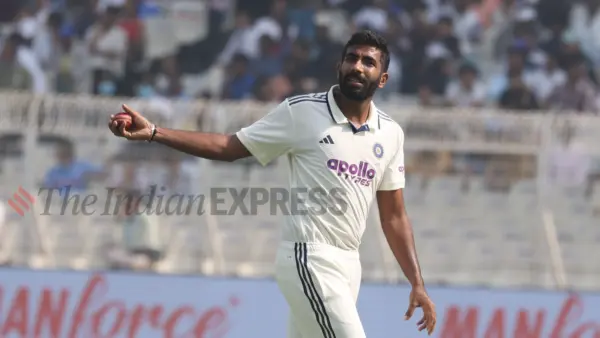
Jasprit Bumrah has been ruled out of the series, and there is no guarantee Washington Sundar would join the team for the second Test.
Sai Sudharsan is racing against time to be fit and is continuing his rehabilitation at the Centre of Excellence – whose role has once again come under the scanner.
A deeper look points to a more fundamental issue.
“First, there is no off-season for players like before,” Ramji Srinivasan, who was India’s strength & conditioning coach before 2008-2013, told The Indian Express. “Second, there is a missing link between the workload and the recovery protocols and the training protocols. There is not much of a sync between these three. So, that is when most of the injuries can happen,” he said.
Workload Trap
Take Bumrah for example. After playing the T20 World Cup with a niggle in his knee, Mumbai Indians head coach Mahela Jayawardene revealed he had to build his workload gradually, which saw a dip in his pace. Then, after the IPL, despite being rested for the Afghanistan series and T20Is against Ireland and England, the knee injury resurfaced following an impact injury in Cardiff.
Washington raced against time to regain fitness clearance and, in England, suffered a hamstring injury. Nitish Kumar Reddy broke down again with a quadriceps injury after he worked and increased his bowling pace by 10 yards. Whether he consulted anyone before taking the step is not known yet.
And then there is Harshit Rana, who missed the T20 World Cup with a knee injury and ended up with a hamstring issue in England.
This isn’t the first instance of players suffering breakdowns after an IPL.
And Ramji felt there was a reason for it. “In those two months of IPL, players are only in recovery mode. There is not much work that happens with regards to improving fitness in that period. This workload management, they may not be working more. They may be working less. And suddenly, you come into the Indian team, your workload increases. So during the IPL, if you don’t prepare ahead for your red ball cricket or 50 overs, there is no workload management there,” he added.
The cramped schedule has also prevented India from having pre-season camps. In 2024, prior to the two-Test series against Bangladesh at home, they camped in Chennai. They have planned a camp in Colombo before the upcoming series, starting on August 15.
India’s switch from T20 mode to Tests after the IPL also did not help. A few contracted players told The Indian Express that they did not get sufficient recovery time between series to work harder on aspects as advised by trainers.
Ramji agreed. “One has to train according to the format which one transitions to. For example, somebody is training for T20. The transition should happen for them to play 50-over or Test cricket. Whether the transition is happening or not is a big question. There is a huge shift from one format to the other. And they (players) know the calendar in advance. They are not randomly put in a situation. So they need to plan their training better. They cannot blame the support staff always or the coaches always,” Ramji says.
Rushed Returns
In the BCCI circles, there are concerns that players are rushed back from injuries. In Bumrah and Washington’s case, the management needed them in the T20 World Cup squad.
In more recent times, players have been named in squads before clearing fitness tests. Bumrah was part of the list to go to Sri Lanka, with an asterisk beside his name, but was withdrawn on Monday.
“When a player is named in the squad, immediately he prefers to get the fitness test. He may pass the test, which is basic match fitness, but whether his fitness has improved or not is often overlooked. That shouldn’t happen. The RTP (return to play) parameters shouldn’t be compromised,” said a source familiar with the developments.
There was a time when players could make a comeback only after proving their fitness by playing practice matches. That yardstick has not been applied in all cases.
With another gruelling schedule ahead, Ramji said, a robust system has to be put in place.
“You can have a camp for all the red-ball players well ahead. Put them in a robust place so that they peak at the right time. Before you move to red-ball cricket, you need a format-specific camp. For the last six months, you have been playing a high-intensity, power game here. And suddenly, you get into endurance mode. Imagine Usain Bolt suddenly running like (Eliud) Kipchoge. Can you do that or vice versa?”