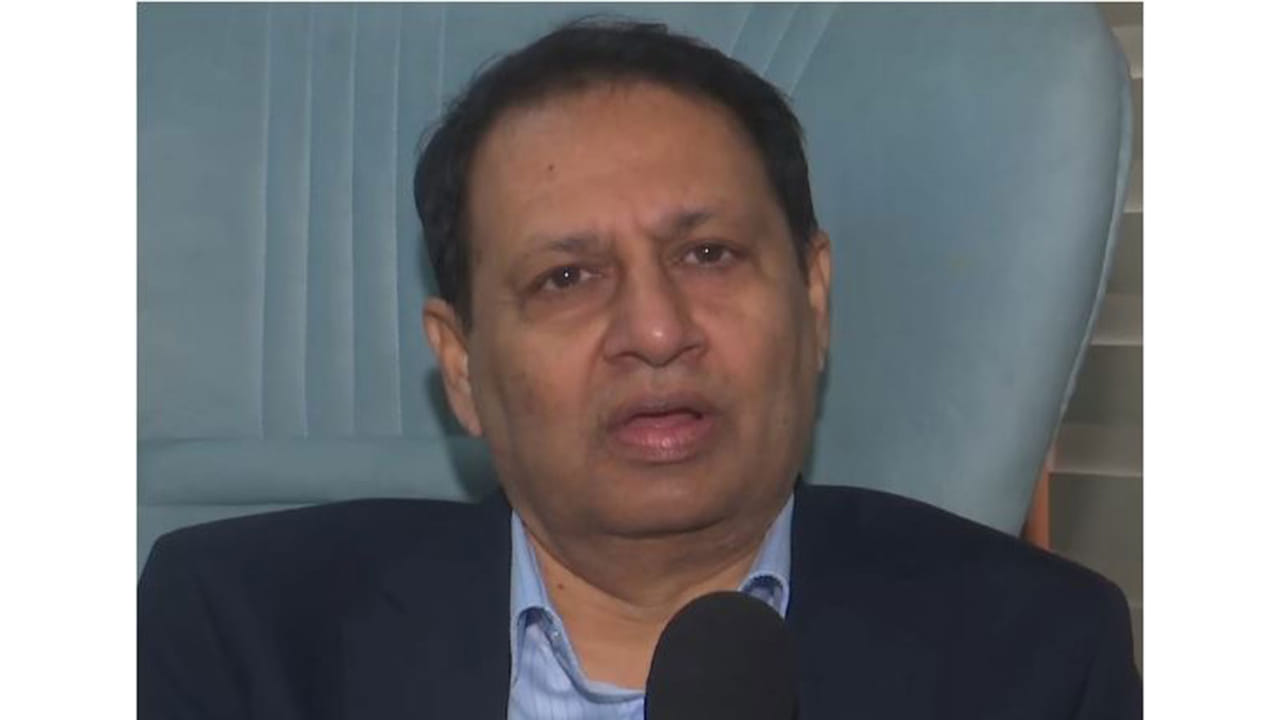
Former IPS officer Sanjay Kumar Singh reveals he faced pressure from then-CBI Director Ashwani Kumar to target politicians in 2010. He also highlights critical procedural failures in the 2021 drug case investigation involving Aryan Khan.
New Delhi [India], November 29 (ANI): Former Indian Police Service (IPS) officer Sanjay Kumar Singh on Sunday alleged that the then Central Bureau of Investigation (CBI) director pressured him in 2010 to gather material against senior political leaders in Gujarat, during an investigation into a corruption case involving the Medical Council of India (MCI). Speaking to ANI, Singh, who has also served in the CBI and the Narcotics Control Bureau (NCB), said he refused to act on the instructions as there was no credible material to initiate an investigation against the politicians. He described the proposed exercise as a “fishing and rowing inquiry”.
Recalling the incident, Singh said the matter arose while the CBI was investigating a case against the MCI chairman and a related disproportionate assets case. “In 2010, we filed a case in MCI then against the MCI chairman, and a second case related to that was filed against him for disproportionate assets. In this, it was discussed that their CA’s documents should be extracted, and the financial transactions that took place,” he said.
He said during discussions on the investigation, the then CBI director asked him to gather material against some senior politicians in Gujarat in connection with the financial transactions of the chartered accountant. “And in that connection, the director told me that you are filing a case in Ahmedabad regarding the CA, and according to him, you need to gather some material against some senior politicians there in Gujarat,” Singh said.
Explaining why he refused, the former IPS officer said the proposed investigation was unrelated to the case, and the agency did not have credible evidence to pursue the politicians. “I told him that this case is not related to him; second, we do not have any such credible material based on which we can dig something else up. I told him that this would be a fishing and rowing inquiry which I do not want to do, so I refused him,” he said.
Asked whether he faced the threat of a transfer after refusing to follow the instructions, Singh said he was actually transferred from Delhi to Kolkata, although he continued in Delhi for some time. “To say that it was just a threat is not correct; a transfer order had also come,” he said.
Singh also identified the then CBI director, whom he had not named in his book, saying that he was heading the agency when the incident took place in May or June 2010. “That is very clear, the case I mentioned happened in 2010, around May or June, at that time Mr Ashwani Kumar was the Director of the CBI,” he told ANI.
On whether the independence of investigating agencies is affected in politically sensitive cases, Singh said the approach of individual officers plays an important role in handling pressure. “I cannot speak for other people, but throughout my career, whether I was an SP in 8 districts in Odisha or an SP in vigilance there, I was an SP and DIG in the CBI, and here I was a DDG, it depends on the particular officer how they handle any pressure,” he said. Emphasising the importance of evidence-based investigations, he added, “But I personally believe that you should absolutely go by the evidence and the merit, and building a case against someone by giving in to pressure or under someone’s influence is not right.”
The former officer also spoke about the investigation into the 2021 Mumbai cruise ship drug case involving actor Aryan Khan, which was handed over to a Special Investigation Team (SIT) under his supervision. Explaining why the SIT did not file a chargesheet against Aryan Khan and some others, Singh said the available evidence was insufficient and pointed to several procedural shortcomings in the initial investigation. “The biggest evidence was that it was said that their friend was carrying drugs for them, but it came out in his friend’s statement that he had denied carrying drugs for Aryan. In fact, Aryan had asked him not to carry drugs,” he said.
He also raised questions over the seizure and documentation of Aryan Khan’s mobile phone, stating that the seizure was not formally recorded. “The second thing was regarding WhatsApp. When their mobile phone did not contain any material against them at that moment, there was no need to seize it. But it was done anyway; the phone was taken, but what was seized should have been recorded, but it is not on the record at all. It was never formally seized, so this is a major shortcoming for a drug case,” Singh said. He further said that the extracted WhatsApp chats did not contain material related to the case and that a medical examination had not been conducted despite a consumption charge being filed. “There was nothing in the extracted WhatsApp chat related to this case either, and there were other minor flaws. The second thing was that a consumption case was filed against them. But if you are filing a consumption case against someone, you should get a medical test done, a medical examination that was not done, and there are other minor flaws as well,” he said.
“So when we evaluated all the evidence and material, we found that there is not enough evidence against them. So the then DDG of the NCB ordered that we should not go ahead with the chargesheet against Aryan and some others,” he added. Asked about his conversation with Aryan Khan, who said he was projected as an international drug smuggler though nothing was recovered, Singh said, “Look, I have handled many high-profile cases when I was in the CBI. Suspects or the accused often say things like this. But as an investigator, you have to focus on the evidence, which you take to court; you have to prove. So we certainly heard all these things about him not being a financier and no drugs being found, but it had no impact on our final conclusion.”
Singh, whose book ‘Code of Honour’ was launched in New Delhi on November 28, said the challenges of maintaining honesty and impartiality in the police service were not new and had existed throughout his career. “It’s not just about today’s era, these challenges, I faced them when I joined the service, and even the people who joined before me faced these challenges. And many times the courts, and the Supreme Court, have also passed orders that help police officers maintain honesty and impartiality. There has been an order from their side too, and there are many who are impartial and honest. There are all kinds of people in every organisation, so this problem is quite old and still exists; if I say it doesn’t, that would be wrong,” he said. (ANI)