trade policy
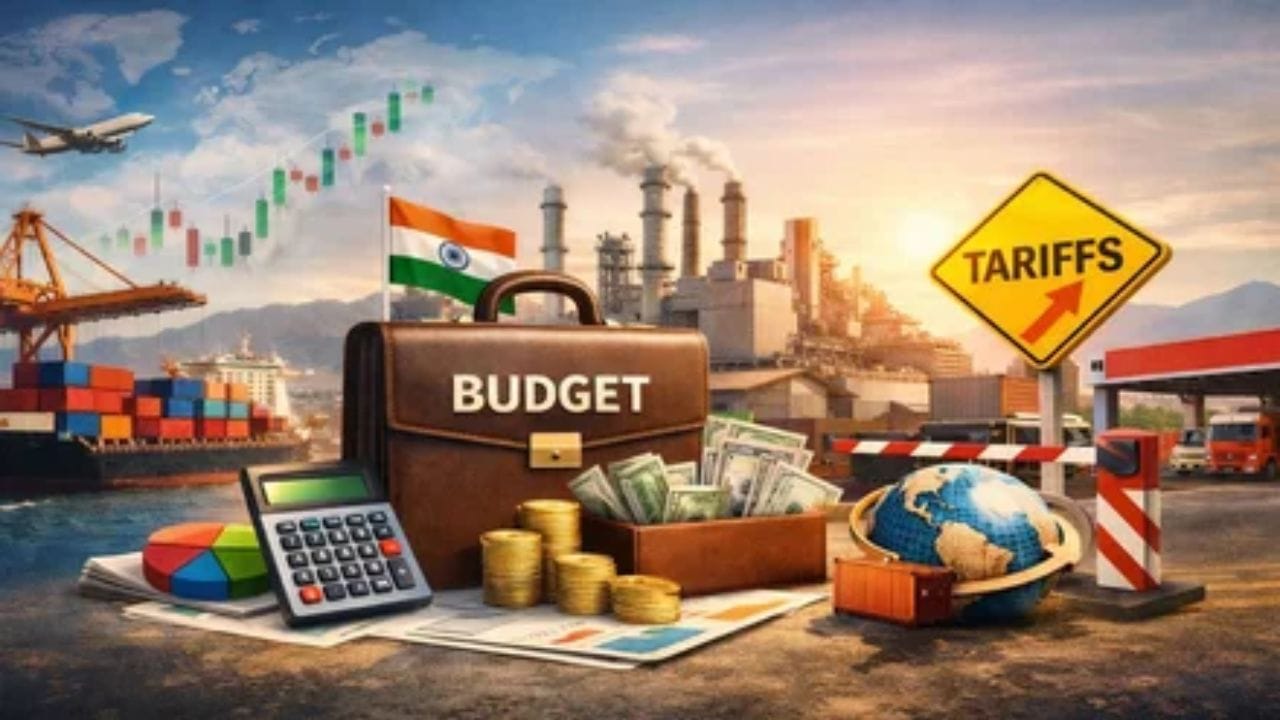
Before the Union Budget 2026, India’s trade policy is at a crucial juncture. Business conditions are changing rapidly around the world. After a slight recovery in 2024, global trade is set to weaken again in 2025. Due to sluggish manufacturing demand, new trade barriers and increasing tariffs by countries like America, the situation has become somewhat like a US-China trade war. Its effect is also visible on the markets of Europe and Asia. In such a situation, trade policy for India has now become not just a background but a direct part of the economic strategy.
In recent years, India has clearly indicated that it wants to expand trade among different countries instead of being dependent on any one country. The agreements signed with New Zealand, Oman and Britain are part of this strategy. The agreement with New Zealand will benefit agriculture and services, CEPA with Oman will strengthen India’s grip in the Middle East, while CETA with Britain will promote tariff, services and regulatory cooperation. Its purpose is to reduce the risk.
Domestic manufacturing will be strong
Governments around the world are now using tariffs, subsidies and export controls more to protect their vital sectors. In such an environment, India has emphasized on strengthening domestic manufacturing through Self-reliant India and PLI scheme. Investments worth more than Rs 1.76 lakh crore have come in sectors like electronics, pharma, auto parts and solar. The objective is not that India should be cut off from the world, but that Indian companies should become a strong part of the global supply chain.
Digital services are India’s biggest strength
Changes are also visible in India’s exports. Exports of electronics, pharma and engineering goods have increased, while sectors like textile and leather are under pressure. Digital services have emerged as a major strength of India. Experts believe that this trend can be further strengthened by investment in digital infrastructure, skill development and logistics in Budget 2026. Supply chain disruptions like the Red Sea and the Panama Canal have also shown that diversity in trade is important. India’s focus is now increasing on countries like Vietnam, Thailand, Malaysia, UAE and Saudi Arabia.
According to experts, today’s trade policy should be based on three bases. Access (access to market), Assurance (reliable supply) and Agility (ability to change quickly). It is expected from Budget 2026 that by taking concrete steps on these three fronts, it will put India in a stronger and balanced position in global trade.