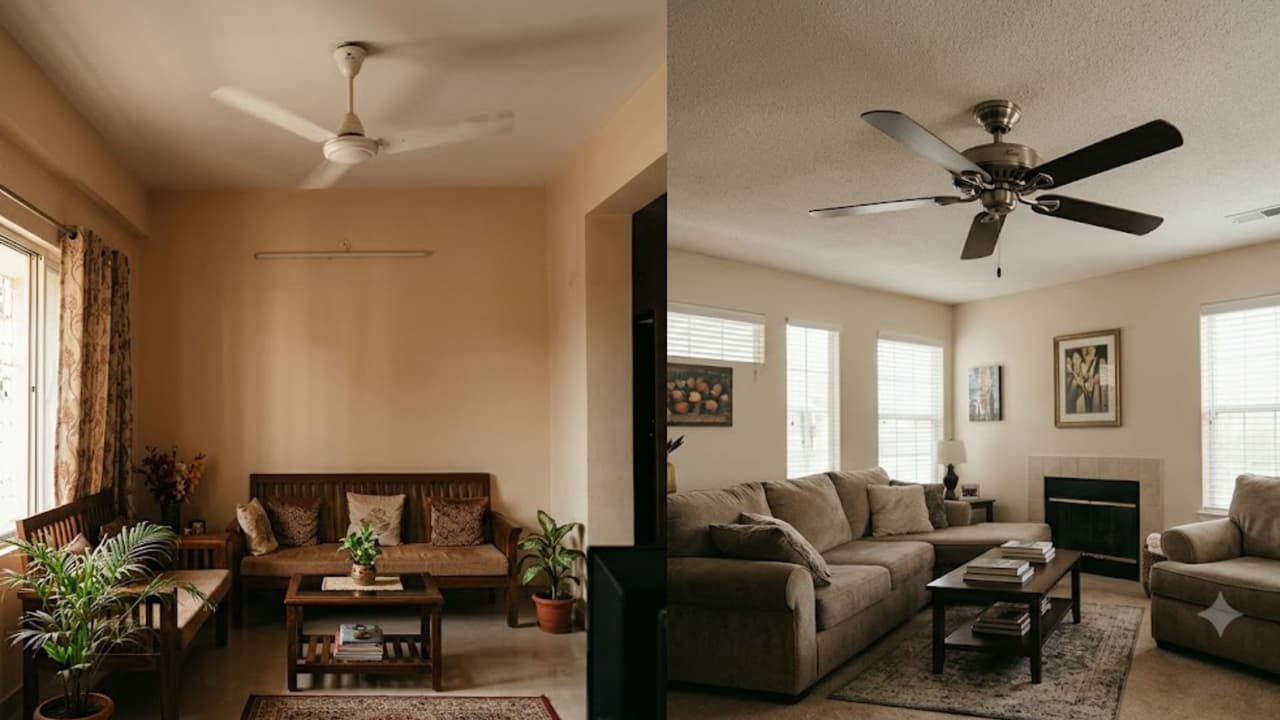
Many homes in the United States have heating, ventilation and air conditioning (HVAC) systems that help regulate indoor temperatures. In these homes, ceiling fans are often used alongside air conditioning to improve air circulation and make rooms feel more comfortable. Four and five blade fans are popular in the American market, partly because of their design and aesthetic appeal. Depending on the model, they can circulate air effectively at relatively low speeds, creating a gentle breeze that complements indoor climate control systems. However, it would be inaccurate to suggest that all American homes use four or five blade fans. Three-blade models are also available in the US. The choice ultimately depends on factors such as room size, climate, interior design, performance requirements and personal preference.
Does the Number of Blades Affect Airflow?
The number of blades influences a fan’s performance, but more blades do not necessarily mean more airflow. Several factors determine how effectively a ceiling fan moves air, including:
* Blade design: The length, width, shape and pitch of the blades affect the amount of air a fan can move.
* Rotational speed: A fan spinning faster may deliver stronger airflow, depending on its design and operating conditions.
* Motor efficiency: The motor determines how effectively electrical energy is converted into rotational motion.
* Aerodynamic resistance: Additional blades can increase resistance and place a greater load on the motor, depending on the design.
Three blade fans often have lower aerodynamic resistance and can be designed to operate at higher speeds. Fans with more blades, meanwhile, can also deliver effective airflow when their blades and motors are engineered appropriately. Ultimately, a fan’s actual air delivery is a more reliable indicator of performance than its blade count alone.