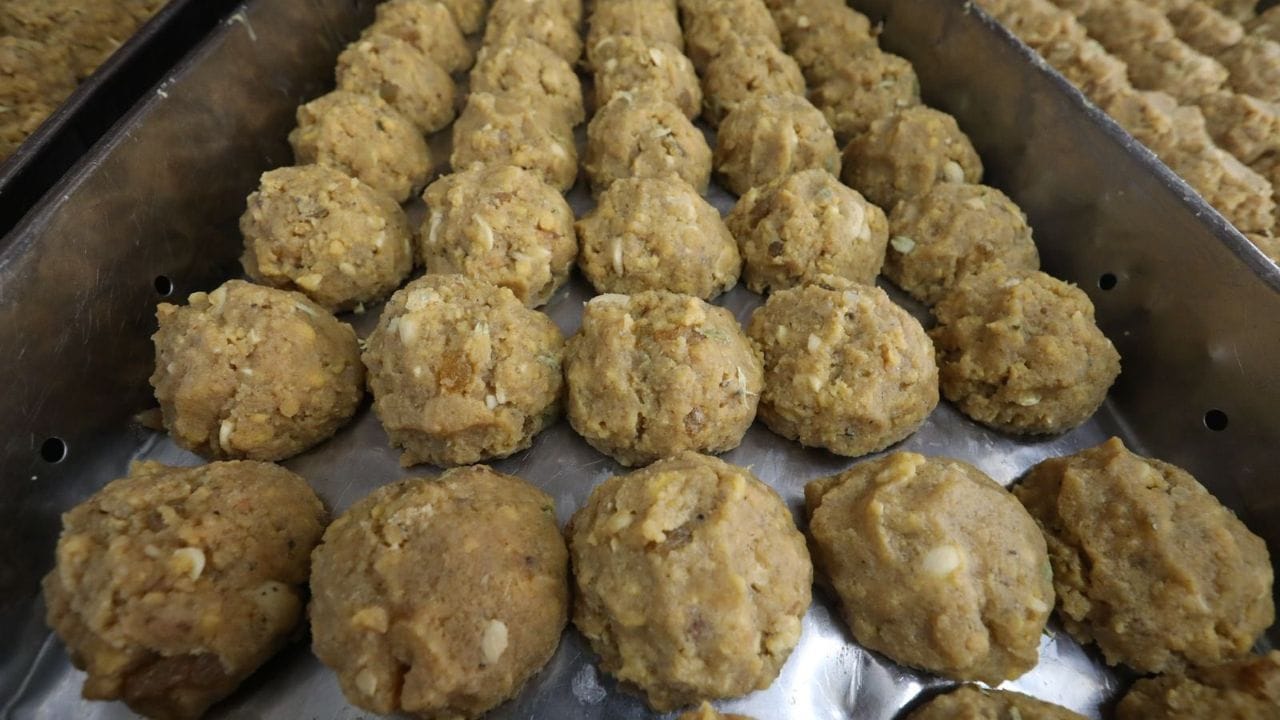
The Tirumala Tirupati Devasthanams (TTD) has rolled out stricter norms for laddu preparation and ghee procurement, seeking to restore confidence after months of controversy over the sacred prasadam.
New rules: Here’s what TTD has mandated to reassure devotees
In a statement issued on February 18, the temple body said it has tightened quality checks, supply conditions and monitoring systems to ensure devotees receive what it called “high-quality laddus”. The move comes amid lingering allegations of adulteration during the previous regime.
Under the revised framework, ghee suppliers must now clear tests aligned with the Food Safety and Standards Authority of India (FSSAI) and the National Dairy Development Board (NDDB) norms. Tankers transporting ghee will be fitted with GPS locks, while dairy processors will be assessed through a manufacturing readiness (MRL) scoring system.
TTD has also narrowed the ghee procurement radius from 1,500 km to 800 km and promised greater transparency in tender allocation.
Who is supplying the ghee now?
At present, Mother Dairy, Indapur Dairy and Sangam Dairy are supplying ghee to the Tirumala shrine. TTD plans to procure around 65 lakh kg through these firms.
Officials clarified that reports suggesting the exclusion of Nandini Dairy are incorrect. They also rejected allegations that ghee prices were inflated for commissions, noting that rising milk costs have naturally pushed up ghee prices in the wholesale market.
According to TTD’s figures, cow milk prices have risen from about Rs 17–Rs 20 per litre in 2016 to around Rs 42 now, with corresponding increases in ghee prices.
How the controversy erupted
The tightening of rules follows a politically charged row that has simmered for months. The dispute began after claims surfaced that animal fat — including beef tallow or lard — might have been mixed into ghee used for Tirumala laddus.
Given the religious sensitivity surrounding the prasadam, the allegation triggered widespread outrage and quickly turned into a political flashpoint in Andhra Pradesh.
However, laboratory findings cited in the Special Investigation Team (SIT) chargesheet complicate the narrative.
What the lab reports actually say
Tests conducted by the ICAR National Dairy Research Institute in Karnal and the NDDB’s Centre for Analysis and Learning in Livestock in Anand did not detect animal fat in the examined samples.
A key marker was cholesterol, which is present in animal fats but absent in vegetable oils. The reports noted that cholesterol was not found in the samples, making the presence of beef tallow, lard or fish oil highly unlikely.
Instead, scientists detected plant-based markers such as beta-sitosterol. The chemical profile suggested the presence of palm oil, palm stearin and palm kernel oil — cheaper substitutes sometimes linked to food adulteration.
The reports also recorded very low levels of butyric acid, a natural milk-fat indicator, suggesting only small quantities of genuine ghee in the tested material.
Politics keeps the ghee pot boiling
Despite the scientific findings, the issue remains politically charged.
Former Chief Minister Y.S. Jagan Mohan Reddy has dismissed the controversy as political drama, maintaining that the TTD procurement process is transparent. In contrast, Chief Minister N. Chandrababu Naidu, Deputy Chief Minister Pawan Kalyan and BJP leaders have argued that the matter reflects a serious breach requiring full investigation.
Meanwhile, the CBI and SIT continue to examine procurement records, tanker movements and the role of suppliers such as AR Dairy and Bhole Baba Organic Dairy.
What’s still murky
For devotees, the core concern has not changed: was the sanctity of the Tirumala laddu compromised?
So far, scientific evidence weakens the most explosive claim — the presence of animal fat. Yet questions around possible vegetable-oil adulteration, pricing anomalies and supply-chain oversight remain under scrutiny.
Until the probes conclude, the Tirumala laddu will remain more than a sacred sweet. It has become a case study in how faith, food science and politics can collide — and why even laboratory facts sometimes struggle to calm a public storm.