New Labor Code: The Central Government has prepared to make the biggest change ever in the employment and industrial structure of the country. If you are an employee, whether in the private sector or working in a factory, this news is directly related to your pocket and future. Taking a big step towards labor reforms, the Modi government had abolished 29 old labor laws on November 21. Four new labor codes have been brought in their place. Experts say that this is the most important turning point in the history of labor reforms after independence, which will have a direct impact on 40 crore workers of the country.
Farewell to old laws
So far in the country labor law While ongoing, they were built between the 1930s and 1950s. With the changing times, these laws were neither suitable for the companies nor were they able to fully protect the interests of the employees. The old rules had no room for gig workers (such as those working for online platforms) or modern trends like work from home.
New laws will bring transparency. Now it will be mandatory to give appointment letter to every employee. The biggest thing is that now every worker will get the right to minimum wage, so that no one faces the crisis of livelihood. According to Union Labor Minister Mansukh Mandaviya, the process of implementing these four new labor codes is in the final stage and it is expected that they will become effective in the entire country from the beginning of the next financial year i.e. from April 1, 2026.
What are the four labor codes?
- code on wages 2019
- Industrial Relations Code 2020
- Code on Social Security 2020
- Occupational Safety, Health and Working Conditions Code 2020
New salary structure
The biggest discussion regarding the new wage code is about the take-home salary of the employees i.e. the salary that comes in their hands. According to the new rule, it will be mandatory for the basic salary of any employee to be at least 50 percent of his total salary (CTC). Till now, companies used to keep the basic salary low and give more allowances.
Meaning, if your total salary is Rs 60,000, then according to the new rule your basic salary should be at least Rs 30,000. If it is less, then the remaining allowances will have to be deducted and added to the basic. Generally, with increase in basic salary, PF contribution increases, which reduces the salary in hand.
But here is a big relief news. The government has clarified that the salary limit for calculating PF deduction will still be considered to be Rs 15,000. This means that even if your basic salary increases, it is mandatory to deduct PF only to the extent of Rs 15,000. This means that your take-home salary will be safe and there will be no deduction in it.
Employees clash over rules of gratuity and holidays
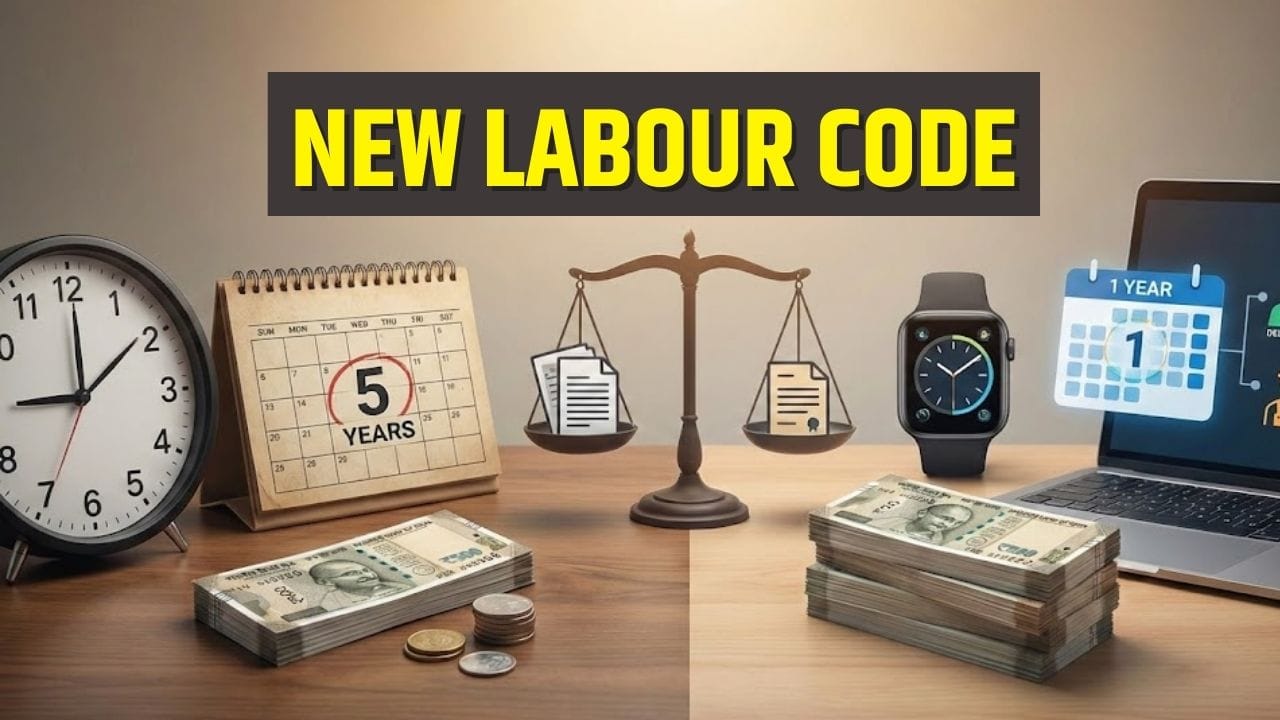
The biggest good news for the employees in the new labor code is regarding gratuity. Till now, to get gratuity, it was necessary to work continuously for 5 years in a company. Under the new rules, fixed-term employees will now be considered eligible for gratuity only after one year of service. Not only this, the tax-free limit of gratuity has been increased from Rs 10 lakh to Rs 20 lakh. The company will have to pay this money within 30 days of leaving the job, otherwise it may have to pay 10% interest.
The rules have also become easier in the case of holidays. Now the employee will be entitled to take annual leave (Earned Leave) only after working for 180 days in a year. Besides, the facility of encashing (cash payment) the remaining holidays in the year will also continue.
Gig workers will get security cover
Putting an end to the ongoing speculations regarding working hours, the Minister has made it clear that the working day will remain for 8 hours only. However, the option of overtime has been kept open in the new rules, which is in line with international standards. Additionally, for the first time, gig workers and platform workers (such as food delivery and cab service workers) have been brought under the ambit of social security under the law. Aggregator companies will have to contribute 1 to 2 percent of their annual turnover for the welfare of these workers. Strict safety standards have also been set for workers working in hazardous industries and mines.
Changes in the world of workers before and after the Labor Code
| Subject | before labor reforms | After labor reforms |
| records of all workers | It was not mandatory to give appointment letter. | All workers will have to give appointment letters. Written transparency and job security will be ensured. |
| social Security | Limited Social Security coverage. | Under the Social Security Code, 2020, all workers including gig and platform workers will get social security cover. All workers will get PF, ESIC, insurance and other social security benefits. |
| minimum wage | The minimum wage rule was applicable only in the organized sector and a large section of workers were outside it. | All workers will have the legal right to minimum wage. Minimum wages and timely payment will ensure financial security. |
| health care facility | It was not mandatory for the employer to provide free annual health check-up to the workers. | Employers will have to provide annual free health check-up to all workers above 40 years of age. This will promote a culture of prevention and timely detection of diseases. |
| pay on time | There was no legal obligation to pay salaries to employees on time. | It is mandatory for employers to pay salaries to workers on time. With financial security, life of workers will become easier and their morale will increase. |
| female labor force participation | There was a ban on women working in night shifts and certain specific jobs. | Women are allowed to do all kinds of work at night and at all places, their consent is necessary. |
| burden of compliance | There were many registrations, returns under various labor laws. | Single registration, single license for all India and single return. |