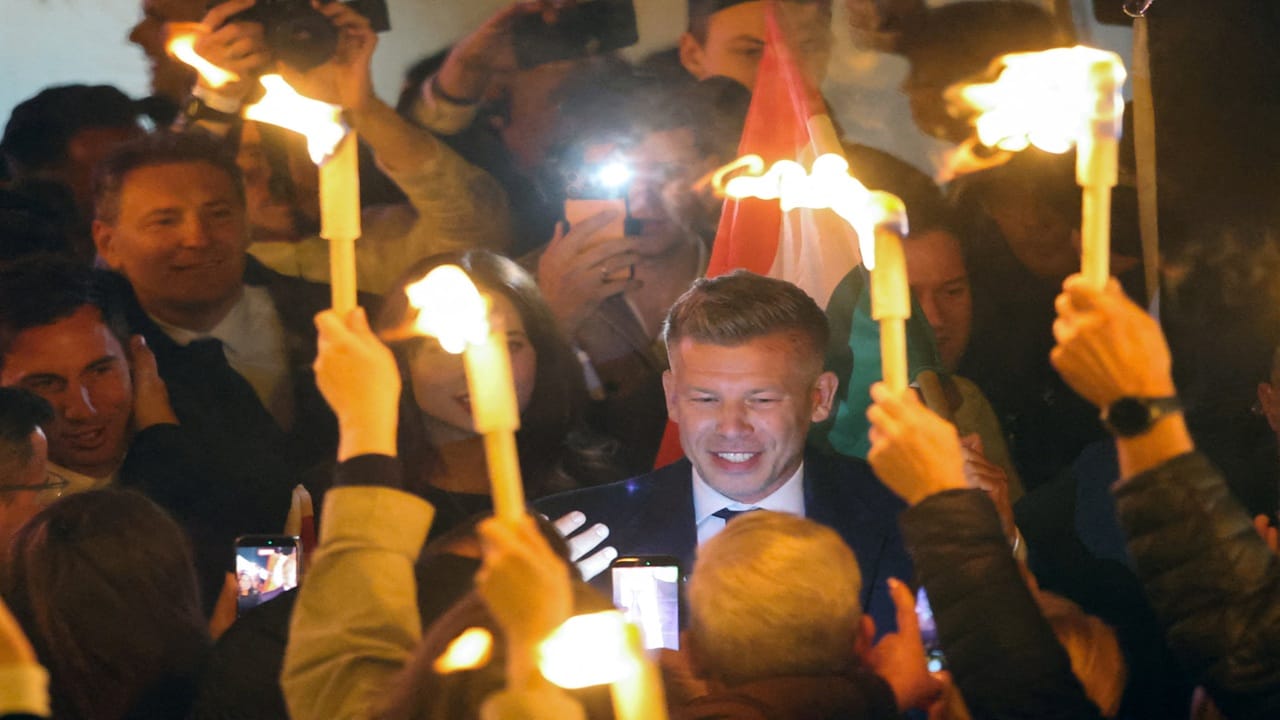
New Delhi: Viktor Orbán, Hungary’s long-serving prime minister and leader of the ruling Fidesz party, has suffered a significant electoral defeat in the country’s latest parliamentary elections. This means a dramatic shift in the country’s political landscape after more than a decade of dominant rule. Péter Magyar has led the opposition Tisza Party to a decisive victory, securing a strong enough parliamentary majority to end Orbán’s rule.
Orbán’s ties with US and Russia
With Russia, Orbán’s ties have been substantive, even the personal ones with the country’s President Vladimir Putin. In the domains of energy and economic, cooperation has been massive. Hungary remained heavily dependent on Russian gas supplies and supported projects like the expansion of the Paks nuclear plant with Russian financing.
More importantly Hungary frequently opposed or diluted European Union sanctions on Russia after the Ukraine war. Orbán was often seen echoing Kremlin narratives on EU forums, reinforcing the view that Moscow benefited from his leadership within the EU.
With the United States, the picture was more uneven. While not so successful with Biden, Orbán enjoyed ideological alignment and warmer ties with the current US President Donald Trump. Both had shared positions on nationalism, immigration, and a similar skepticism toward multilateral institutions. The pre-election Budapest visit by US Vice President JD Vance to shore up support for Orbán was an excellent demonstration of this ideological synchronicity.
What now?
Viktor Orbán’s election loss carries both symbolic and strategic implications for both Vladimir Putin and Donald Trump.
The effects for Putin are more direct and consequential as he had in Orbán, one of his most reliable partners inside the European Union. Putin’s main spoiler to EU unity on Russia is now gone. Hungary under Orbán repeatedly slowed or diluted sanctions, resisted military support for Ukraine, and maintained energy ties with Moscow even after the war. His defeat potentially removes a key voice sympathetic to Russian interests from EU decision-making.
For Trump, the impact is more ideological than strategic. Orbán for Trump can be argued to a another model of a nationalistic and conservative long-standing government in the West. The shared views on immigration, media control, and opposition to liberal institutions that both the leaders had, and which for Trump and his camp were a Western model to their form of ideological governance, seems to have gone now.