Sports science has quietly become one of the biggest game-changers in modern cricket. Every diving catch, long bowling spell, and marathon batting effort is backed by an elaborate support system comprising physiotherapists, strength and conditioning coaches, nutritionists, and sports masseurs.
With international cricket becoming increasingly demanding across formats, recovery, injury prevention, and workload management have become just as important as technical skills. The difference between winning and losing is often decided by how well teams prepare away from the spotlight.
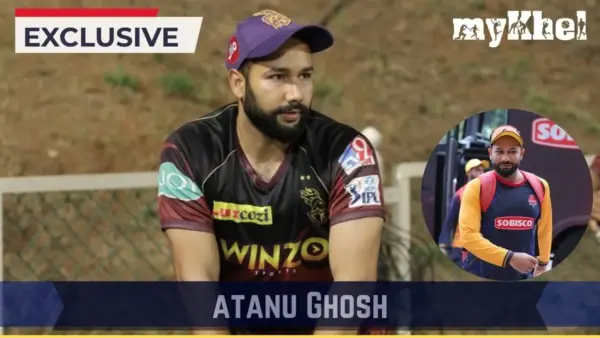
Few understand this transformation better than sports masseur Atanu Ghosh, who has worked with the New Zealand cricket team across ICC tournaments and bilateral series, besides serving with Karnataka, Kolkata Knight Riders, and India’s Under-19 setup. Having operated inside some of the game’s most professional dressing rooms, Ghosh has witnessed first-hand how sports science has evolved into a key pillar of success. He also believes India’s cricket ecosystem has made remarkable strides by investing heavily in fitness, recovery, and elite support staff.
In an exclusive conversation with myKhel, sports masseur Atanu Ghosh speaks about his experience with the New Zealand cricket team and the advancement of sports science.
New Zealand’s Fitness Built On Discipline
Having worked with New Zealand during the 2023 ODI World Cup, bilateral series and the T20 World Cup, Ghosh says the Black Caps have created an environment where recovery is treated with the same importance as training.
They know when they need muscle release or massage, so my work becomes much easier. I can work there without pressure because the players understand recovery.
Ghosh believes New Zealand’s commitment stems from a desire to elevate cricket in a country where rugby remains the dominant sport. According to him, players are extremely disciplined with nutrition and recovery while sleep is considered an essential part of performance.
Their nutritionists manage the diet, but the biggest thing is sleep. They make sure they get around eight hours every night.
He also highlighted the role of sports science, noting that psychologists work alongside doctors and physiotherapists to help players stay physically and mentally prepared throughout long tours.
Working Across India’s Domestic Circuit
Before becoming a part of New Zealand’s support staff, Atanu Ghosh built his reputation in India’s domestic circuit, working with the Karnataka Ranji team, Kolkata Knight Riders, India’s Under-19 side, and currently in the Bengal Pro T20 League. Those experiences, he says, helped him understand the demands of Indian cricket and the importance of creating strong support systems around players.
Ghosh credits the Karnataka setup for shaping his career and believes its highly competitive domestic structure consistently produces quality cricketers.
In Karnataka, competition is on another level. Players don’t just play club cricket, they compete every day to stay in the team. That mentality produces quality cricketers.
His stint with Kolkata Knight Riders was equally memorable, especially witnessing the franchise’s highs and lows over multiple IPL seasons.
KKR is an emotion for me because I’m from Kolkata. Missing out in 2020 hurt, reaching the final in 2021 was special, and winning the title in 2024 was an unforgettable feeling.
Now working in Bengal’s domestic setup, Ghosh believes the infrastructure is steadily improving, with qualified physios, strength and conditioning coaches, trainers, and masseurs available to players. However, he insists that support staff can only do so much if players are unwilling to help themselves.
The support staff monitor everything, from recovery and workload to sleep, but players have to take responsibility for their own lifestyle. That’s what ultimately makes the difference.
He also feels Bengal possesses enough talent to produce more international cricketers, naming players like Karan Lal and Sudip Kumar Gharami as capable of making the jump if they continue to perform consistently. According to Ghosh, fitness is no longer the primary concern; rather, success now depends on maintaining consistency and grabbing opportunities when they arrive.
Difference of Working With National Team
Besides the domestic circuit, Atanu Ghosh has been actively involved with the national team as well. Ghosh says India’s cricket structure has undergone a significant transformation, with the BCCI building a world-class support system from the junior level upwards. According to him, players now have access to qualified physios, trainers and recovery experts from the Under-16 and Under-19 pathways.
BCCI is doing a very good job. From Under-16 to Under-19, the setup is excellent. The only thing players have to improve themselves is their lifestyle.
He also praised the professionalism of senior Indian cricketers, particularly their focus on recovery and fitness.
Virat Kohli controls his diet very well and gives a lot of importance to sleep. He also knows exactly when he needs a massage, physiotherapy, or muscle release.
For Ghosh, the biggest shift in Indian cricket has been a change in mindset. Fitness is no longer optional but a fundamental part of player development, with young cricketers aspiring to emulate the professionalism of the country’s biggest stars. That cultural evolution, backed by sports science and investment in support staff, has played a major role in establishing India as one of the fittest teams in world cricket.