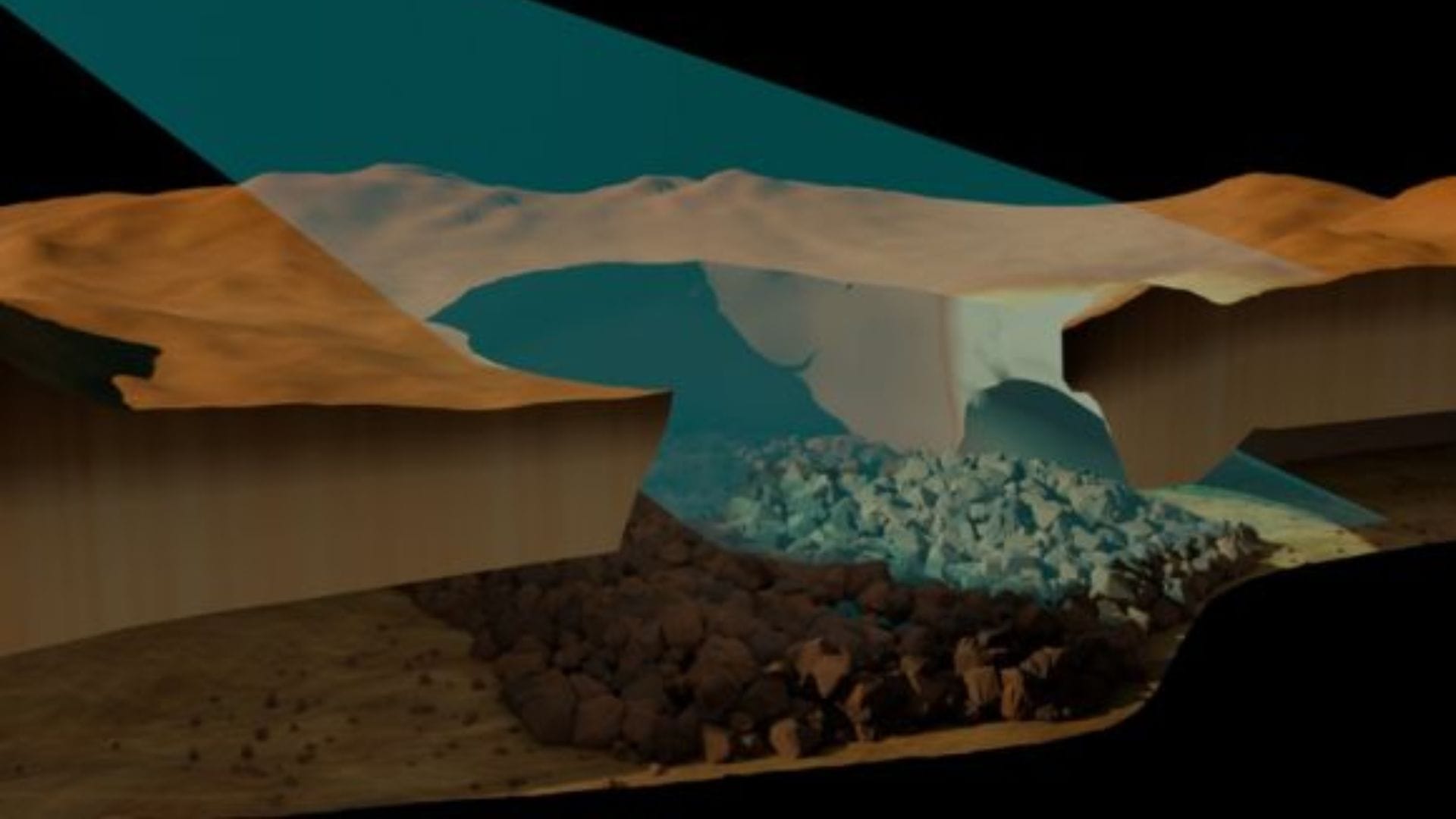
New Delhi: Researchers from the University of Trento in Italy have discovered a hollowed-out lava tube deep within Venus. The surface and the geology of Venus has largely been shaped by volcanic processes. Venus is obscured by a dense and cloudy atmosphere, making it challenging to directly identify the surface. Probing the remote subsurface of Earth’s sister planet is even more challenging. As these lava tubes are primarily underground, they are hidden and can only be spotted when part of the roof collapses, creating a visible well in the surface of the planet.
These collapsed portions can reveal the presence of the lava tube itself, and potentially provide access to it. As even the surface is obscured by a thick haze characteristic of the planet, scientists have to rely on radar imagery rather than cameras. The findings are based on observations by NASA’s Magellan probe that mapped the Venusian surface between 1990 and 1992 using a synthetic aperture radar (SAR). The researchers examined areas with signs of surface collapses, and developed an imaging technique to characterise the underground ducts close to the skylights. The research revealed the existence of a large underground conduit in the Nyx Mons region. The structure has been interpreted as a possible lava tube with an estimated diameter of about one kilometre, and a roof thickness of at least 150 metres.
How does the Venusian lava tube compare to those found on other planets?
The lava tube extends to a depth of at least 375 metres. The physical and atmospheric parameters of Venus favour the formation of lava tubes as Venus has a slightly lower gravity and a denser atmosphere than Earth. These conditions favour the rapid creation of a thick insulating crust immediately after magma escapes from its conduit. The lava tube appears to be wider and higher than those observed on Earth or predicted for Mars, and is close to the upper limit of those predicted or observed on the Moon. A paper describing the research has been published in Nature Communications.