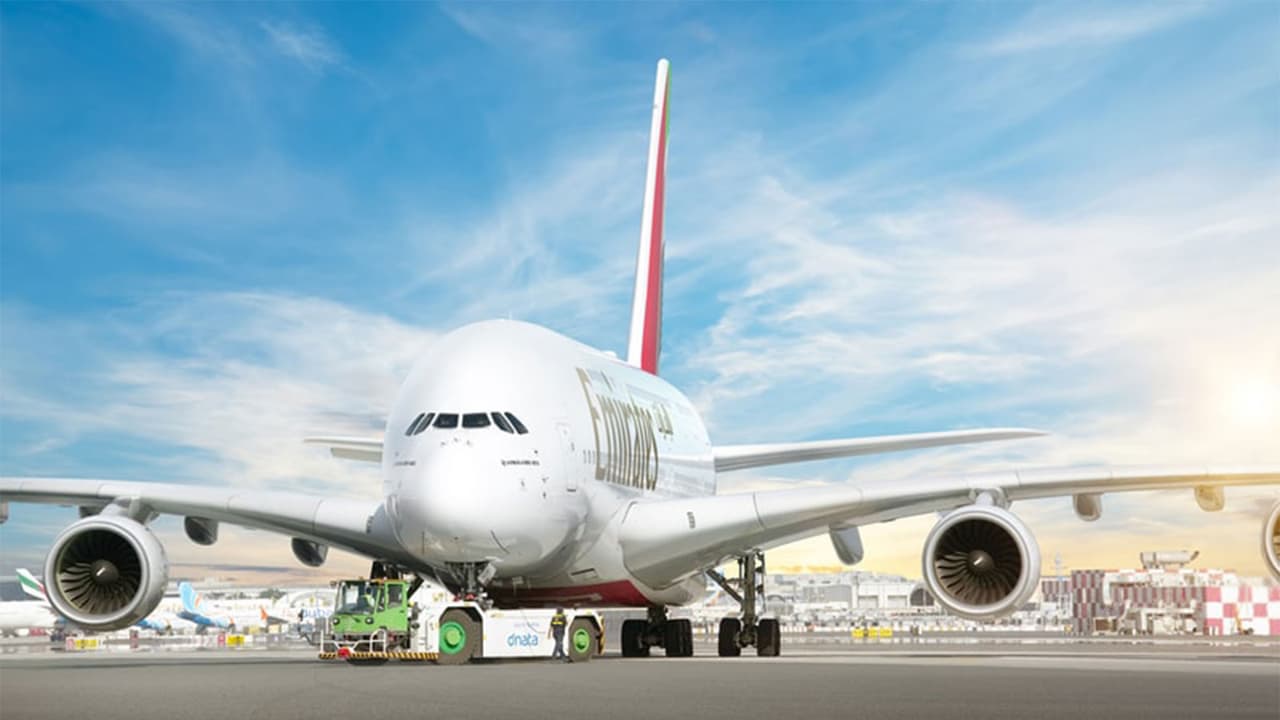
Emirates Group reports a 66% drop in H1 2026-27 profits, impacted by regional instability and high fuel costs. Despite these challenges, cargo operations performed strongly as the airline works to restore its full global network.
Emirates Group Reports H1 Financial Decline
Emirates Group reported a 66 per cent decline in profit before tax to AED 4.1 billion (USD 1.1 billion) for the first half of the 2026-27 financial year, as regional conflict, operational disruptions and elevated fuel prices weighed on its airline and ground-handling businesses. The Group’s revenue fell 12 per cent to AED 66.2 billion (USD 18 billion) during the six months ended September 30, compared with AED 75.4 billion in the corresponding period last year. Its earnings before interest, taxes, depreciation and amortisation (EBITDA) declined 41 per cent to AED 12.5 billion.
Emirates Group Chairman and Chief Executive Sheikh Ahmed bin Saeed Al Maktoum said customer demand remained firm and cargo operations made a strong contribution, supporting revenue and cash levels despite global jet fuel prices doubling from the same period last year. He also credited the UAE government for coordinating the safe resumption of air transport activities following military developments across the Gulf region.
Airline Operations and Challenges
The airline’s profit before tax declined 68 per cent to AED 3.7 billion, while revenue dropped 13 per cent to AED 56.9 billion. Emirates carried 21.8 million passengers during the first half, down 22 per cent year-on-year, as intermittent airspace restrictions and reduced flight schedules affected operations. At the end of September, the airline had restored 91 per cent of its pre-disruption network, connecting 150 airports across 78 countries and territories.
Cargo Resilience and Fuel Costs
However, its cargo business provided some support, with Emirates SkyCargo’s revenue increasing 52 per cent despite a marginal 1 per cent decline in cargo volumes to 1.2 million tonnes. Regional conflict reduced available airfreight capacity and prompted shippers to seek air transport alternatives amid disruptions to marine transportation. High fuel prices remained a significant cost pressure. Emirates’ fuel expenses before hedging gains increased 60 per cent, while gains of AED 7.1 billion from its fuel price risk management strategy helped limit the net increase in fuel costs to 13 per cent.
Dnata Performance and Group Outlook
Meanwhile, dnata reported a 51 per cent decline in profit before tax to AED 410 million, while revenue fell 7 per cent to AED 11 billion, reflecting reduced volumes in some UAE and UK businesses. Sheikh Ahmed said the Group would maintain a close watch on costs and geopolitical developments while continuing investments in fleet expansion, products and operational capabilities. The group ended September with cash reserves of AED 54.1 billion, compared with AED 59.6 billion at the end of March 2026, providing financial support as it navigates regional volatility and elevated fuel prices. (ANI)
(Except for the headline, this story has not been edited by Asianetnews Editorial staff and is published from a syndicated feed.)