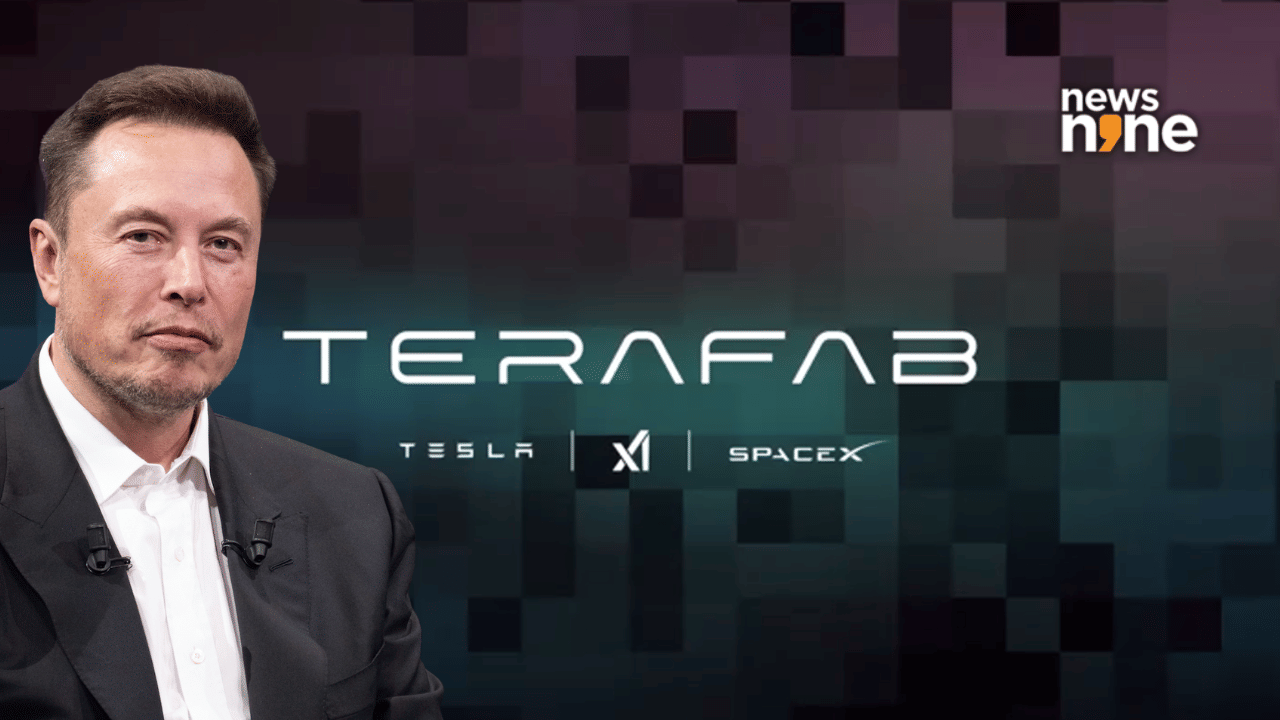
New Delhi: Elon Musk has once again put forward a massive bet on the future of computing, this time with a project he calls “Terafab.” The plan, revealed in Austin, Texas, brings together Tesla, SpaceX, and xAI in a joint effort to build what could become one of the world’s largest semiconductor facilities.
The timing is hard to miss. Demand for AI chips is rising fast, and companies across the globe are racing to secure supply. Musk argues the current ecosystem is simply not scaling quickly enough. “That rate is much less than we’d like,” he said, adding, “We either build the Terafab or we don’t have the chips, and we need the chips, so we build the Terafab.”
TERAFAB: the next step to becoming a galactic civilization
Together with @SpaceX & @xAI, we’re building the largest chip manufacturing facility ever (1TW/year) – combining logic, memory & advanced packaging under one roof.
To harness as much power as possible from the Sun, we… https://t.co/QYfGR8XsJx
— Tesla (@Tesla) March 22, 2026
What TeraFab is and why it matters
Terafab is planned as a full-stack chip facility near Tesla’s Austin base. The idea is simple on paper, but very hard in reality. Musk wants everything under one roof, from design to fabrication and testing.
The facility aims to:
- Produce advanced 2-nanometer chips
- Build chips for cars, robots, and space systems
- Support up to 1 terawatt of computing power annually
That scale is massive; even established players like Taiwan Semiconductor Manufacturing Company have taken decades and huge investments to reach current output levels.
Two types of chips and a space push
Musk’s plan splits production into two categories. One is for edge computing. These chips will power Tesla vehicles, robotaxis, and Optimus robots. The second is far more ambitious.
He wants chips designed for space-based computing.
During the presentation, he showed a concept of a small AI data centre satellite. It would start with around 100 kilowatts of power. “We expect future satellites to probably go to the megawatt range,” Musk said.
The long-term vision includes launching large numbers of such satellites to handle AI workloads in orbit.
Big promises meet big challenges
Building a semiconductor fab is not like building a car factory, as costs can run into tens of billions of dollars, and timelines stretch over years. And even then, yield and performance take time to stabilise.
Musk himself has acknowledged the scale of the problem. He pointed out that existing suppliers like Samsung, TSMC, and Micron cannot meet his expected demand.