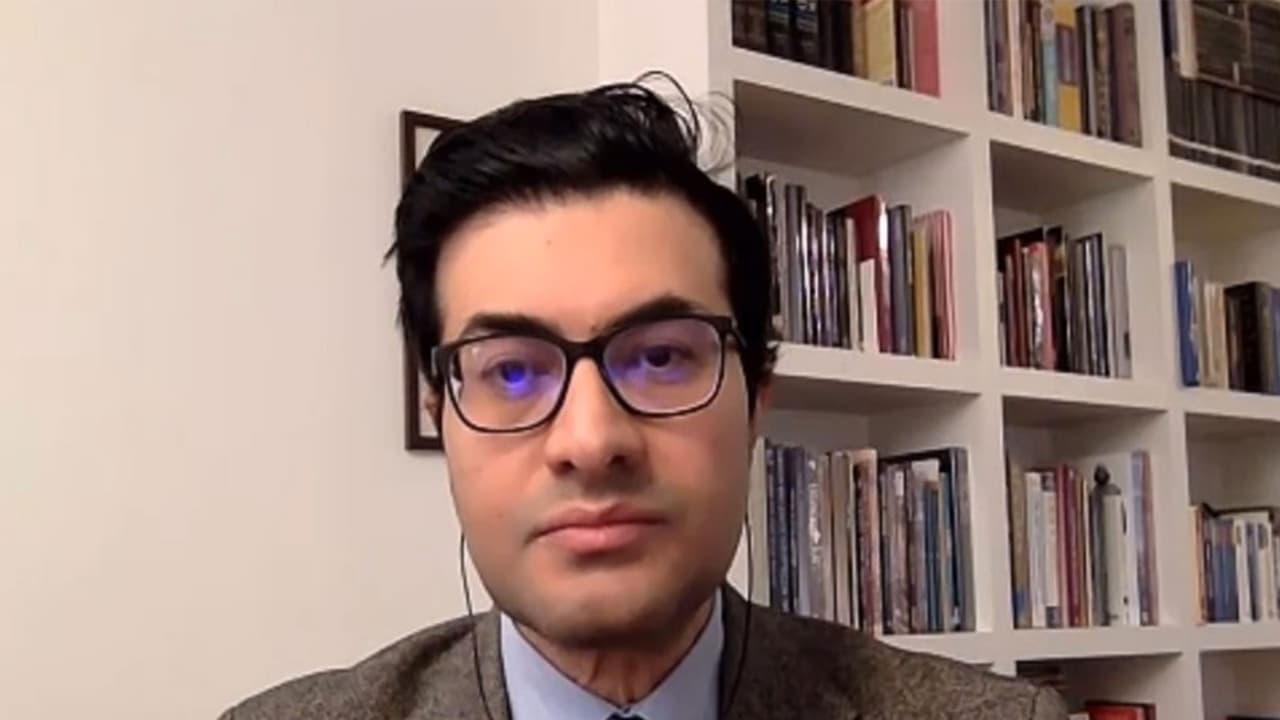
Experts offer conflicting views on Iran’s protests. Burzine Waghmar cites domestic corruption and mismanagement, dismissing US sanctions as a cause. Conversely, Waiel Awwad links the unrest directly to the economic impact of US sanctions.
Domestic Factors Fuelling Iran Protests: Expert
Speaking with ANI, the expert said, “The basic grievance is economic mismanagement and corruption, structural inefficiencies that have brought Iran to where it is today. It has nothing to do with sanctions or with the 12-day war with Israel, as others believe. That is a misperception. It is completely domestic, both economically and politically, in a regime that is repressive and stifling and doesn’t think twice about shooting its own population… These cycles of protests are not a new phenomenon. It has built up over 2.5 decades…”
Trump’s Remarks and Misinformation
When asked by ANI about US President Donald Trump’s statement on Iranian protests, he said the remarks offered moral support to Iranian citizens, as, according to him, the protests in Iran would not have received as much recognition as they are getting right now. He claimed that the protests in Iran do not receive enough attention. He also said that there is a particular kind of misinformation about the protests that is spreading, about the participants in the protests that they are “just insurrectionists or rebels being put out by the US, Israel, or other external elements”. He said, “President Trump’s remarks offer moral support to those who feel the world has forgotten them. It has to be seen in such light… We often speak at protests in Hong Kong, Tibet, or practically anywhere in the world… A blatant lie is being put out in certain quarters of the media that they (the protestors) are just insurrectionists or rebels being put out by the US, Israel, or other external elements.”
Government’s Desperate Measures and National Scope of Protests
He claimed that the Ministry of Defence export centre has been “desperate” to procure cryptocurrency to bypass Western financial sanctions, under which it is unable to sell defence equipment to anyone and claimed that it’s dangerous that “the Iranian government is willing to sell anything and everything to not just countries, but even terrorists”. In the end, he stated that the protest is a national movement involving all strata of Iranian society. He added, “It is more serious than the others… In the last 24 hours, the Central Bank of Iran has begun issuing orders nationwide, from Tehran to the provinces, to prepare for financial contingencies… The Ministry of Defence export centre has been desperate to procure cryptocurrency to bypass Western financial sanctions, under which it is unable to sell defence equipment to anyone… It’s quite dangerous that the Iranian government is willing to sell anything and everything to not just countries, but even terrorists… It is not just a protest by popular youthful discontent among the unemployed or those with no prospects. It involves all strata of Iranian society, including the middle classes, technocrats, and those who are pious Muslim Shia elements… it is the national movement…”
Counter-View: US Sanctions Blamed for Unrest
Foreign Expert Waiel Awwad, speaking about the current Iran protests, told ANI that unrest is beginning now due to the decline in the currency, unemployment, and other difficulties faced by ordinary people in Iran. According to him, the problem has been going on for the last 20 years, when the US sanctions were imposed on Iran because of its nuclear program. After some relief in 2015, it was reintroduced in 2019, when the US President again put Iran under sanctions and pulled out of the P5+1 deal. Speaking with ANI, he said, “… What’s happening in Iran is the resentment against the governmnet. The unrest is starting now because of the decline in the currency, unemployment, and other difficulties faced by the common people of Iran. The problem has been going on for the last 20 years, when the US sanctions were imposed on Iran because of its nuclear program. However, in 2015, there was some kind of relief by signing the nuclear deal with P5+1, and the United States pulled out during the tenure of President Trump, 2019, and then, he again put Iran under the sanctions; therefore, there is a huge impact on the economy and the people, and the poverty line has been rising in Iran.”
Broader Economic and Geopolitical Context
The protests come as Iran faces severe economic strain, including a rapidly depreciating currency and high inflation, compounded by years of drought in Tehran, a city of around 10 million people. Iranian leaders have adopted a comparatively conciliatory tone, with President Masoud Pezeshkian saying the government is at “fault” for the situation and pledging to seek solutions.
Tensions between Tehran and Washington remain elevated following US strikes on three Iranian nuclear sites in June 2025, during a 12-day escalation involving Israel, an operation Trump later described as a “very successful attack”. Last week, during a joint appearance with Israeli Prime Minister Benjamin Netanyahu, Trump warned that the US would “knock the hell out” of Iran if it advanced its nuclear or ballistic weapons programmes. The remarks came amid renewed Israeli efforts to resume attacks on Iran. Pezeshkian has said Iran would respond with a “severe” reaction to any aggression. (ANI)
(Except for the headline, this story has not been edited by Asianet Newsable English staff and is published from a syndicated feed.)