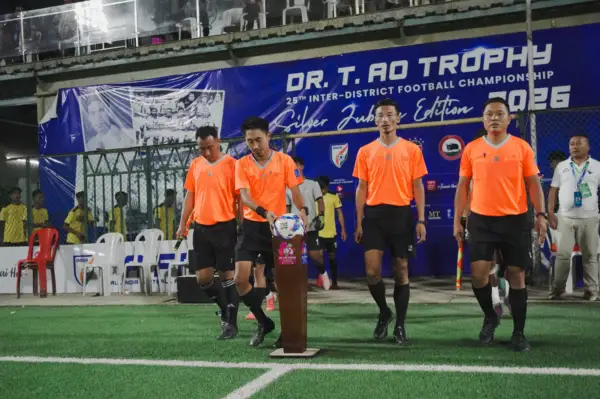
Kohima: Decades after Nagaland’s premier Inter-District Football tournament was established to encourage grassroots football, the competition continues to bring the districts together.
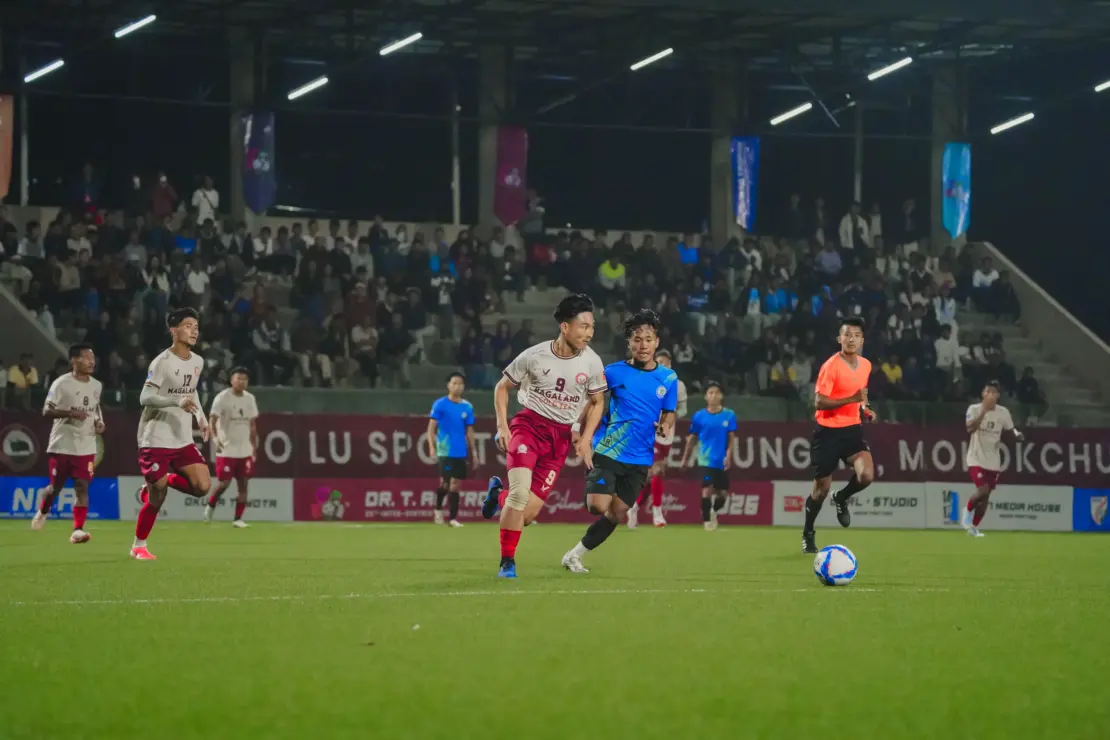
Evidently, the standard of play is rising, public interest is growing, and more young footballers are looking beyond their home districts for opportunities.
Yet, beneath this progress, questions remain about the structures supporting the game. Shortages of qualified coaches, gaps in tournament administration and concerns over players’ long-term prospects point to a wider challenge for Nagaland football: turning growing enthusiasm into a sustainable pathway for development.
Nagaland’s first national referee, Mechievilie Yashü, said the Dr T Ao Trophy had witnessed considerable improvement in the standard of competition over the years.
“Speaking of the level of competition, it is becoming very high year by year,” he told EastMojo.
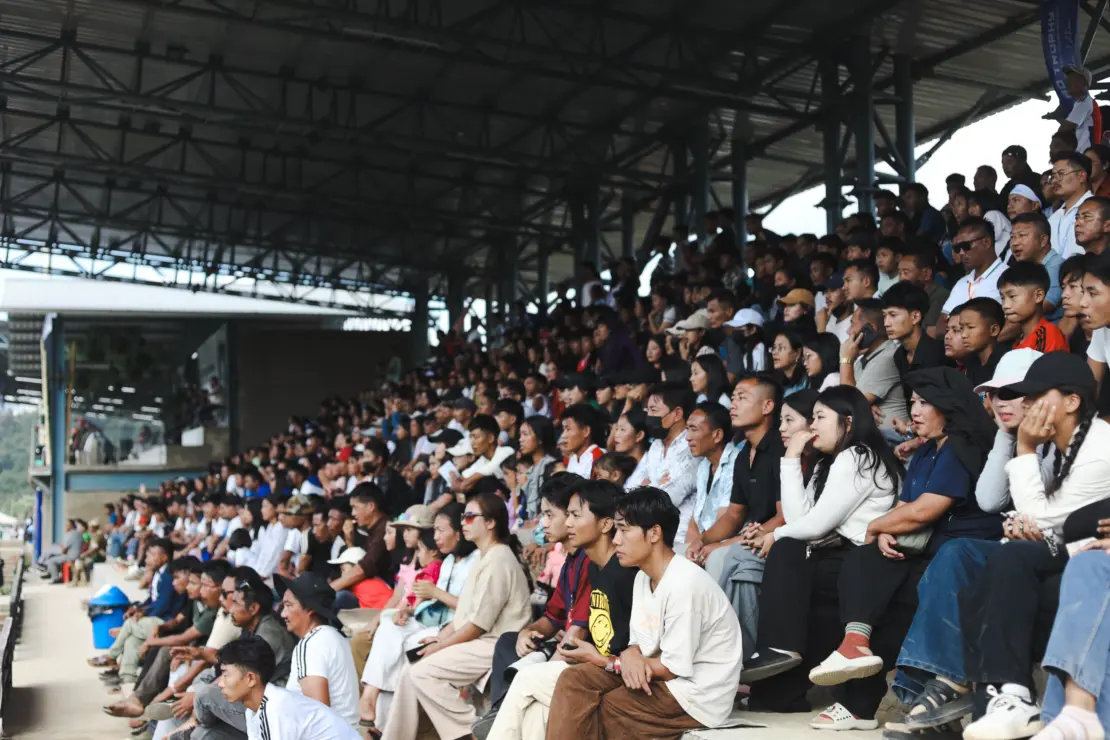
Yashü observed that players were demonstrating greater skill and discipline both on and off the pitch. He also noted that the tournament’s growing spectator base was helping expand football’s influence in society.
However, he said further improvements were needed in technical management, tournament administration and strategic promotion, drawing on his experience of football in other states.
Chingmak Chang, a football administrator from Tuensang, also called for greater attention to the structures supporting players, arguing that the tournament’s growing visibility should translate into tangible improvements at the grassroots level.
Chang pointed to a shortage of qualified coaches in several districts and urged the Nagaland Football Association (NFA) to organise coaching camps by bringing coach educators to areas where trained personnel were lacking.
He also called for greater familiarity with digital football administration systems, a fixed annual window for the Dr T Ao Trophy to avoid clashes with district competitions, and better assistance for players who sign with clubs outside Nagaland.
His concerns underline the work that remains to ensure that young footballers have access not only to a major state-level tournament but also to the coaching, competition and administrative support needed to progress.
The player beyond the tournament
Akok Tally, son of Dr T Ao, also drew attention to a dimension of football development that can be overlooked amid the excitement of competition: what happens to players after their peak playing years.
He noted that footballers have a limited window in which to perform at their highest level and stressed the need for opportunities that allow them to support themselves and their families after their playing careers.
“Sports like football have only one time window for a footballer to contribute his peak performance,” he said.
His observation adds to the wider conversation around the future of football in Nagaland, where the growing popularity of the game has created aspirations among young players to pursue opportunities beyond their districts and the state.
Developing football, therefore, involves more than organising competitions. It also means building an environment in which players can progress, find sustainable opportunities and prepare for life beyond the pitch.
The Dr T Ao Trophy offers a platform for district footballers to compete and gain exposure. The challenge is to ensure that the opportunities it creates are supported by stronger systems throughout the year.
A legacy that continues to travel
The Inter-District Football Championship was established in the 1970s with the aim of encouraging grassroots competition. Today, the tournament carries the name of a man whose journey took Indian football to the London Olympics at a defining moment in the country’s history.
Its continued growth reflects the place football has secured in Nagaland’s sporting culture, while the participation of districts across the state gives younger players an opportunity to be part of a tradition that predates them.
For Tally, seeing his father’s name continue to inspire young people is a source of deep satisfaction.
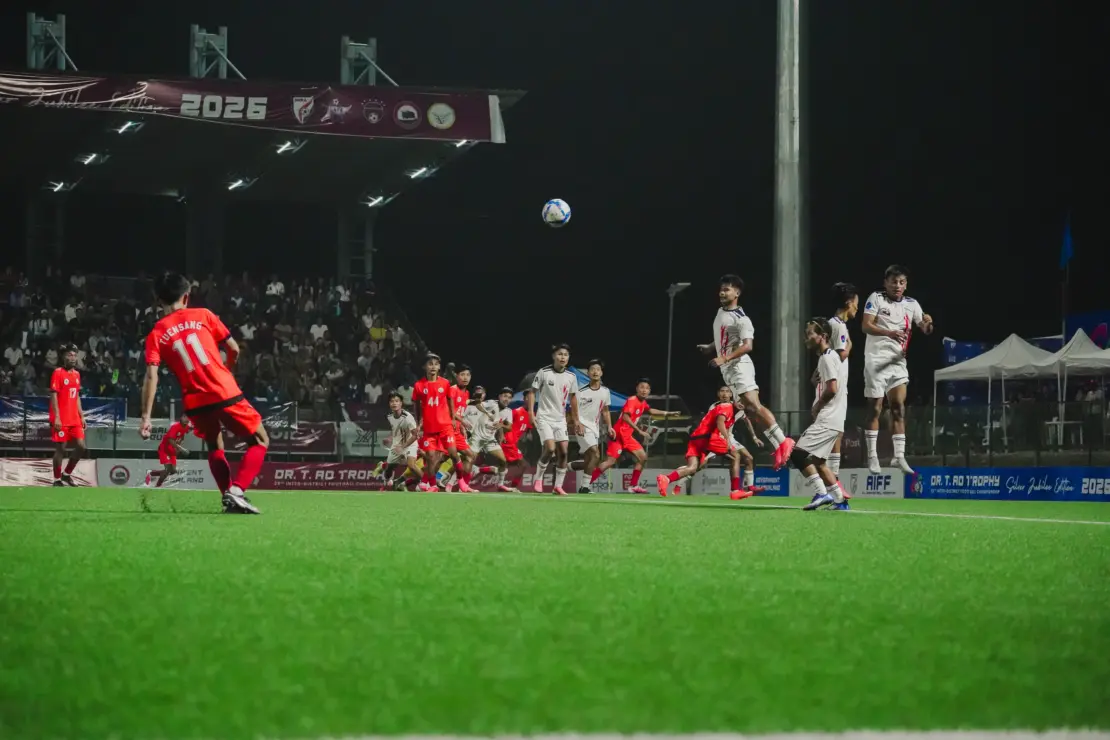
For those working within the game, the silver jubilee edition is also an opportunity to reflect on the responsibilities that accompany that legacy. The improvements in stadiums and playing surfaces, the rising level of competition and the growing audience are important markers of progress.
But the calls for better coaching, stronger administration and improved player welfare show that the journey is far from complete.
Dr T Ao’s legacy began on the international stage, but its meaning in Nagaland today is found in the young footballers taking to the field, the districts competing for the trophy and the spectators who continue to gather around the game.
The Dr T Ao Trophy – 25th Inter-District Football Tournament will conclude on October 29 in Ungma, Mokokchung, with the final bringing the participating districts’ campaign to a close. But even after the competition concludes, these issues will remain central to the wider conversation on football development in the state.