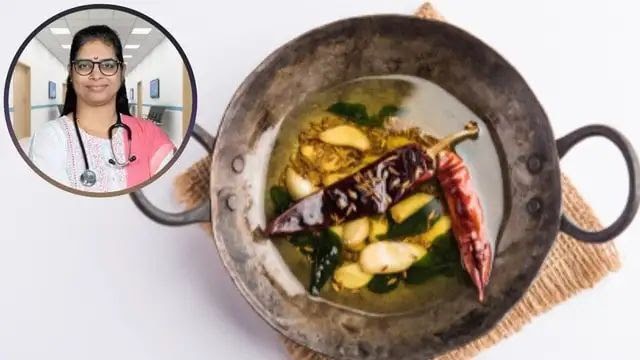
Our elders often used to say that it matters a lot in which vessel the food is cooked. Because the qualities of the utensils also come into the food. Even doctors today believe this.
Generally you must have seen that iron utensils are considered good for cooking. Food prepared in iron pan is very beneficial for those people who are deficient in iron in their body. However, there are some things which should be avoided while cooking in an iron pan. Dr. Shalini Singh tells through an Instagram post that there are some things which can be harmful when cooked in an iron pan. It can play the role of your stomach, skin and health. Let us know in detail.
Vegetables or gravy containing tamarind, lemon and tomato
You should not cook vegetables or gravies that contain sour things like tamarind, lemon or tomato in an iron pan. Dr. Shalini tells that these things are of acidic nature. When they come in contact with iron, they react, which can cause risk of food poisoning.
Dishes made with curd or curd
According to Dr. Shalini, you should not cook curd dishes like kadhi, curd potatoes or other vegetables in an iron pan. Doing this may cause the curd to burst, which may completely spoil the taste of your dish. This can also give your dish an iron-like taste and smell.
milk dishes
One should also avoid cooking milk based dishes like kheer, custard, cream in an iron pan. Doctors say that by doing this the milk may curdle, it may get sour or stale smell and the taste of the entire dish may also get spoiled.
Do not cook kidney beans or chickpeas.
Heavy items like kidney beans or chickpeas should not be cooked in an iron pan. Actually, the heat in an iron pan is not uniform, due to which your chickpeas or kidney beans may remain slightly raw or cooked. Eating these can cause problems like stomach gas, bloating and indigestion.
Chinese foods that use vinegar
There are many Chinese dishes in which vinegar is used. Dr. Shalini says that such dishes should not be cooked in iron pans at all. Actually, vinegar is an acidic element, which reacts when it comes in contact with iron. This can spoil the taste, aroma and color of food. At the same time, there can also be a risk of food poisoning.
Note: This article has been written for general information purposes only. Do not consider it in any way a substitute for professional medical advice. Always consult your doctor for questions related to any health problem or medical condition.