The initial days of any new government is often looked at closely by political experts and voters as it reveals the priorities and governing that people are going to witness in the coming years.
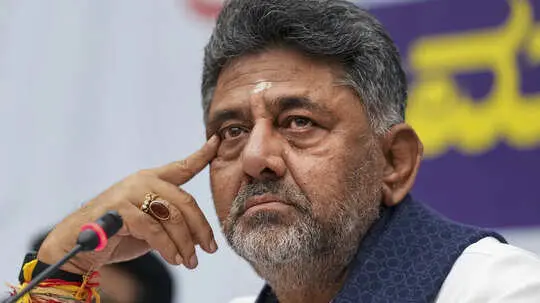
In the case of Karnataka, Chief Minister D.K. Shivakumar’s initial announcements signal an administration approach as a blend of welfare measures, infrastructure spending and administrative reforms designed to strengthen service delivery.
The early actions of Karnataka’s new government under Chief Minister D.K. Shivakumar points to a policy mix that prioritises youth-focused programmes, infrastructure investment and administrative reforms intended to improve service delivery.
State employment exchange and skill programs
The administration has announced a package worth approximately ₹3,250 crore targeting youth employment, educational access, urban infrastructure and welfare implementation. While the long-term impact will depend on execution, sources in the administration believe that the measures outline the areas the government is prioritising in its initial phase.
Youth-focused measures are also emerging to be a notable feature of the new government. The government has said that it will provide free bus passes for students across the state to reduce transport-related barriers to education. Authorities say the move is intended to ease commuting costs that disproportionately affect students from rural and lower-income households, potentially improving attendance and access to institutions; its effectiveness will become clearer once implementation data are available.
A state-supported employment exchange system aimed at private-sector opportunities is also planned. The proposal includes training, skill development and job-matching services designed to strengthen links between employers and job seekers and to help young people transition from education into work. The initiative emphasises opportunities for Kannadigas, reflecting ongoing political and economic debates on local employment and participation in the state’s growth.
The package allocates ₹1,000 crore to create 10,000 Bharat Jodo youth associations across Karnataka. The government says these groups will support sports, culture, leadership development and community engagement. Supporters view them as platforms for civic participation and youth engagement; critics have raised questions about oversight and measurable outcomes. Observers say the associations’ impact will depend on their structure, funding and local management.
Bengaluru’s Planned Urban Infrastructure Push
Urban infrastructure is another key focus. Bengaluru continues to face chronic traffic congestion, road deterioration and civic infrastructure shortfalls. The government has earmarked ₹2,000 crore for road asphalting projects to address these problems. While improved roads could enhance mobility and economic activity, previous infrastructure initiatives in the city have drawn scrutiny over timelines, quality and maintenance, which places implementation under close observation.
On housing and regulatory relief, the government has proposed a one-time relaxation related to Occupancy Certificates (OCs). Officials say the move is intended to resolve difficulties that have prevented homeowners from obtaining utility connections and completing property procedures, by regularising certain properties. The measure could relieve residents who face long-standing administrative hurdles, though its implications for urban planning and regulatory enforcement remain subject to debate.
Strengthening welfare verification
Alongside new benefits, CM Shivakumar has directed officials to strengthen verification mechanisms within welfare schemes. The stated objective is to improve targeting and reduce misuse of public funds. Analysts note that better verification can increase efficiency and accountability, but they caution that safeguards should not create additional barriers for eligible beneficiaries.
Taken together, these announcements present an early agenda centred on youth initiatives, infrastructure spending, housing relief and tighter welfare administration. Officials and analysts say outcomes will hinge on implementation capacity, funding availability and institutional oversight.
However, upcoming months will be crucial to show how these priorities translate into policy outcomes and whether the initial thrust of the government delivers measurable improvements in employment, education access, urban services a
nd welfare delivery.