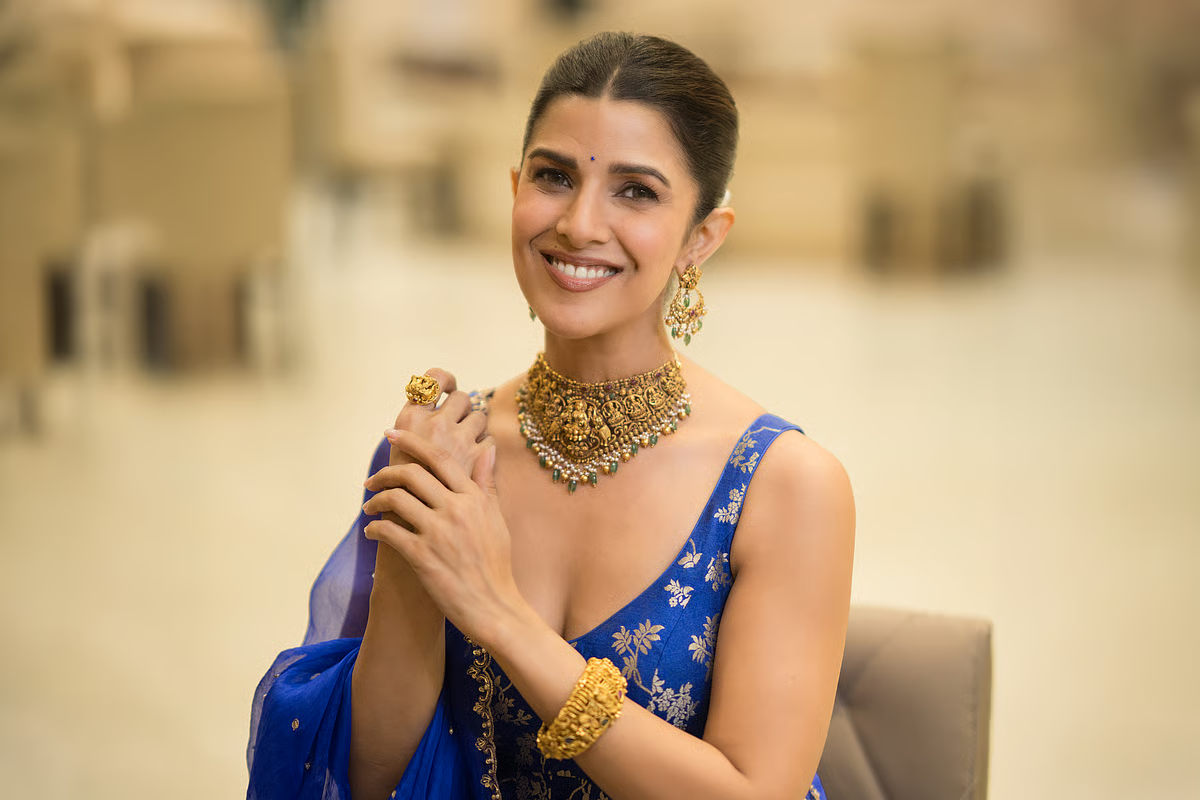
Diwali has a way of bringing us back to the things that matter most: familiar faces, favourite foods, old family rituals and the comfort of being home. For Nimrat Kaur, the festival is a little bit of all that – and then some. Think rangoli in her nani’s veranda, a house full of loved ones, festive shopping that goes right down to the last minute and a generous helping of mithai.
In a conversation with The Free Press Journal for our Diwali special, Nimrat takes us back to the excitement of celebrating as a child in Army cantonments, shares the rituals she hopes her family will carry forward, and reveals why her festive wardrobe is as traditional as it is practical. And, of course, there’s the mithai she looks forward to every year!
From crackers and cantonment parties to coming home
As a child, Diwali meant one thing above all else for Nimrat: the freedom to run around, make noise and wait impatiently for the crackers. Growing up in an Army family meant moving between places and being surrounded by children from different cultures and parts of the country. Festivals were celebrated together, whether it was Diwali, Holi or Gurpurab.
“Diwali was really that time of the year for us,” she recalls, remembering the excitement of cantonment celebrations and mess parties. “We would just wait to burst crackers, and that was all that we would look forward to.”
Those childhood celebrations also came with a sense of belonging that stayed with her. In Army communities, friendships could turn into family in no time, and festivals brought everyone together. “It didn’t matter how long anyone knew each other for,” she says. “It was kind of understood that we were all family.”
That warmth continues to shape the way she celebrates today. Nimrat says she enjoys marking the festival with whoever is around her, whether she makes it home or finds herself on a film set. Some of her memorable Diwalis have been spent with co-stars, crew members and technicians.
“I really just love celebrating Diwali with any and everyone that’s around me,” she says.
One childhood memory she still holds close is her father hiding two packets of phuljhari for Gurpurab, which followed Diwali. He would keep them somewhere high, out of reach of Nimrat and her sister, leaving them to guess where the sparklers were tucked away.
“I used to wait for those simple pleasures,” she says. “Diwali was about bursting crackers, phuljhari, chakris and anar, and then those two packets would be kept aside for Gurpurab.”
Even now, the festivals feel connected in her mind — one celebration leading into another, with memories of childhood tucked into both.
The rituals that make Diwali feel like home
Over time, the festival has taken on a more personal meaning. With family members living apart and busy schedules making everyday catch-ups difficult, Diwali has become a chance to regroup, slow down and reconnect.
“It has grown more personal with time,” Nimrat says. “It’s become a perfect time for me to meet my family, relax with them, spend time with them and regroup.”
When she is home, the celebrations follow familiar traditions. She makes rangoli in her nani’s veranda, while the family prepares gud ke chawal and gets the diyas ready for the festival. The earthen lamps are soaked in water the night before Diwali, then arranged and filled with sarson ka tel. The wicks, which were once rolled by hand, are now often bought ready-made.
Nimrat remembers creating designs with candles and diyas along the boundary of the house — a small ritual that has stayed with her because of the time and care it takes. For her, these traditions are less about getting everything perfect and more about the people who come together to do them. “More than anything, this is that time where everyone comes together,” she says. “That is what I would love to see passed down through the family to all the kids.”
A festive wardrobe with a practical side
When it comes to Diwali dressing, Nimrat is firmly in the traditional camp. A saree or a salwar kameez is usually her go-to, with the final choice depending on what the day has in store.
The reason is simple: she is rarely sitting still during the celebrations. Back home, she becomes the designated chauffeur, making market runs, welcoming guests and ensuring everyone has something to eat or drink.
“I mostly lean towards wearing a salwar kameez because it’s easier to run around in,” she says. “It’s more like practical, traditional, but beautiful.”
If she chooses a saree, it has to be light enough to move around in. Flats are usually part of the look, too. But practicality doesn’t mean playing it safe with colour. Nimrat loves festive shades and adds a personal touch by borrowing jewellery from her mother’s collection.
There is also a tradition she looks forward to every year: her mother buys her a new outfit for Diwali. “I will not have it until she buys me something new for the festival,” she says, adding that she is already curious about what her mother will pick this time.
And when it comes to dressing up, she believes Diwali is the one occasion when there is no such thing as too much. “You can never be overdressed when it’s Diwali,” she says. “You must look like a pataka, as they say, and not burst one.”
Mithai, memories and a peda from Pilani
Diwali and mithai are inseparable for Nimrat. She admits that the festival is when she lets go of her usual restraint and enjoys the sweets without negotiating over portions.
“Instead of having half a mithai, I have the full thing. In fact, I have two,” she laughs.
Pista barfi, besan ladoo, soan papdi, chena murki and rasgulla all make the list. But there is one special treat that has a place of its own: the pedas from Pilani in Rajasthan, where Nimrat was born.
The family orders them from Mahaveerji Pedawale, a shop known for its distinctive pinch mark on the peda. Made with khoya and a hint of cardamom, they are a tradition her mother grew up with, too. “That is a must-do,” Nimrat says. “It’s something I can’t wait to eat when I go back.”
The joy is in the little things
If Nimrat could pass one part of her family’s Diwali celebrations on to the next generation, it would be the simplicity of it all. The shopping lists that keep changing until the last evening, the gift bags she and her mother put together, the visits to neighbours and friends, and the familiar cycle of tea, coffee and mithai.
“My shopping lists from mom are never over until the last evening,” she says. Sometimes, it is only around sunset on Diwali day that her mother finally feels everything is ready.
Nimrat loves being part of the bustle — driving her mother around, picking up gifts, visiting people and helping prepare the festive dinner. During those days, the usual labels and responsibilities fade into the background.
“Diwali time is that one time where I forget what I do, who I am, where I come from or where I am in life,” she says. “None of it matters. I’m the designated driver.”
For her, the real celebration is not just about looking festive or capturing the perfect picture. It is about showing up for people, sharing food, exchanging gifts and spending time with those she may not have seen in a while.
“I love that hecticness and the joy that it brings,” Nimrat says. “It’s just about genuinely meeting the people whom you’ve not met in a while, being generous and enjoying the generosity of the festival.”
And perhaps that is what makes Diwali special for her now: the chance to return home, take part in the rituals she grew up with, and find joy in the everyday moments that make the season feel like family.