
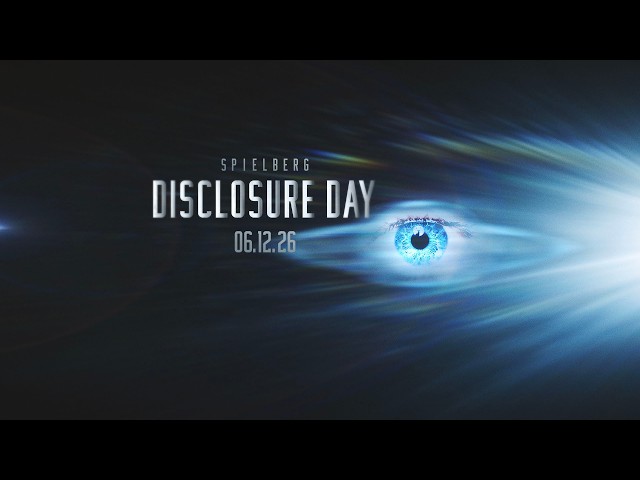
“Listen.” Emily Blunt delivers a single word facing the audience and the screen abruptly goes dark. Steven Spielberg’s new film, Disclosure Day, ends on that note.
It is quite unlike how the filmmaker does things. Steven Spielberg is known to explain, while in Disclosure Day he leaves a lot unsaid. It is a film that has left many viewers confused – some feel Spielberg has just made his weakest film yet, many others insist this film will age well. No Spielberg film has perhaps been as divisive as Disclosure Day.
SCI-FI SAGA DIGS DEEP
‘s latest is pitched as a sci-fi thriller – a genre the filmmaker literally shaped for new-age commercial cinema with such gems as Close Encounters of the Third Kind, E.T. The Extra-Terrestrial, Minority Report, Jurassic Park and the Indiana Jones films, just to name a few.
In Disclosure Day, Spielberg and his frequent screenplay collaborator David Koepp keep the stock tropes coming in through the film’s 145-minute runtime. There’s alien and UFO in the package, of course, as well as a spectacular car-and-train chase. There’s a scheming corporate boss trying to lay his hands on government secrets, and the US government trying to hush up a decades-old conspiracy. Spielberg’s signature ‘family home’ finds space in the narrative, too, though in an unusual way. Yet, Disclosure Day seems like it wants to be different from your regular Spielberg sci-fi, and that’s not necessarily because of the film’s languid pace.
Somehow, though, the film brings back a recall of Spielberg’s 2017 political drama, The Post, starring and Tom Hanks. Like that film, Disclosure Day is about an obsessed mission to uncover truths hidden by governments from citizens.

Here’s what happens, in a nutshell: Cybersecurity specialist Dr. Daniel Kellner (Josh O’Connor) lays his hands on extraterrestrial technology and files that detail human contact with aliens, starting from the Roswell incident of 1973. Colin Firth as Noah Scanlon, head of the corporation from where Kellner stole the files, not surprisingly bays for his blood. The government wants to keep the alien truths hushed up, and Kellner is soon branded a foreign spy. He finds an unlikely ally in Margaret Fairchild (Emily Blunt), a Kansas City TV meteorologist.
The film talks about the idea of intelligent life existing elsewhere, too, beyond Earth, and what would happen if we came to know that powerful forces and hid it from the rest of the world. Would we be ready to accept the fact? Would we be willing to accommodate an alien way of thinking?
TOLERANCE IS THE MESSAGE
So, where does the film’s silent message – one that pertains to listening – fit into all this? You’d find the answer in the final sequence, when the government finally admits to the world that they had hidden the truth about aliens, and that they did capture one at Roswell. The alien is wheeled in for all to see, and it whispers something in Kellner’s ear.
We aren’t let in on what the alien said, that isn’t important. What the scene conveys is humans have finally learnt to listen to voices that may or may not align with our thought process.
In a world where people are becoming increasingly deaf to every other opinion but their own, Disclosure Day asks its audience to listen. Even if it is a voice unknown. Steven Spielberg, mainstream maestro who habitually keeps redefining popular cinema, just reminded us we’re fast forgetting a basic etiquette at a time the world needs more conversations.