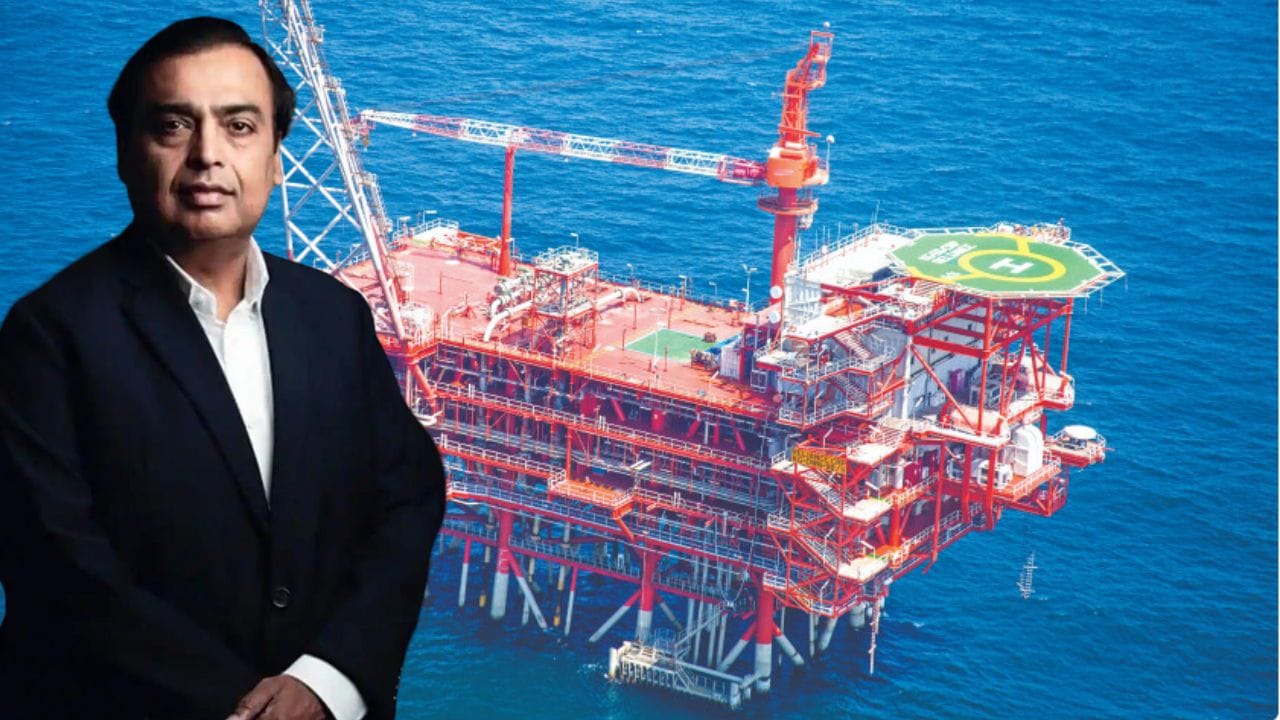
The country’s largest company Reliance Industries has denied a Reuters report which said that the government has sought compensation of $30 billion from the company for producing gas less than the estimated reserves from its KG-D6 block. RIL, the operator of the KG-D6 field, said in a statement on Monday that there is no claim of $30 billion against Reliance and BP. The claim made by the Government of India in respect of the KG-D6 block is approximately $247 million, which has been disclosed in the company’s annual audited financial statements.
The case is going on since 2016
The compensation claim relates to an over a decade-old dispute that arose after the government rejected a portion of the investment made by the consortium of RIL, BP and Nico for drilling and development of related infra in the KG-D6 block. The sector is governed by production sharing contracts, under which companies are allowed to recover their costs before sharing profits with the government in pre-determined proportions. The arbitration proceedings have been going on since 2016, the final hearing of which has been completed and the decision is expected next year. The company said that Reliance Industries Limited, along with its partner BP, has always been in compliance with its contractual and legal obligations and the (Reuters) report contains misrepresentations of facts, which we condemn.
This report came earlier
Reuters said in its report that Reliance produced only 20 percent of its estimated total gas reserves of 10 trillion cubic feet from the D1 and D3 fields. The report said that the government has demanded compensation from RIL and BP for this shortfall. Reuters, citing unnamed sources, reported that during the arbitration hearing, the government justified its demand for $30 billion in compensation by saying that it owned any gas discovered under the contract and that most of the reserves were destroyed due to mismanagement. The report further said that the government has alleged that Reliance mismanaged the fields by following ‘highly aggressive’ production methods, which included extracting gas from fewer wells than the number initially planned. The report also said that the reserves were damaged by drilling only 18 wells instead of the planned 31 wells.
Why did the matter of arbitration come up?
Reliance says that gas production from KG-D6 block has been limited due to geological disturbances and has termed the government’s refusal to recover the cost as an unfair step, due to which the arbitration case has come to the fore. Under the production sharing contract, the management panel consisting of two government representatives has final authority over all decisions and the operator cannot make any expenditure without its approval. RIL argues that it was therefore unfair to disallow the expenses already incurred.